Visiting Zagreb: The Essential Attractions You Can't Miss
The capital of Croatie, Zagreb is often a gateway for visitors who rush to reach the coastal and historic cities of the Adriatic coast.
The capital of Croatie, Zagreb is often a gateway for visitors who rush to reach the coastal and historic cities of the Adriatic coast. Yet the city is far from lacking in attractions—quite the opposite! Divided into two parts—the Upper Town and Lower Town—Zagreb is home to numerous historical, religious, and cultural landmarks. Discover everything there is to do and see in Zagreb.
What to See and Do in Zagreb's Upper Town?
Also known as "Gornji Grad," the Upper Town of Zagreb is the historic center. It was born from the merger of the towns of Gradec and Kaptol in the 17th century, which today form the neighborhoods of the old town.
As its name suggests, Zagreb's old town sits in the heights, perched on hills. With its colorful house facades and red-tiled roofs, charming cobblestone streets, and church spires, Gornji Grad is often considered a travel highlight for visitors.
Did you know?
A funicular railway connects the Upper and Lower Towns of Zagreb. It's the world's shortest funicular at just 66 meters long! While its retro look is charming, it saves only a few minutes of climbing.
Lotrščak Tower
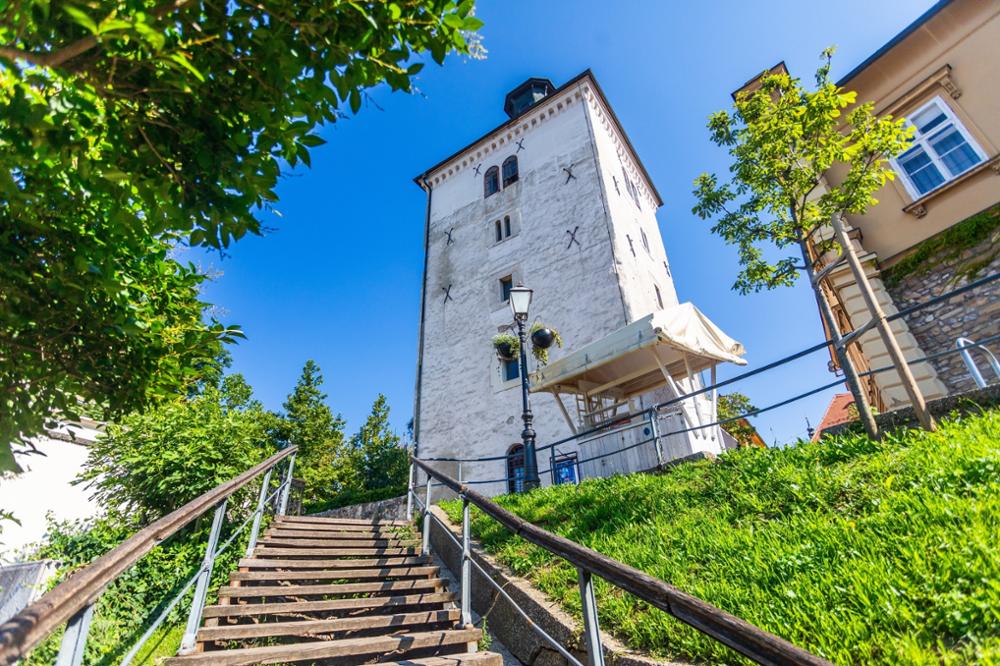
Located at the funicular's exit, Lotrščak Tower is one of Zagreb's iconic monuments. Built in the 13th century to protect the city gate from enemies, it is the last remaining medieval tower of the Croatian capital. You can visit it to learn more about its history and climb to the top to enjoy an exceptional 360-degree panoramic view of the city.
Good to know:
Every day at noon sharp, a cannon is fired from Lotrščak Tower. Established in 1877 to indicate the time to Zagreb's residents, this tradition has continued for over 100 years. Be sure to plan a visit just before noon to witness it!
St. Mark's Church
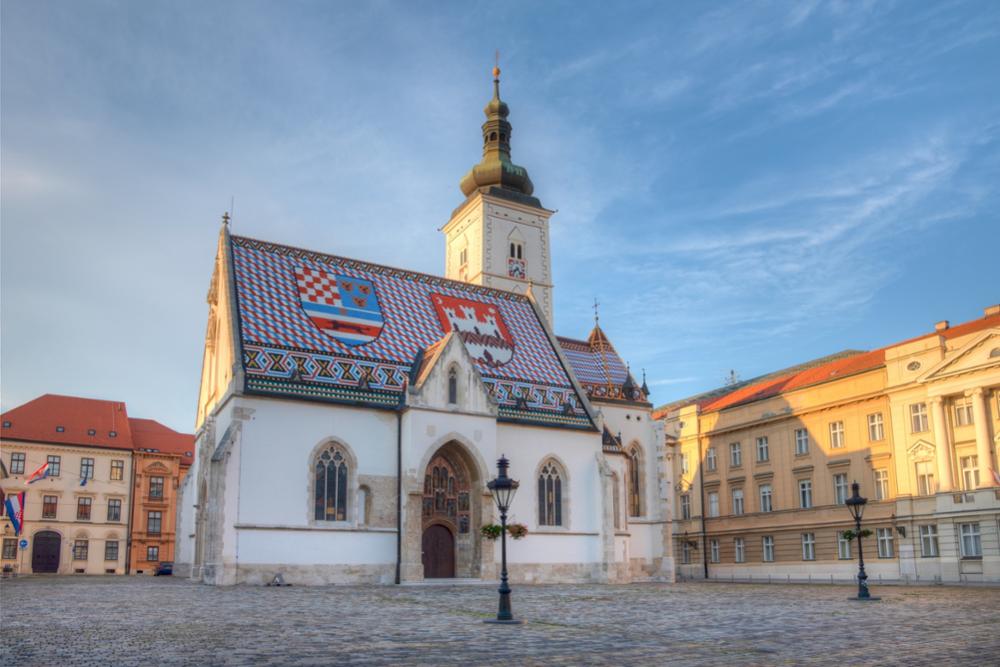
Located near Lotrščak Tower, St. Mark's Church is one of Zagreb's symbols. Built in the 13th century, its architecture has undergone several modifications over the centuries. It is especially renowned for its roof of colorful tiles illustrating the medieval coats of arms of Croatie and Dalmatia on the left side and those of Zagreb on the right. While the church's interior is not currently open to visitors, its exterior architecture alone is worth the detour.
To note:
On St. Mark's Square, you'll find other prestigious Zagreb buildings. You can admire the Sabor Palace, which houses the Croatian Parliament, and the Banski Dvori, the seat of the Government of the Republic of Croatie.
Zagreb Cathedral (Our Lady of the Assumption, St. Stephen, and St. Ladislaus)
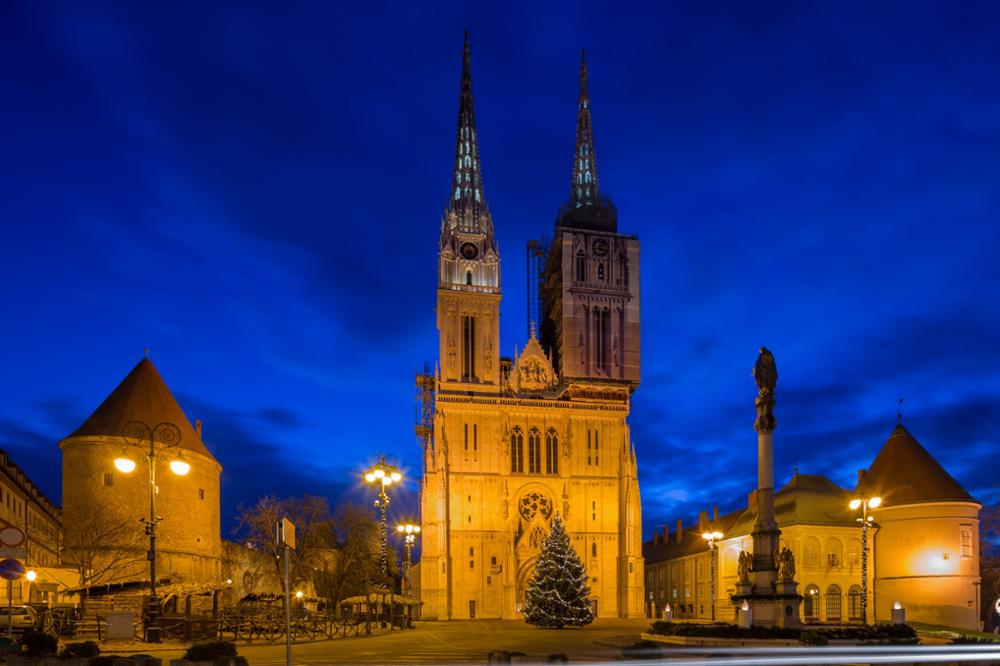
Zagreb Cathedral is another essential landmark. This building is the tallest structure in all of Croatie. Its spires, visible throughout the city, reach a height of 105 meters. Dedicated to the Assumption of Mary and to Kings St. Stephen and St. Ladislaus, it was built at the end of the 11th century in Romanesque style. Damaged by the devastating 1880 earthquake, it was restored by the city's architect, Herman Bollé, who redesigned it in Neo-Gothic style.
In addition to admiring its exterior architecture, we recommend entering the cathedral to discover its treasures, including the famous Passion Triptych by Albrecht Dürer from 1495, an 18th-century sculpture of the Last Supper, and the glass sarcophagus of Cardinal Alojzije Stepinac.
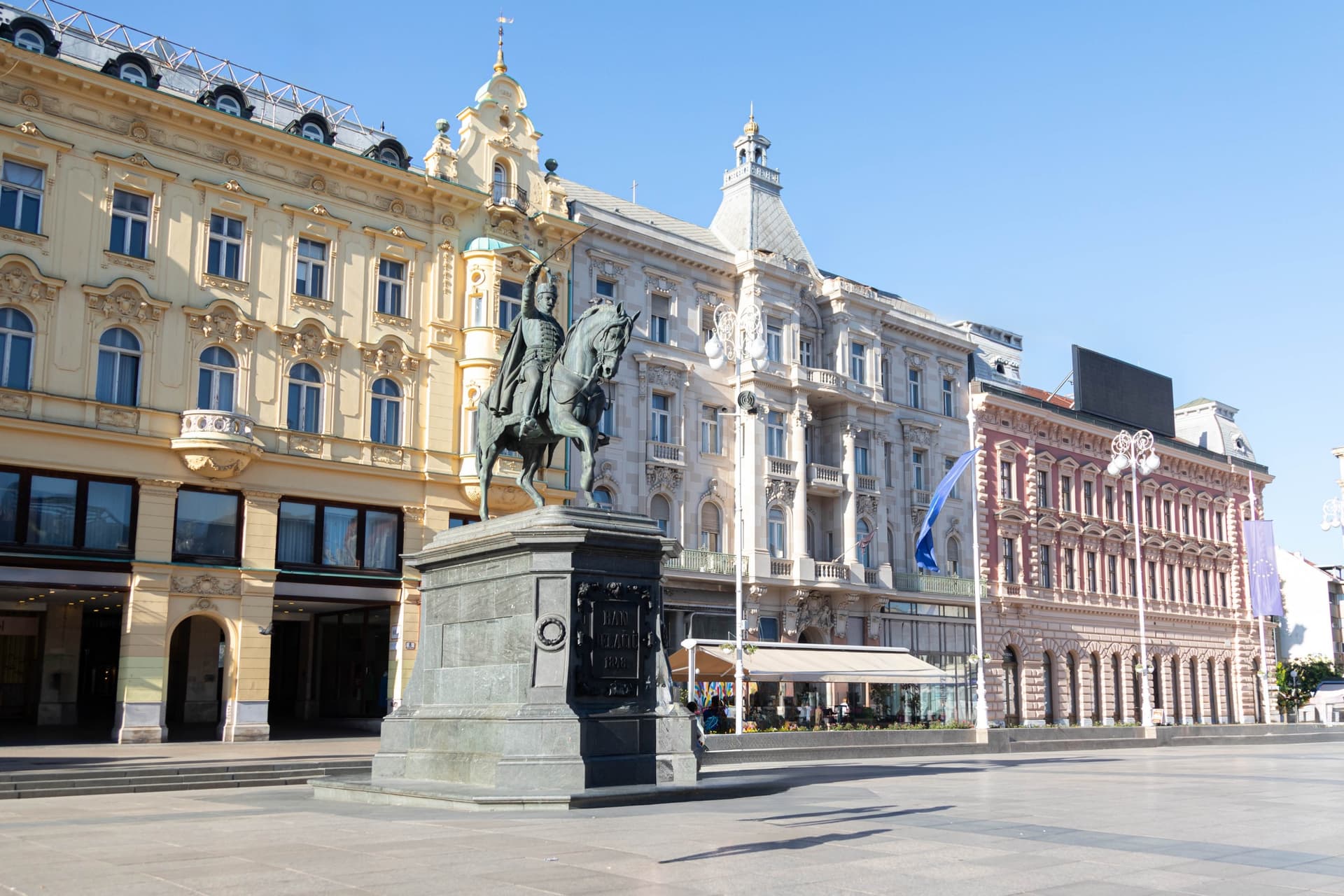
To visit, head to just a short walk from Ban Jelačić Square, in the heart of the Kaptol neighborhood.
Did you know?
Just next to Zagreb Cathedral, on the wall of the Kaptol Fortress, is the old cathedral clock that stopped working after the devastating earthquake of November 9, 1880. To this day, it still displays the exact time the quake struck the city: 7:03 and 3 seconds.
The Stone Gate (Kamenita vrata)
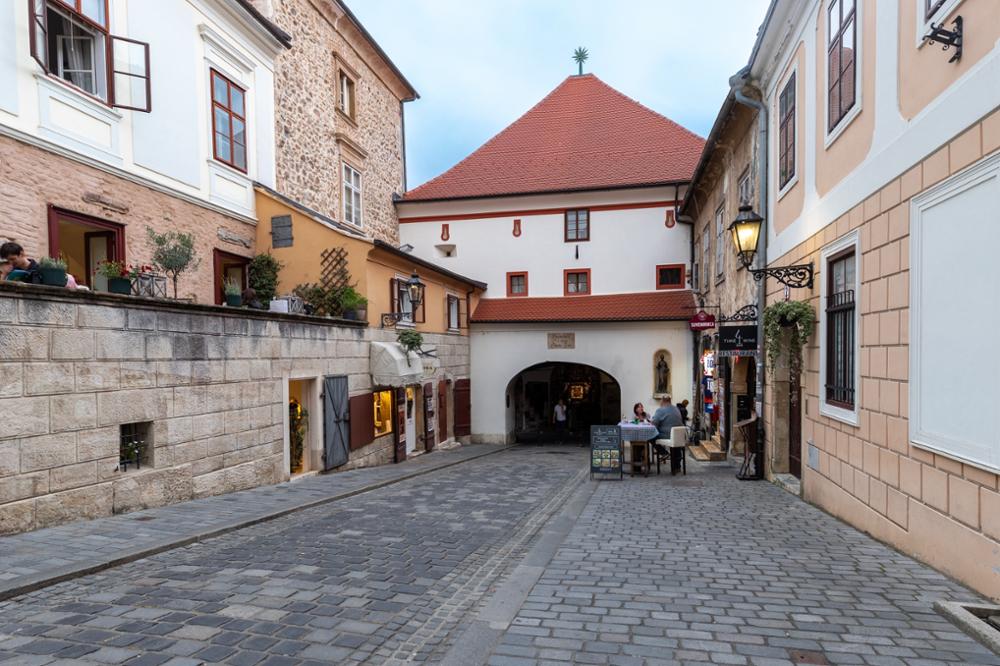
Accessible on foot from Zagreb Ban Jelačić Square, the Stone Gate (Kamenita vrata in Croatian) is the only remaining gate from Zagreb's original fortifications. Built in the 13th century as one of the city's four main gates, it houses a sanctuary and stone slabs bearing the image of the Mother of God.
For the record, the Sanctuary of Our Lady of the Stone Gate contains a painting of the Mother of God that miraculously survived a 17th-century fire. Since then, many locals and tourists have come to pay their respects. Take time to observe the stone slabs in the gate's passage—they have been engraved by residents. You can read a few words, such as "Hvala Ti," which translates to "Thank you."
To note:
Every Tuesday at 8 p.m., residents gather to sing and pray at the Stone Gate. If you happen to be passing through on a Tuesday, we recommend joining in to share this spiritual moment with the locals.
The Gric Tunnel
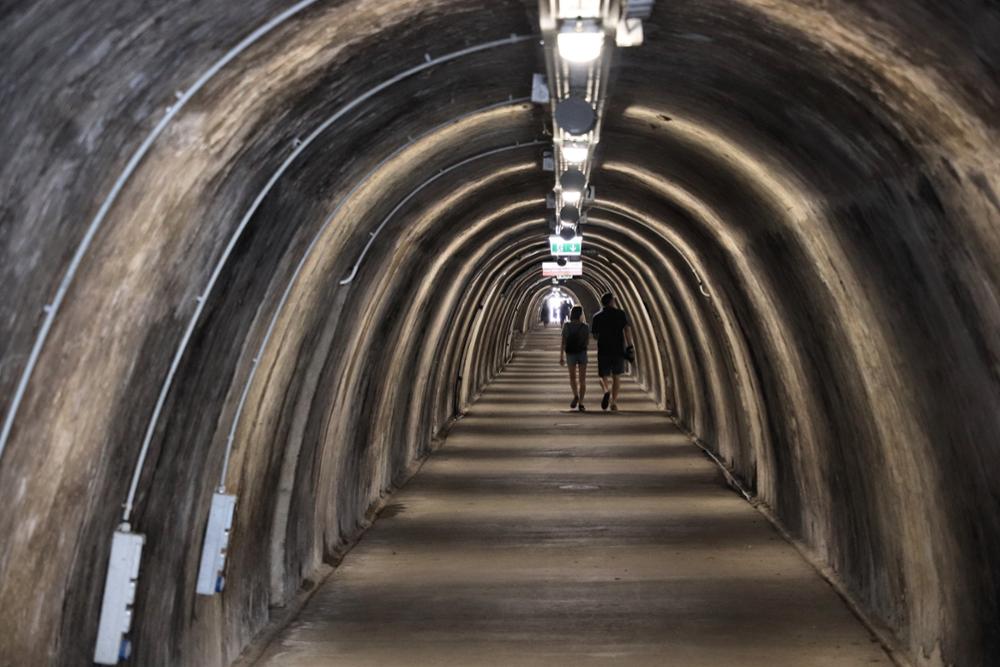
Here's an unconventional visit not to miss while exploring Zagreb's old town. Located beneath the Gradec hill, the Gric Tunnel was dug during World War II to serve as a shelter. It was also used during the Balkan Wars of the 1990s. Since 2016, the tunnel has been open to the public and regularly hosts cultural events.
Several entrances provide access to Gric Tunnel: the first is located at the foot of Strossmartre on Mesnicka Street, the second is near the funicular at the Art Park, and the third is accessible from Radiceva Street, near the small street Krvavi most.
Good to know:
The Gric Tunnel also serves as a shortcut between Mesnička and Stjepan Radić streets, allowing you to avoid climbing the hill.
Strossmartre Promenade
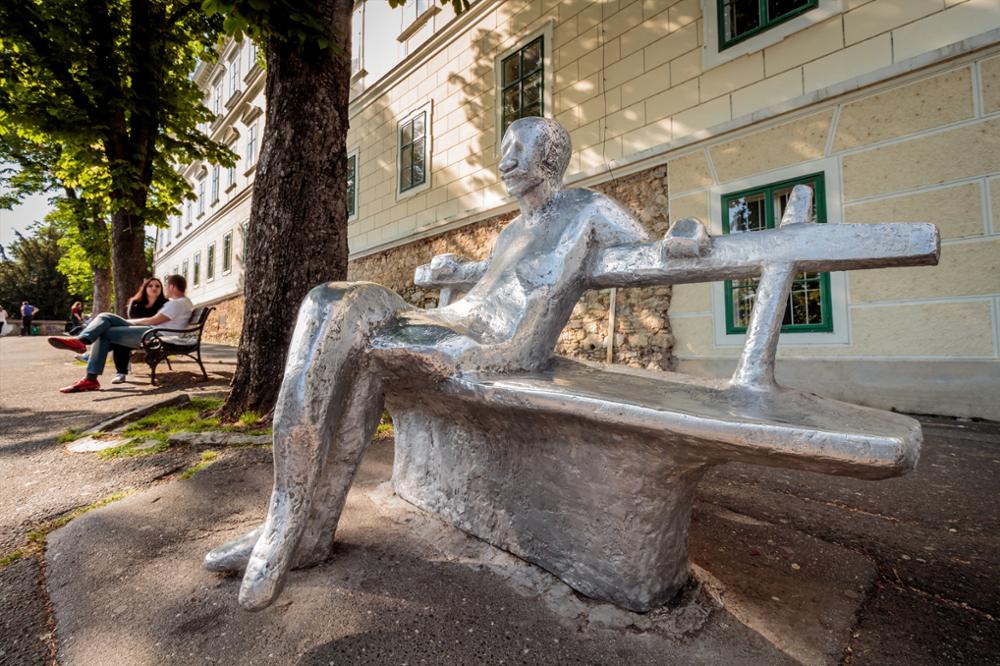
Strossmartre is the pedestrian street that runs along the Gradec hill. Often nicknamed the "Montmartre of Zagreb," this tree-lined street is perfect for strolling. You'll find a few food and drink stands as well as poetic installations for taking unique photos of the old town rooftops. Many concerts are held here, and the atmosphere is equally charming by day and by night.
To reach Strossmartre, you can take a pedestrian passage from Radičeva Street or take the funicular or stairs leading up to Tomićeva Street.
The Museum of Broken Relationships (Muzej Prekinutih Veza)
Here is a museum that is nothing short of unconventional and unexpected, located next to Lotrščak Tower. The Muzej Prekinutih Veza (Museum of Broken Relationships) is, as its name suggests, a museum dedicated to lost loves. What was originally meant to be a simple exhibition about the end of the relationship between film producer Olinka Vistica and sculptor Drazen Grubisic has evolved into a full-fledged museum that has grown over time.
During a visit, you can discover a collection of objects related to separations, donated by people from around the world. Each object (letters, photos, cards, stuffed animals...) is accompanied by an explanatory text. You'll find some funny and amusing stories, as well as others that are far sadder and more dramatic. Overall, it invites reflection on romantic relationships.
The Museum of the City of Zagreb (Muzej grada Zagreba)
If you wish to learn more about the history of the Croatian capital, visit the Museum of the City of Zagreb (Muzej grada Zagreba in Croatian). Located in a beautifully restored complex, the former Convent of the Poor Clares dating from 1650, the museum was founded in 1907 by the Society of Croatian Dragon Brothers. It houses over 75,000 objects tracing the cultural, artistic, economic, and political history of the city from prehistory to today.
Mirogoj Cemetery
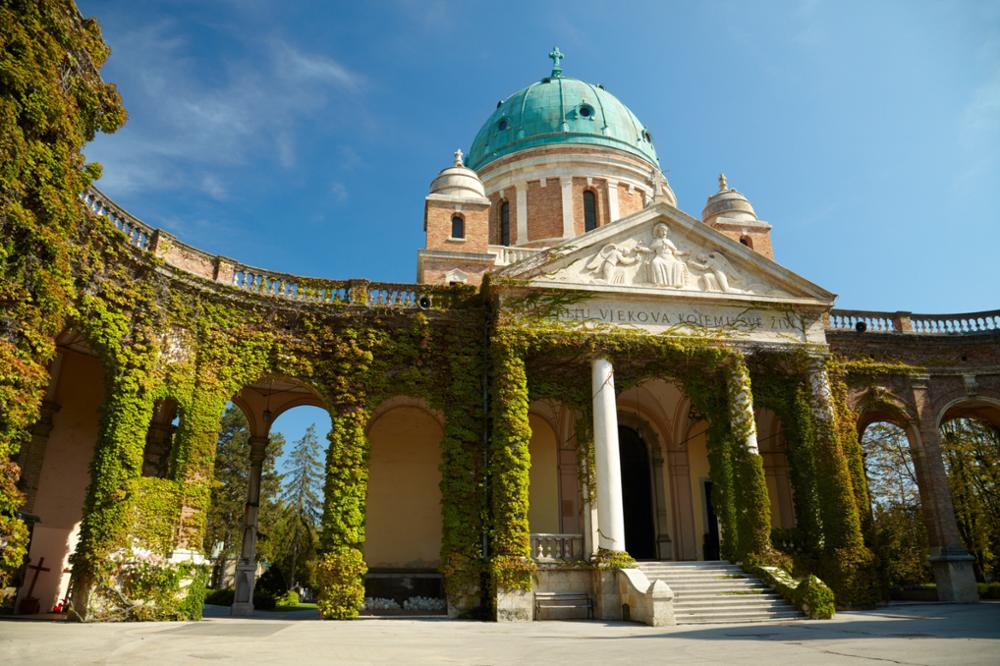
As surprising as it may sound, we strongly recommend visiting Mirogoj Cemetery. Considered one of Europe's most beautiful cemeteries and one of Zagreb's most remarkable monuments, it is unique in bringing together the deceased of all religions (Catholic, Orthodox, Muslim, Jewish...)
Envisioned in 1876 by German architect Hermann Bollé, the cemetery was designed in Neo-Renaissance style. Surrounded by monumental arcades, it contains numerous chapels and pavilions as well as impressive hundred-year-old trees.
Many notable Croatians are buried here. You'll find the graves of poets Petar Preradović and Antun Gustav Matoš, painter Vladimir Becić, and many others...
Maksimir Park
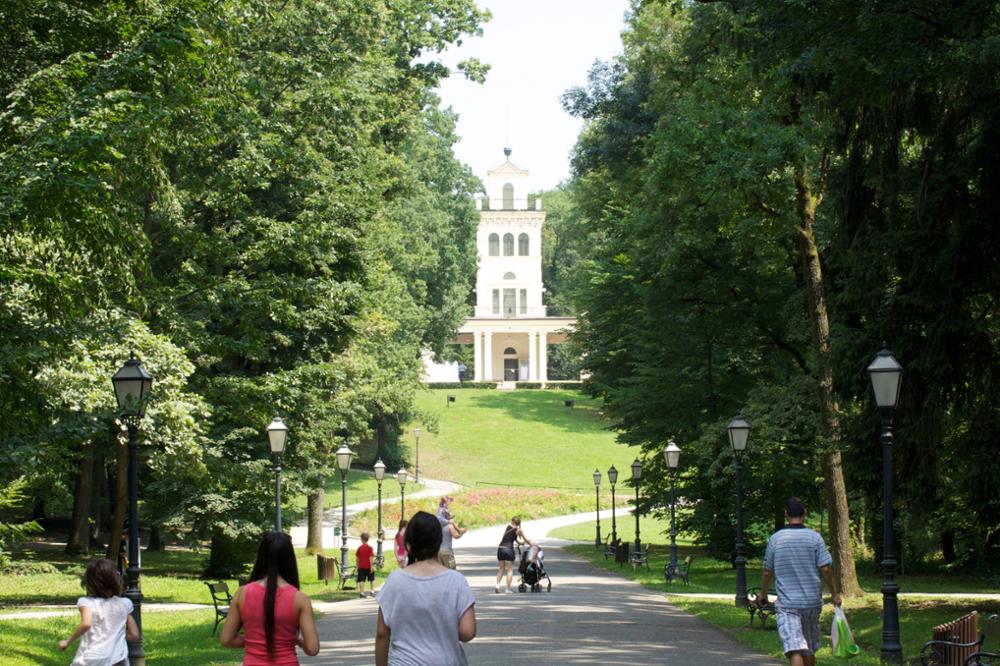
We conclude our tour of Zagreb's Upper Town by venturing away from the city center to discover Maksimir Park. Although it's not located in the old town, it absolutely deserves mention. Inaugurated in 1794, it is the oldest public park in the capital and one of the oldest in Europe. It's the ideal place to take a pleasant break away from urban hustle.
What to See and Do in Zagreb's Lower Town?
Also called "Donji Grad," the Lower Town of Zagreb is the newer and more modern part of the Croatian capital. Considered the city center of Zagreb, this is where you'll find the most activity and shopping. While not the historic section, the Lower Town has plenty of charm and contains numerous points of interest.
Dolac Market
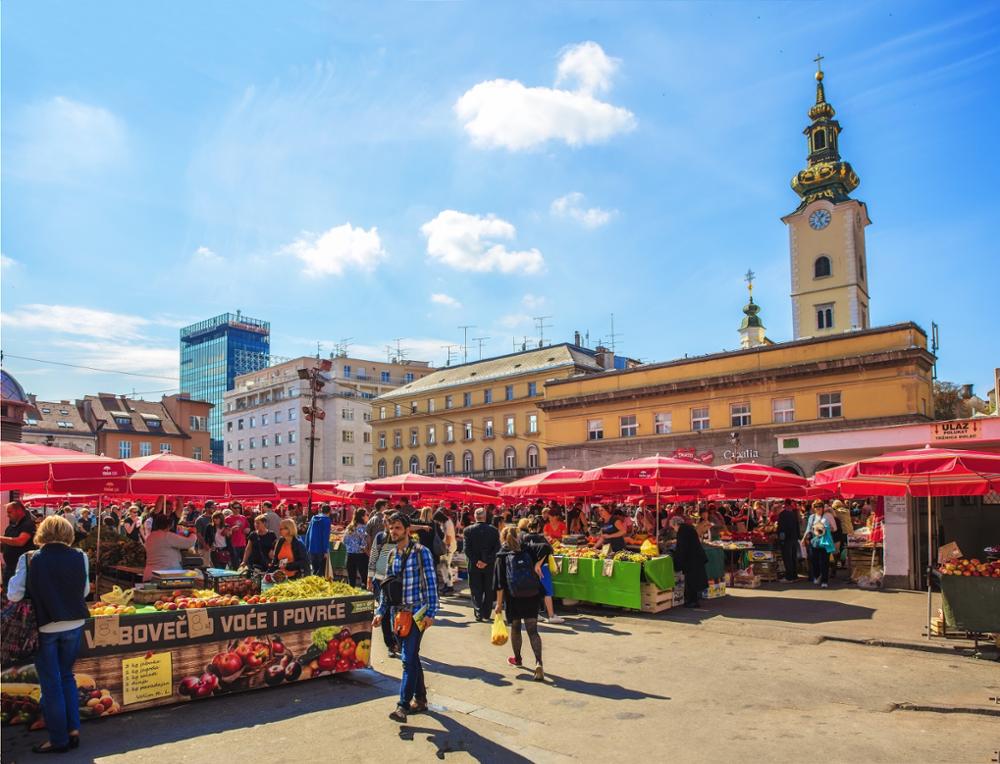
Located behind Ban Jelačić Square, between the Upper and Lower Towns, Dolac Market is a true Zagreb institution. And like everywhere else, there's no better place than a market to immerse yourself in local culture. Comprising a covered hall and outdoor stalls protected by the famous red umbrellas, Dolac Market brings together numerous local producers in an animated and convivial atmosphere.
You'll find mainly food products (fruits and vegetables, meat and fish, cheese, Croatian specialties...) as well as flowers. The market welcomes visitors daily from 7 a.m. to 2 p.m.
Good to know:
Do you love browsing? The city of Zagreb has a reputed flea market that takes place every Sunday on Britanski trg Square and along Ilica Street, the main street of the Lower Town.
Zrinjevac Park
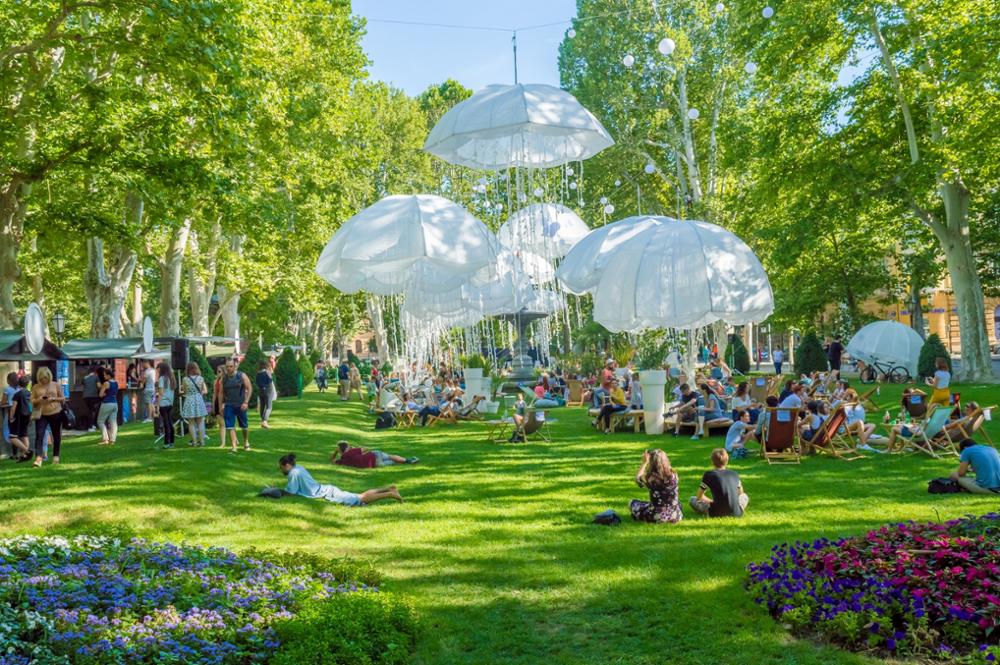
Zrinjevac refers to both a square and the park built around it. Until the end of the 19th century, the square was used as a livestock fair. It is one of eight squares designed by engineer Milan Lenuci. Because of its U-shaped layout, this ensemble was nicknamed "Lenuci's Green Horseshoe."
Today transformed into a park, it is among the favorite walks for locals and visitors alike. People come to stroll and admire the plane trees imported from Trieste and to observe local life. Concerts and other cultural events are regularly organized here.
What about the buildings around the park?
Zrinjevac Park is surrounded by a collection of monuments with Neo-Renaissance, Neo-Romanesque, and Classical architecture. Notable buildings include:
the Supreme Court of the Republic of Croatie,
the Zagreb Archaeological Museum,
the Croatian Academy of Sciences and Arts,
the Ministry of Foreign and European Affairs of the Republic of Croatie,
the Regional Court of Zagreb.
Zagreb Botanical Garden (Botanički vrt)
The Zagreb Botanical Garden is another green space worth exploring. Designed in 1889 by Antun Heinz, a professor at Zagreb University, it features English, French, and Asian garden styles. It includes an arboretum, a Japanese-style pavilion, lakes and ponds with turtles and aquatic plants, a French-style flower bed, and 14 tropical greenhouses. In total, over 10,000 different plant species are recorded here.
Croatian National Theatre
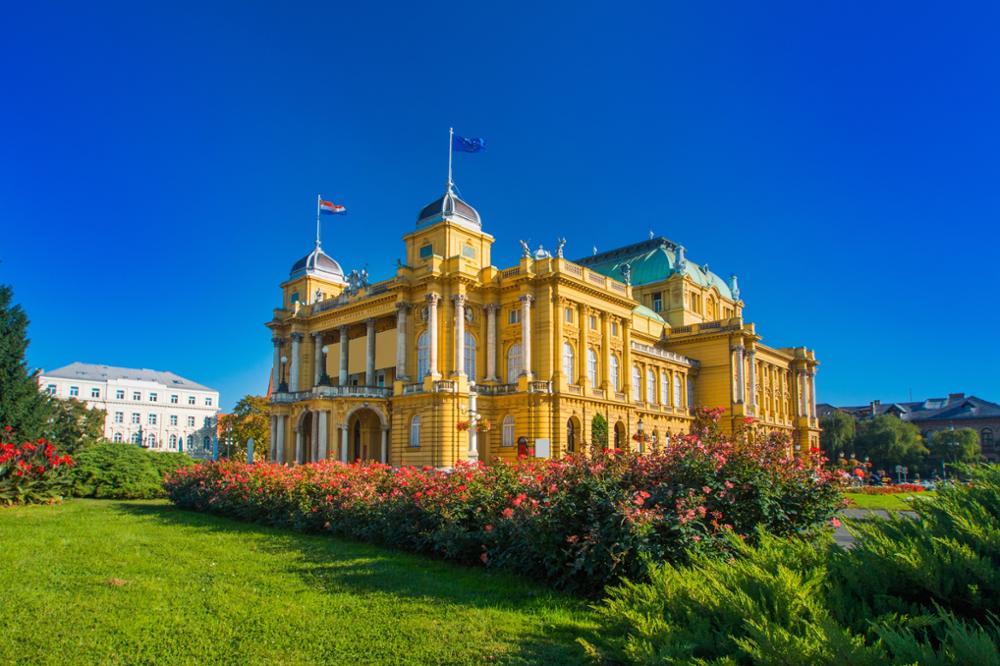
The Croatian National Theatre has been housed in a stunning Neoclassical building since 1895. Inaugurated by the Emperor of Austria-Hungary, Francis Joseph I of Austria, the building is the work of Viennese architects Ferdinand Fellner and Herman Helmer. It has welcomed the greatest Croatian artists, including Ivan Zajc, who was its first conductor.
To note:
It is not possible to visit the interior of the Croatian National Theatre unless you book a ticket to see an opera or ballet performance.
Lake Jarun
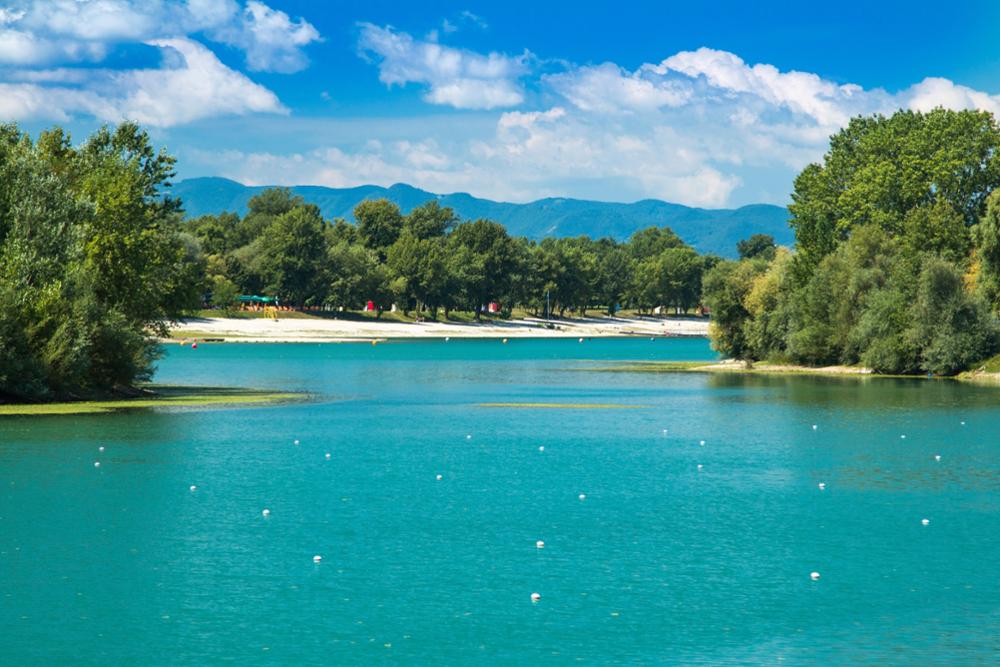
We conclude by venturing slightly away from the Lower Town to discover Lake Jarun. Located southwest of the city center, the lake resulted from gravel extraction from the Sava River. Developed from 1980 onwards, it is now Zagreb's largest recreation area.
It features a water sports zone designed for competitions and other areas where you can practice canoeing, rowing, pedal boating, or wakeboarding. Several pebble beaches also allow for a break and swimming.
Around the lake, numerous hiking trails and a cycling path are available for visitors. Additionally, you'll find several bars, restaurants, and even nightclubs. The site is also known for hosting the INmusic Festival, Croatie's largest international contemporary music festival in the open air.
Lake Jarun is accessible by tram (lines 5 and 17). It takes about 20 minutes from the city center.
Practical Information:
What is the best time to visit Zagreb?
Zagreb has a continental climate with distinct seasons. Summer is therefore the warmest season, but also the most touristy. In winter, it's cold, but the magic of the holidays gives the city a singular atmosphere, especially since it's possible to ski less than 30 minutes from the center. Ultimately, spring and autumn are the ideal seasons to enjoy mild weather and avoid crowds.
How much time should you plan to visit Zagreb?
We recommend planning at least 2 days to discover Zagreb's must-see attractions. A stay of 3 to 5 days will allow you to take your time and explore sites a bit further from the center, such as Maksimir Park and Lake Jarun.