Visiting Pula: What to see and do in Istria's jewel?
Located at the southern tip of the Istrian peninsula, Pula ranks among the most beautiful destinations in the region, and indeed throughout Croatie!
Located at the southern tip of the Istrian peninsula, Pula ranks among the most beautiful destinations in the region, and indeed throughout Croatie! This ancient city, rich with Roman heritage, attracts lovers of fine architecture and history. But the city extends far beyond its buildings and ancient remains—the region is also home to numerous natural treasures that will delight outdoor enthusiasts. Discover everything there is to do and see in Pula.
What to do in Pula's city centre?
Here are all the things to do and see in central Pula:
Visit the city's amphitheatre, one of the largest Roman amphitheatres in the world
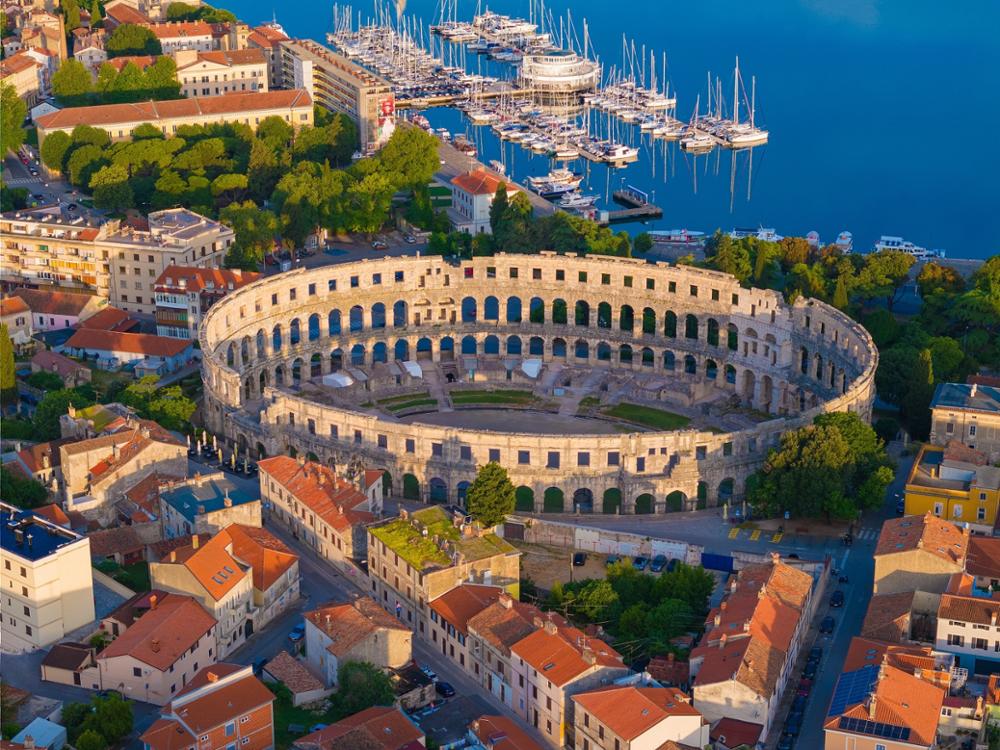
Also known as the Colosseum of Pula, Pula's amphitheatre is undoubtedly one of the emblematic symbols of this Croatian city. Built during the reign of Augustus (2–14 AD) before being reconstructed and enlarged, it is one of the rare Roman amphitheatres to have preserved much of its original structures.
Elliptical in shape, measuring 132 m in length and 105 m in width, it ranks among the six largest amphitheatres in the world. Dedicated to gladiatorial combats, it had a capacity of around 23,000 people!
When visiting Pula's amphitheatre, visitors can immerse themselves in history and discover beautifully preserved Roman architecture. For enthusiasts: gladiator combat reenactments are sometimes staged during summer.
The underground passages, which once housed gladiators and animals before combat, now contain a permanent exhibition on viticulture and olive oil production in Istria during antiquity. You'll see reconstructed Roman tools, olive presses, and wine crushers.
Did you know? Beyond its historical value, the amphitheatre is also considered a major cultural and artistic hub. In fact, it hosts Croatia's oldest film festival each year: the Pula Film Festival. Thanks to its exceptional acoustics, numerous concerts and operas are also organised here. International artists such as Elton John, Robbie Williams and Dua Lipa have already performed there. |
See the Forum and visit the Temple of Augustus
The Forum
It's impossible to visit central Pula without passing through the Forum square. Also called Trg Forum or Republic Square, it is the city's oldest square. During Roman times, it was the main square and the city's nerve centre, where major public events took place. Today, it remains a central square and a popular venue for cultural events.
The Temple of Augustus
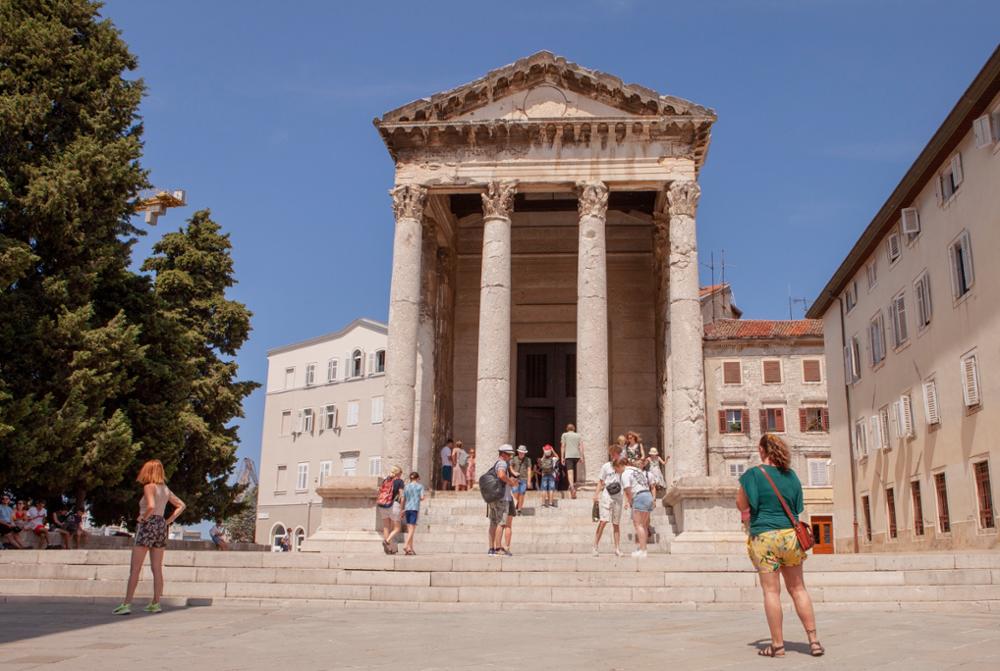
On the square, you'll also discover the Temple of Augustus, a Roman temple built in the early 1st century (between 2 BC and 14 AD), characterised by a rectangular structure supported by sublime Corinthian columns. As its name suggests, the temple was first dedicated to Roman Emperor Augustus before being transformed into a church by the Byzantines, then into a grain store. Today, it houses a lapidary museum where you can admire a collection of ancient sculptures in bronze and stone.
Good to know: Other remains of the Roman city can be found around the Forum square. In fact, the town hall, known as Pula's Communal Palace, was built on the ruins of a Roman temple, with some parts still visible. This was the Temple of Diana. Head to the rear facade to see traces of the foundations... |
Admire and walk through the Arch of the Sergii
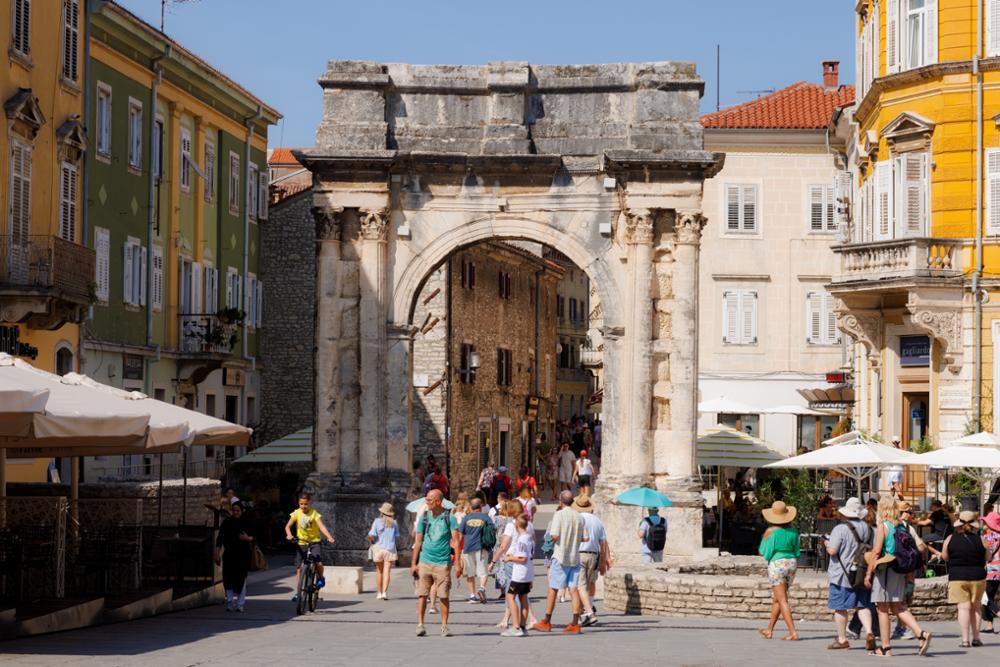
Continue your visit through historic Pula with the discovery of the Arch of the Sergii, a triumphal arch built in 29–27 BC. Standing 8 m high, this arch of triumph was erected beside one of the city gates (Porta Aurea or the Golden Gate) and thus marked the heart of the city.
It was built in honour of the Sergii to commemorate their participation in the Battle of Actium victory. As the monument's main inscription proclaims, its construction was financed by the wife of Lepidus, Salvia Postuma Sergia, sister of the three Sergii brothers. With its sophisticated ornaments and excellent state of preservation, this Roman architectural edifice is a must-see in Pula.
Learn at the Istrian Archaeological Museum
Housed in the former Royal Gymnasium building from 1890, the Istrian Archaeological Museum retraces the fascinating history of the region, from prehistory to the early Middle Ages, through an incredible collection of archaeological pieces.
Displayed across three levels, the exhibition presents, on the ground floor, treasures from the Early Christian period such as funerary stelae and fragments of sarcophagi from the 5th century. The first floor houses a collection of prehistoric objects as well as a section dedicated to the influence of Eastern religions in Roman cities. As for the second and final floor, it displays objects collected from the Roman Empire and Middle Ages (coins, ceramics, mosaics, etc.).
Climb to Kaštel Fortress (Venetian fortress)
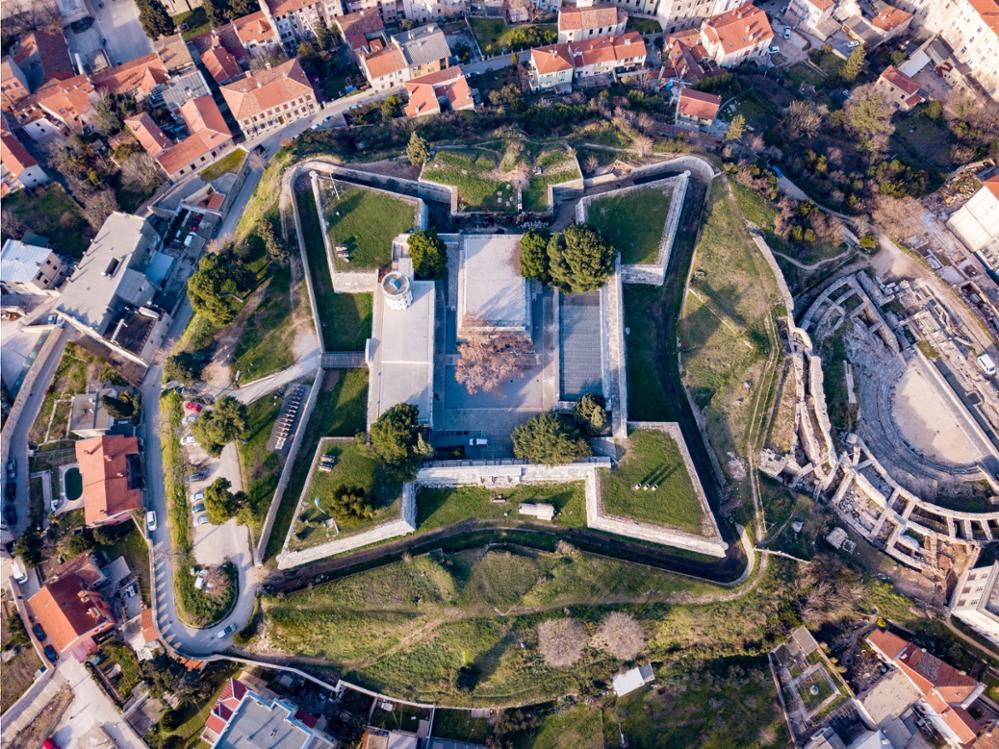
Kaštel Fortress is a Venetian fortress built in the 17th century when the city was occupied by the Republic of Venice. Its construction, with a quadrangular plan and four star-shaped bastions at the corners, is the work of French military architect Antoine de Ville. It was built to protect Pula's port and city, which at the time was an important hub on the main maritime route to the Orient.
Kaštel Fortress currently houses the Istrian History and Maritime Museum. It contains a fine collection of antique weapons, maps from the period, tools, original furnishings from the naval casino, uniforms of Austro-Hungarian naval sailors and officers, naval medals, and more.
Even if history isn't your passion, we recommend climbing to the fortress to enjoy a stunning view of Pula. Perched atop a hilltop, you'll benefit from a sublime panorama of the old town, the port and the endless horizon...
Relax on the beaches
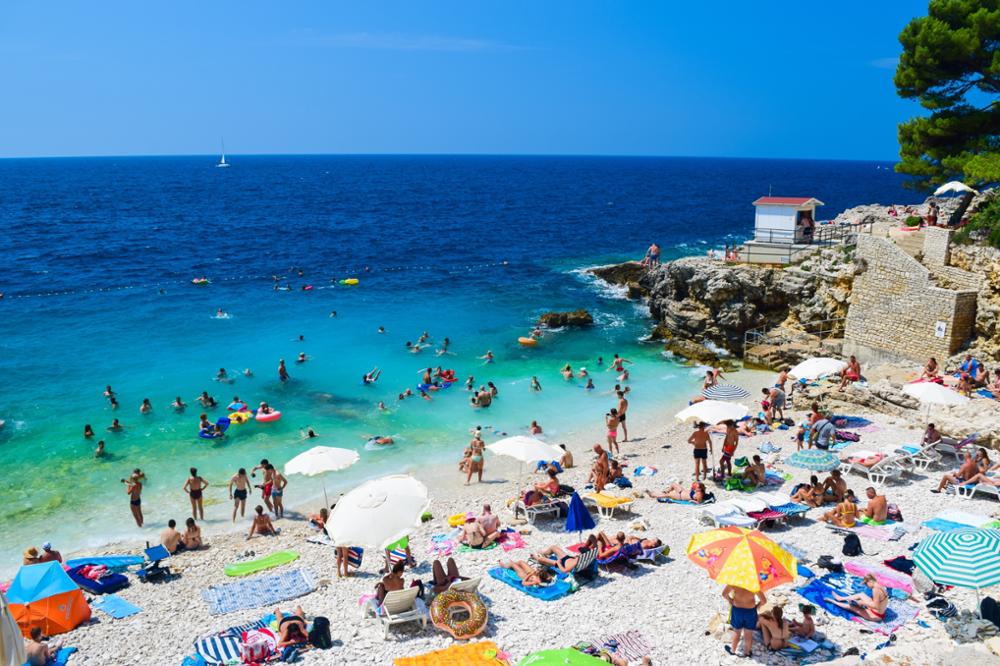
The city of Pula is surrounded by magnificent beaches and coves where you can enjoy some well-deserved relaxation. Although there is no direct access from the centre as they are located in the surrounding areas, Pula's beaches are easily accessible by bike or bus.
Among Pula's most beautiful beaches, we recommend:
Stoja Beach,
Verudela Beach,
Valkane Beach,
Gortanova Uvala Beach,
Stinjan Beach,
Hawaii Beach (Havajsko),
Hidrobaza Beach,
Prementura Beach,
Ambrela Beach,
Histria Beach,
Banjole Beach,
Bijeca Beach...
To note: Apart from a few sandy beaches, most beaches in the region feature pebbles. Remember to bring water shoes for swimming! |
Take a boat trip: dolphin-watching cruises, sunset tours...
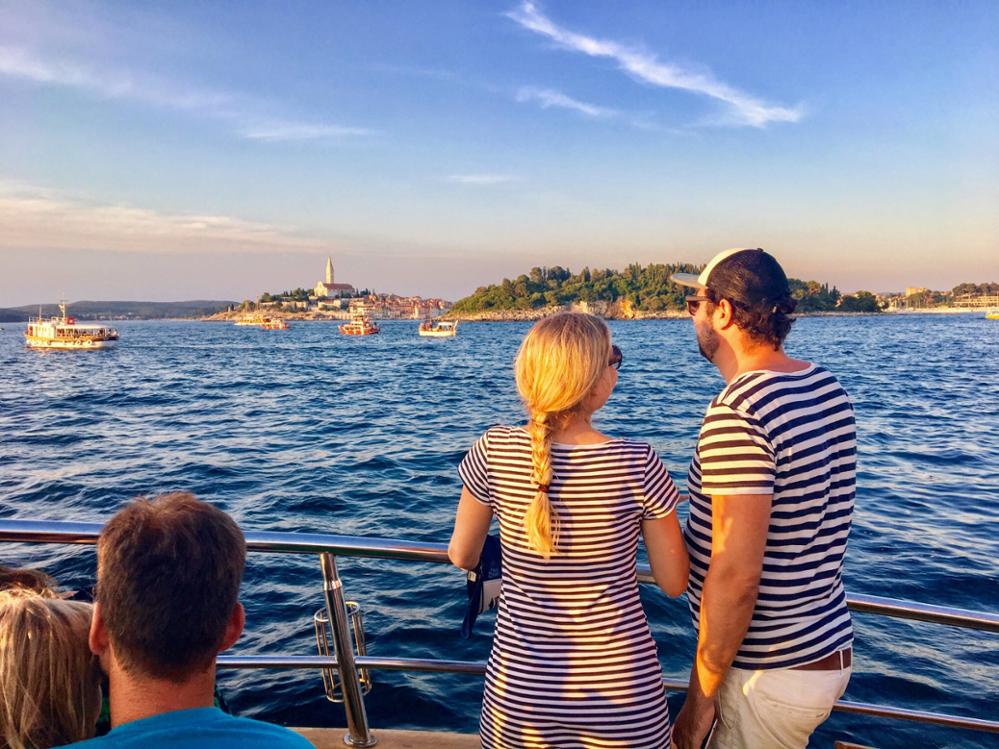
For a feast for the eyes, to see Pula's coast from another perspective and discover the marine life that populates the region's waters, how about treating yourself to a boat trip? Options are plentiful and you'll have several themes to choose from:
Boat ride along the coast with stops in wild coves accessible only by sea;
Boat excursion to Brijuni National Park;
Boat trip with snorkelling stops and cave exploration in the region;
Dolphin-watching cruise;
Sunset tour: sunset with festive atmosphere or romantic dinner...
Note: For the more adventurous, exploring Pula's coastline and surroundings can be done by kayak or stand-up paddle. You can rent them on-site or participate in an organised tour. Don't hesitate to contact us if you're interested! |
Taste local specialities and browse Pula's central market
Pula's cuisine harmoniously blends Mediterranean and Balkan flavours. You'll find typical regional specialities such as fuži, handmade pasta rolled by hand that is often served with a truffle sauce made from Istrian truffles.
In addition to treating your taste buds in Pula's restaurants, you can also discover local produce by visiting the city's central market.
Located in an Art Nouveau building dating from 1902, Pula market features numerous stalls where you can find fresh produce (fish, meat, fruits and vegetables, including the famous Istrian truffles...) as well as many regional specialities such as locally pressed olive oil, sheep's cheese, smoked Istrian ham like Istarski Pršut, Sardele na Savur (marinated sardines), honey, walnuts and much more...
Time to treat yourself, shop and bring back travel souvenirs!
What to do around Pula?
Discover all the things to do and see in the Pula area:
Hike or cycle at Cape Kamenjak
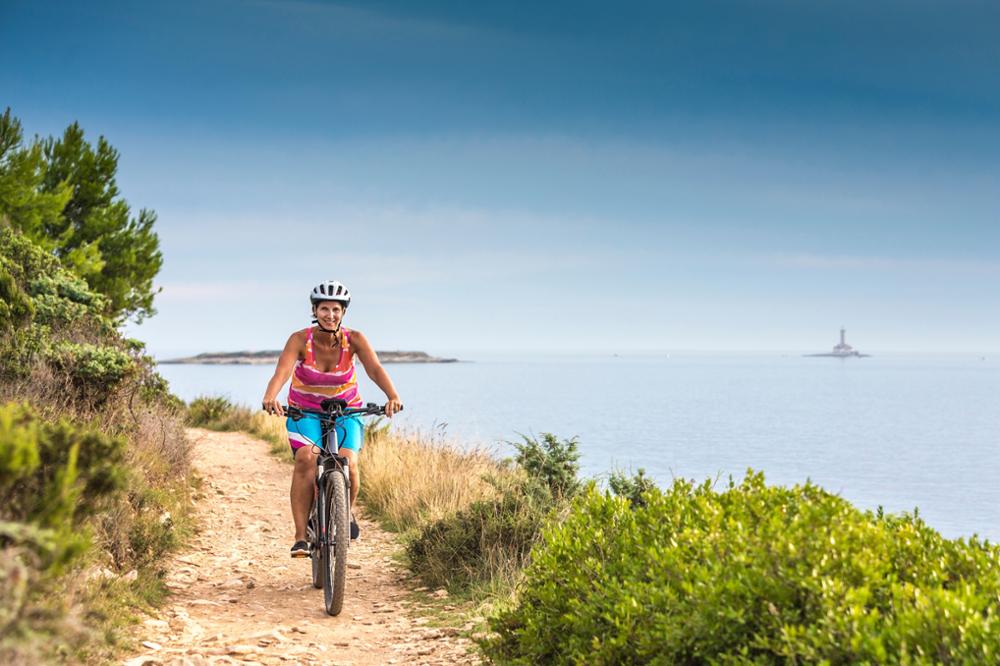
Located at the far south of the Istrian peninsula, Cape Kamenjak constitutes the southernmost point of Istria. Situated on a peninsula, the site is known for its coastline featuring 30 bays and 11 islands forming an archipelago. You can reach it by car, bike or boat.
Beyond its cliffs and numerous coves inviting you to swim, this scenic park is renowned for its fauna and flora. You'll find 600 plant species including medicinal and aromatic plants as well as numerous orchids. Wildlife-wise, Cape Kamenjak is home to numerous butterflies, reptiles, amphibians, birds... The waters surrounding the cape also harbour Mediterranean monk seals.
To discover all these natural treasures and enjoy some fresh air, you can follow hiking trails on foot or cycle through the network of cycling tracks.
Explore Brijuni National Park
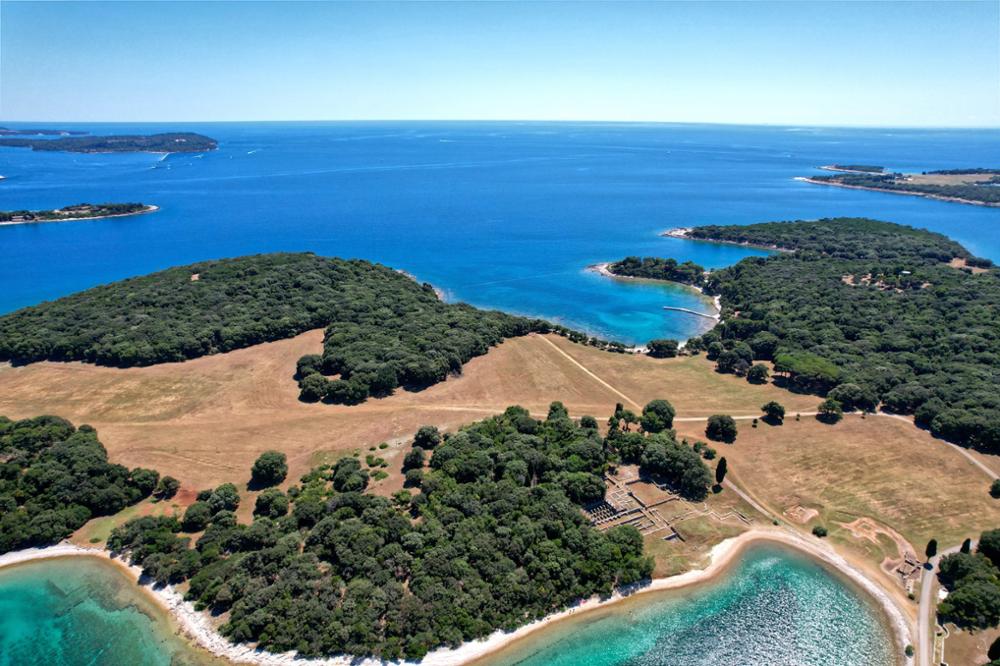
Located a few kilometres north-west of Pula, Brijuni National Park is one of the region's natural jewels and a must-see destination. It's even one of Croatie's most attractive tourist destinations. Accessible only by boat from Fažana port, 7 km from Pula, the park consists of an archipelago of 14 islands and islets.
The archipelago has a fascinating history: it was once a Roman naval station before becoming the summer residence of Marshal Tito, the former leader of former Yugoslavia, who brought many political figures and celebrities (like Queen Elizabeth, actresses Sophia Loren and Elizabeth Taylor...). The archipelago was finally designated a national park in 1983.
What to do during a day trip to the Brijuni Islands:
Tour in a tourist train through Safari Park: you can see many animals (llamas, South American camels, elephants, sea turtles, zebras, sacred cows from India...), some of which were gifts from visiting celebrities;
Visit the remains of an incredible Byzantine castrum in Madonna Bay;
Discover dinosaur footprints on the island of Veliki Brijun (the archipelago's main island), on the Ploče and Vrbanj capes;
Explore a luxury Roman villa dating from the first century BC along Verige Bay;
Visit the remains of the Basilica of Santa Maria, an ancient three-nave church built in the 5th and 6th centuries;
Swimming and kayaking along steep coastlines;
Bike ride on the 24 km network of cycling paths;
Various sports: diving and snorkelling, golf, tennis, volleyball, football...
Discover the region's charming villages
While the Istrian region attracts visitors for its coastal landscapes and numerous beaches—among Croatie's most beautiful—the inland areas are equally worth visiting. You'll find charming medieval villages such as Rovinj, Poreč, Novigrad, Hum, Grožnjan...
This is why we recommend reserving a day or two to discover the region's villages. You can rent a car or use our services to benefit from a private driver.
Spend a day in Venice
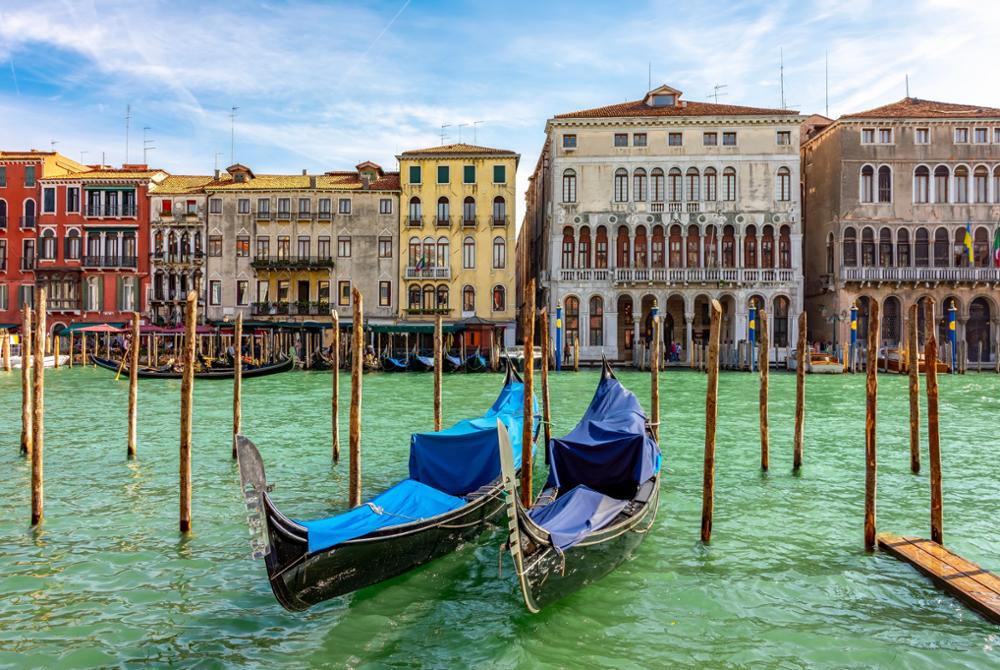
You may not know it, but the city of Venice is only 182 km from Pula. Accessible by ferry, bus or car, many excursions offer visits to Venice from Pula. It's an intense visit, but one that can be considered for those wishing to discover the world's most romantic city during the same Croatie trip! And for those with time, you can always plan to spend a night or more there before heading back to Pula!
Don't hesitate to contact us to arrange your journey!
Practical information for visiting Pula
How to get to Pula?
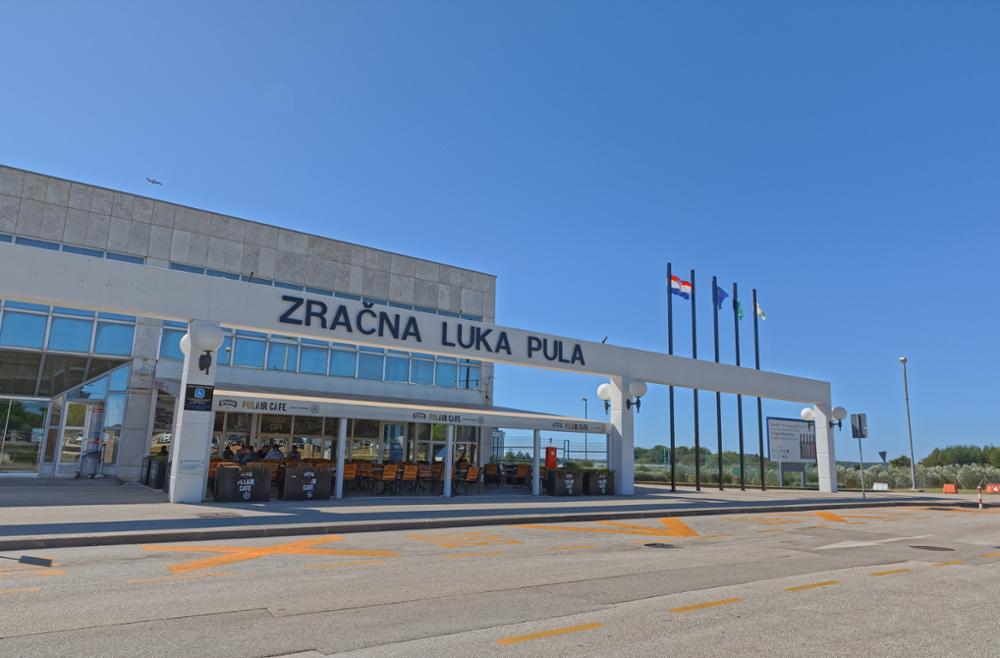
The quickest way to reach Pula is by plane. The city has an airport, located 5 km from the city centre, served by flights from Paris and other European cities (from Italy or Slovenia, for example).
If you're already in Croatie, you can take a bus from most major cities in the country such as Zagreb and Zadar. Trains also pass through the railway station, nestled by the sea. It is served daily by Zagreb and Ljubljana via Rijeka.
Finally, for cruise lovers, note that maritime connections link Pula to Venice and the main coastal towns of the Adriatic.
How long should you plan to visit Pula?
A full day, or even two days on-site, is sufficient to visit central Pula. However, if you want to take your time and explore the treasures of the surrounding area, such as Brijuni National Park and the charming villages of Istria, plan for at least 4 to 5 days.
What is the best time to visit Pula?
Wondering when to visit Pula? With a Mediterranean climate, the Pula region can be visited year-round.
The summer season has its advantages: temperatures are high, allowing you to enjoy beaches and water activities. It's also when the city organises the most cultural events. However, it's the tourist season, when there are more tourists and prices are higher.
If you want to enjoy pleasant temperatures without being overwhelmed by crowds of tourists while benefiting from more advantageous rates, it's better to plan a trip to Pula in shoulder season: spring (March to May) or autumn (September to November) in order to
Need help planning your stay in Pula and your Croatie trip? Feel free to contact us! In the meantime, discover all the reasons to travel to Croatie for your next holiday as well as our travel itinerary discovering Istria.