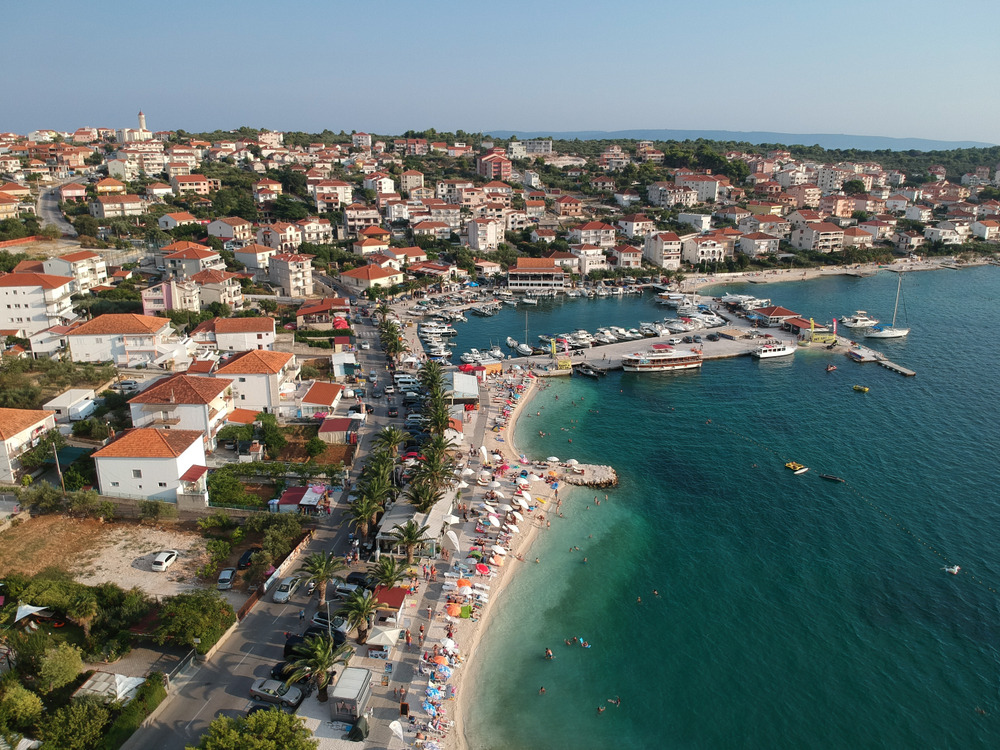
Transportation in Croatia
With its historic cities, paradisiacal islands, and natural parks, Croatia offers a transportation network suited to every type of journey. Explore the Adriatic coast, reach an island, traverse the hinterland... Here's a guide to organizing your travels.
With its historic cities, paradisiacal islands, and natural parks, Croatia offers a transportation network suited to every type of journey. Explore the Adriatic coast, reach an island, traverse the hinterland... Here's a guide to organizing your travels.
The bus network
Major bus operators
Croatia's bus network is managed by several companies. Market leader Arriva serves most tourist sites with modern buses. Croatia Bus and Autotrans offer regular routes between Zagreb, Split, and the Dalmatian coast.
For international travel, FlixBus provides connections to neighboring countries at competitive prices. Čazmatrans focuses on local routes, connecting villages to major cities.
Buses offer good comfort with air conditioning and WiFi. Popular routes like Zagreb–Split or Zagreb–Dubrovnik are served by multiple operators.
Fares and ticket booking
Bus fares depend on distance. For example, a Zagreb–Split journey costs around €30, and Zagreb–Dubrovnik €45. Book your tickets on sites like GetByBus or directly at bus station counters.
By booking in advance, you can get up to 30% discount on certain routes. Students and seniors also benefit from reduced fares with proof of eligibility.
A surcharge of €2–3 is charged for each piece of checked baggage. To save money, consider round-trip tickets, often 10–15% cheaper than two one-way fares.
Night-time connections available
Night buses offer an economical option for traveling between major tourist cities. For example, the Zagreb–Split route offers departures at 11 p.m. and 1 a.m., with early morning arrival. Reclining seats and footrests ensure a comfortable journey.
Night routes also connect Split to Dubrovnik and Zadar to Zagreb, helping you save time and accommodate costs. These services are available mainly from April to October, with more departures during peak season.
Buses are equipped with reading lights, USB ports, and blankets upon request. Book in advance, especially in summer, on popular itineraries like Zagreb to the Dalmatian coast.
Car rental for greater freedom
Requirements and necessary documents
To rent a vehicle in Croatia, you must provide a valid driver's license held for at least one year and up-to-date ID. A credit card in the primary driver's name is also required for the security deposit.
Minimum age requirements vary between 21 and 25 years depending on the agency. If you plan to cross borders into Bosnia and Herzegovina or Montenegro, inform the rental agency at booking. These authorizations are chargeable and must be included in your contract.
In summer, book several weeks in advance, especially for family cars and convertibles, which are in high demand on the Adriatic coast.
Rental costs and insurance
A compact car rents from €35 per day in low season and €55 in July–August. Basic insurance is included. For a family sedan, expect €45–75 per day. The standard excess is €800, but can be reduced for a surcharge of €8–15 per day.
To cross borders into Montenegro or Bosnia and Herzegovina, a tax of €25–50 applies. For ferry transport, request a special authorization for €15.
Optional insurance includes tire and windshield protection (€6/day), undercarriage coverage (€7/day), and 24/7 assistance (€5/day). An additional driver incurs a supplementary cost of €5–10 per day.
Road network condition
Croatia has a modern and well-maintained road network. Motorways connect Zagreb, Split, and the Dalmatian coast rapidly.
The coastal road, the Magistrale, offers stunning views of the Adriatic. National roads are free of charge and allow you to discover the country's interior.
In mountainous areas, secondary roads are somewhat winding but remain in good condition. Road signs are clear and conform to European standards.
Parking in major cities
Major Croatian cities use a color-coded parking system. The red zone, located in historic centers, limits parking to 1 hour for €0.50–2. Yellow zones allow 2-hour parking at moderate rates, and green zones offer up to 3 hours at reduced rates.
In Zagreb, modern underground parking offers daily rates from €15. In Dubrovnik, rates can reach €11 per hour in peak season near the city walls.
Payment is made by SMS or at parking meters that accept local currency and credit cards. Apps like PayDo or Mobilsis enable remote payment. Checks are frequent, and fines for non-payment start at €40.
Maritime links between islands
Ferry operators
Navigation between Croatian islands is managed by several companies. Jadrolinija, the national operator, handles most crossings with its ferries and catamarans. Private operators like Krilo and Kapetan Luka also offer fast-track connections.
For islands in Kvarner (Cres, Krk, Rab), Rapska Plovidba ensures regular crossings. On the Dalmatian coast, TP Line offers rapid routes between Split, Hvar, and Korčula.
Travelers appreciate speedboats that connect islands like Dugi Otok near Zadar to the mainland.
Schedules by season
Crossing frequency changes by season. During peak season, June through September, there are up to 20 departures daily on major routes like Split–Hvar.
In April, May, and October, crossings are less frequent, with 5–7 departures per day. This is a period appreciated by travelers as boats are less crowded.
In winter, November through March, service is reduced to 1–2 departures per day, and certain connections to less-visited islands like Vis or Lastovo are suspended. Schedules are available on transport operators' websites.
Passenger and vehicle fares
Crossing prices depend on destination and transport type. A foot passenger will pay between €4 and €25 for a crossing to nearby islands like Brač or Hvar. For Mljet or Korčula, the fare is €22–25 per person.
Vehicle transport costs extra. For a car, the price ranges from €75 to €250 depending on distance. Motorcycles and scooters enjoy reduced rates: approximately €40 for a scooter and €55 for a motorcycle.
For a family of 4 with a car, a one-way trip to Hvar costs around €150. Advance online booking often allows 10–15% discounts.
The rail network
Main train routes
Croatia's rail network is centered around Zagreb, the main departure point. The main line connects Zagreb to Split in 6.5 hours, offering a day journey or an appreciated night train.
Other major network connections link Zagreb to Rijeka and Osijek. The Dalmatian coast is poorly served by rail, with Split and Šibenik being the only accessible cities.
InterCity trains are used for most domestic routes. For international travel, direct trains connect Zagreb to Ljubljana, Budapest, and Munich, making the capital a strategic hub for exploring Central Europe.
Ticket prices and discounts
Train fares in Croatia are attractive. A Zagreb–Split ticket starts at €29 in second class. Those under 26 and seniors over 60 receive 20% discount with valid ID.
Available for €35 per year, the HŽ loyalty card offers 40% discount on all domestic routes. For families, children aged 4–12 travel at half price, and children under 4 travel free. Seasonal promotions are often available, particularly in spring and autumn.
Urban transportation in major cities
Municipal bus networks
Public transportation is well-developed in Zagreb and Split. In Zagreb, over 130 routes serve all neighborhoods from 5 a.m. to midnight. A single ticket costs €2 and is valid for 90 minutes.
Buses in Dubrovnik and Zadar are punctual, with service every 15–20 minutes during the day. The ZET Zagreb app allows real-time schedule tracking and digital ticket purchase.
Weekly passes are economical for longer stays. For example, a 7-day pass costs €15 in Split and €20 in Rijeka. Central stops feature maps and up-to-date information displays.
Taxi and ride-hailing services
Uber and Bolt apps facilitate taxi travel in Croatia's major tourist cities. Fares are transparent, with pickup from €3 and an average rate of €1.20 per kilometer.
Traditional taxis remain a reliable option, especially in Zagreb. A trip from the airport to the city center costs approximately €25.
For premium services, Blacklane offers private drivers with sedans from €45 per hour.
You can also book by phone by calling the national number +385 970 to connect with the nearest taxi.
Bicycle and scooter rental
In major Croatian cities, bike-sharing systems are available with a day pass at €10 or weekly pass at €25. In Zagreb, over 20 stations are distributed throughout the center and neighboring districts.
Lime and Bird electric scooters are accessible in Split, Dubrovnik, and Zadar. Unlocking costs €1.50, then €0.25 per minute of use.
For cycling enthusiasts, shops offer mountain bikes and e-bikes for exploring national parks. A standard mountain bike rents for €20 per day, while an electric model costs €45. Book in advance during peak season from May to September.