Vrelo Bosne
Vrelo Bosne
On the outskirts of Sarajevo, the Vrelo Bosne park protects the sources of the Bosna River across 603 hectares, developed since the Austro-Hungarian era.
Vrelo Bosne, literally source of the Bosna, is a natural park located on the western outskirts of Sarajevo, near the municipality of Ilidža. The site, organized around the sources of the Bosna River, is classified as a natural monument and constitutes one of the favorite walks of Sarajevo's residents.
Why visit Vrelo Bosne
The park combines three interests rarely found on the same site: a remarkable hydrological heritage (the sources that give birth to the Bosna River), an Austro-Hungarian architectural legacy still visible in the avenues and bridges, and protected biodiversity across 603 hectares. About twenty minutes from central Sarajevo, it is the most accessible green escape from the city, with a setting suited to both family walks and nature observation.
The water that springs here supplies part of the urban area via the Bačevo system, after natural filtration through the limestone rocks of Mount Igman. This practical dimension explains why the site is subject to strict protection.
History of the site
The area has been frequented since antiquity. A Roman bridge crossed the river nearby, leading to the village of Aquae Sulphurae, whose thermal springs were already being exploited. On these foundations, the Ottomans built a new stone bridge between 1530 and 1550, whose remains are still visible today.
The development of the park as it is walked today began in the 1890s under Austro-Hungarian administration. Viennese engineers laid out the Grand Avenue, planted thousands of trees, and built the thermal villas of Ilidža, transforming the area into a prized resort for the empire's aristocracy.
The park suffered significant damage during the Bosnian War (1992-1995), notably tree felling for heating. A restoration program launched in 2000 made it possible to recreate the avenues and vegetation. In 2006, Vrelo Bosne received official status as a protected natural monument. Today, it is estimated to attract over 60,000 visitors per year.
What to see and do on site
The springs and ponds
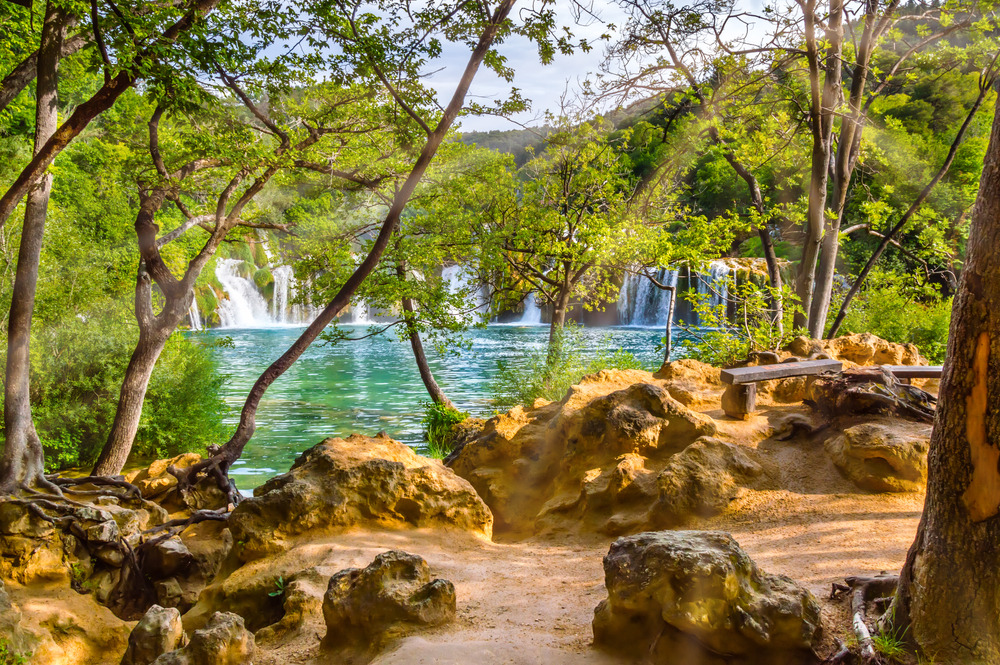
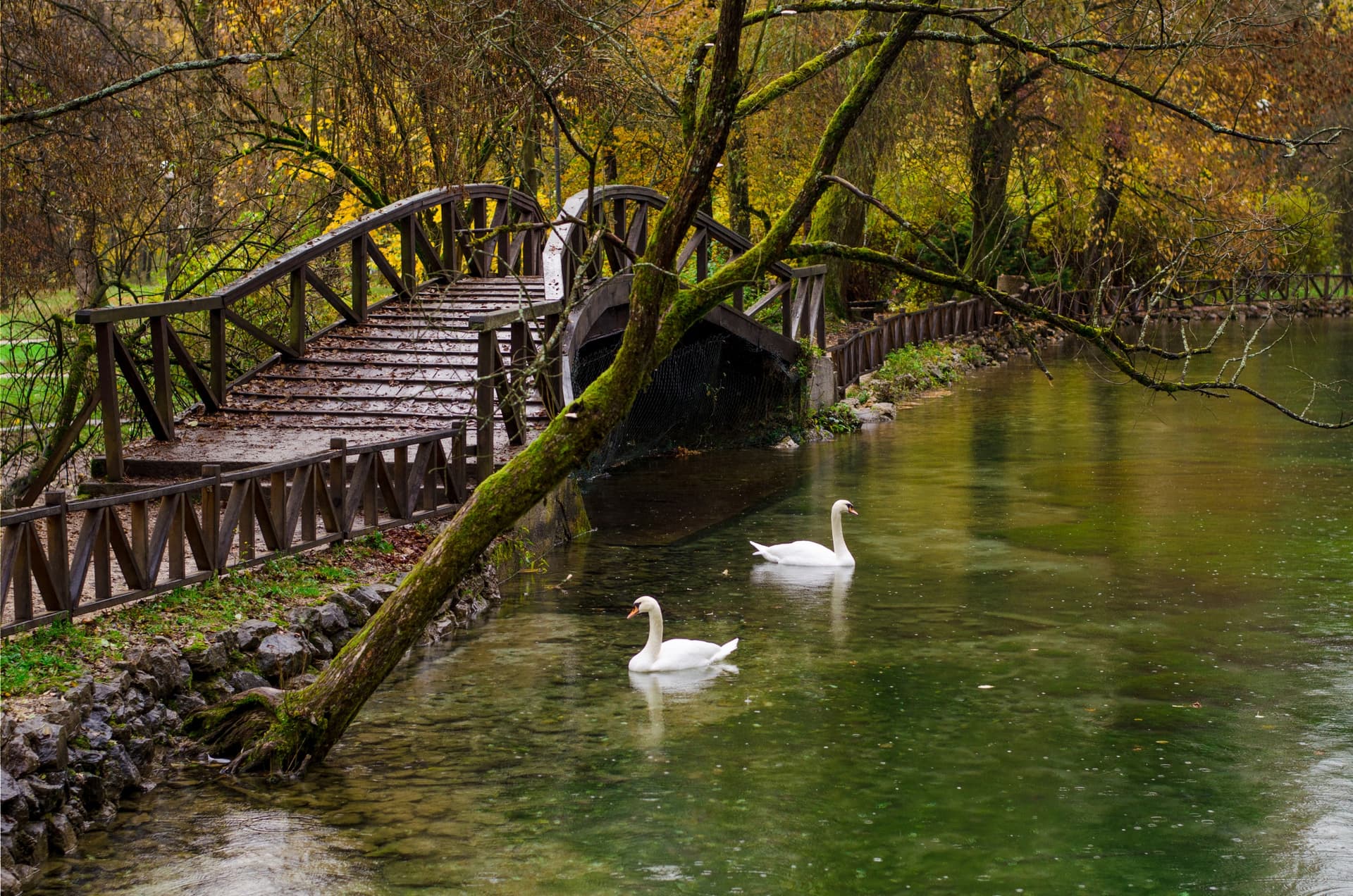
The heart of the park is formed by a succession of springs, basins, and small channels that join together to form the Bosna. Wooden walkways allow you to walk above the water and observe swans, ducks, and trout. The main developed circuit is about 2 km and can be completed in about an hour of leisurely walking.
Biodiversity
Botanists have identified 26 plant communities within the park's perimeter, from wetland meadows to mixed woodlands. The less frequented areas, away from the main circuit, harbor interesting bird life, particularly during migration periods.
The Grand Avenue and horse carriage ride
The Grand Avenue connects Ilidža to the park entrance over 3.5 km, lined with more than 3,000 trees planted during the Austro-Hungarian era. The tradition of horse carriage rides has existed here since 1895. Plan about thirty minutes for the journey, with fares set at a moderate range per carriage, payable directly to the coachmen stationed near the starting point.
The remains of the Ottoman bridge
Near the main entrance, the ruins of the 16th-century bridge recall the historical depth of the place. An interpretation panel highlights the ancient-Ottoman-Austro-Hungarian stratification of the site.
The Ilidža thermal complex
Before or after visiting the park, the Ilidža Thermal Riviera complex, next to the Grand Avenue, exploits the thermal springs known since Roman times. Indoor and outdoor pools, wellness facilities, and treatments are offered at reasonable rates for the region.
Labud restaurant
Located on the water's edge with a terrace overlooking the basins, Labud restaurant serves classic Bosnian cuisine (ćevapi, soups, grilled meats). It's the most practical option for lunch without leaving the park.
Practical information
- Area: 603 hectares, main circuit of 2 km
- Duration of visit: plan 2 to 4 hours for a comfortable visit to the park and Grand Avenue
- Entrance fee: moderate access fee at the park, payable upon entry
- Equipment: walking shoes recommended, some passages near the springs are wet
- Food and drink: Labud restaurant on site, cafés in Ilidža
- Accessibility: main avenues are stroller-friendly
When to visit Vrelo Bosne
The park is open year-round, but each season offers a different experience:
- Spring (April-June): the most favorable period. Vegetation explodes, water flow from the springs is at its peak following snowmelt from Mount Igman, and visitor numbers remain reasonable.
- Summer (July-August): the park serves as a climate refuge for Sarajevans on hot days. Prefer mornings to avoid weekend crowds.
- Autumn (September-October): the colors of the deciduous trees along the Grand Avenue are remarkable, crowds decrease.
- Winter: the site remains accessible but may be snowy. Horse carriage rides are rarer, the thermal complex becomes the main option.
How to get there from Sarajevo
Vrelo Bosne is located about 12 km from central Sarajevo, in the municipality of Ilidža.
- By tram: Sarajevo's tram line terminates at Ilidža. Then allow 10 minutes on foot to the start of the Grand Avenue. This is the simplest option for visitors without a vehicle.
- By car: take the M-17 road (Sarajevo-Mostar axis) and turn toward Ilidža, or reach Ilidža directly from the center. Paid parking is available near the Grand Avenue and at the park entrance.
- Once there: reach the heart of the springs on foot (3.5 km from Ilidža via the Grand Avenue), by bike, or by horse carriage.
Nearby
The Sarajevo area and Bosnia and Herzegovina offer several natural extensions to your visit to Vrelo Bosne:
- The Sarajevo tunnel, a testament to the city's siege during the Bosnian War, accessible from Ilidža.
- The pyramids of Bosnia in Visoko, about thirty kilometers to the north, for a controversial but popular archaeological excursion.
- Počitelj, a fortified Ottoman village on the road to Mostar.
- The colorful mosque of Travnik, about 90 km away, to discover another historic city in central Bosnia.
Frequently asked questions
Frequently asked questions
A half-day is ideal: plan about an hour for the main circuit around the springs, plus time for the Grand Avenue (on foot or by carriage, about 1 hour round trip). Adding a meal break at Labud restaurant or a visit to the Ilidža thermal baths easily makes for a full day's visit.
The simplest way is by the Sarajevo tram to its terminus at Ilidža, followed by a 10-minute walk to the start of the Grand Avenue. From there, you can reach the springs on foot (3.5 km) or by horse carriage.
It's a traditional experience practiced since 1895 along the Grand Avenue. The slow pace and the setting of century-old trees make it a pleasant journey, especially for families or visitors who prefer to avoid the 7 km round trip walk. The fare remains moderate.
No, swimming in the springs is forbidden: the water supplies part of Sarajevo's water system and the site is protected. For thermal bathing, the Ilidža Thermal Riviera complex, next to the park, offers pools fed by local hot springs.
Spring (April to June) offers the most spectacular water flow and flourishing vegetation. Autumn, in September-October, is also highly appreciated for the colors of the deciduous trees along the Grand Avenue.
Including Vrelo Bosne in your trip
Vrelo Bosne fits naturally into a stay in Sarajevo, alongside visits to the historic center. The site combines well with other war memorial sites, Ottoman cities of the Balkans (Mostar, Travnik, Počitelj), or a wider circuit including the Adriatic coast. To build a custom itinerary, consult our trips in the region.
Interested in this visit?
We can include it in your personalised itinerary.