Počitelj
Počitelj
Fortified Ottoman village overlooking the Neretva River, 30 km from Mostar. A classic excursion from the Dalmatian coast, a UNESCO World Heritage candidate.
Počitelj is a fortified village located in Bosnia and Herzegovina, 30 km south of Mostar, on slopes overlooking the Neretva River. Although situated outside Croatie, it constitutes a frequent excursion from the southern Dalmatian coast (Dubrovnik, Split) or from Mostar, due to its proximity to the border. Its Ottoman urban ensemble, a candidate for UNESCO World Heritage inscription, ranks among the best-preserved sites in the region.
Why visit Počitelj
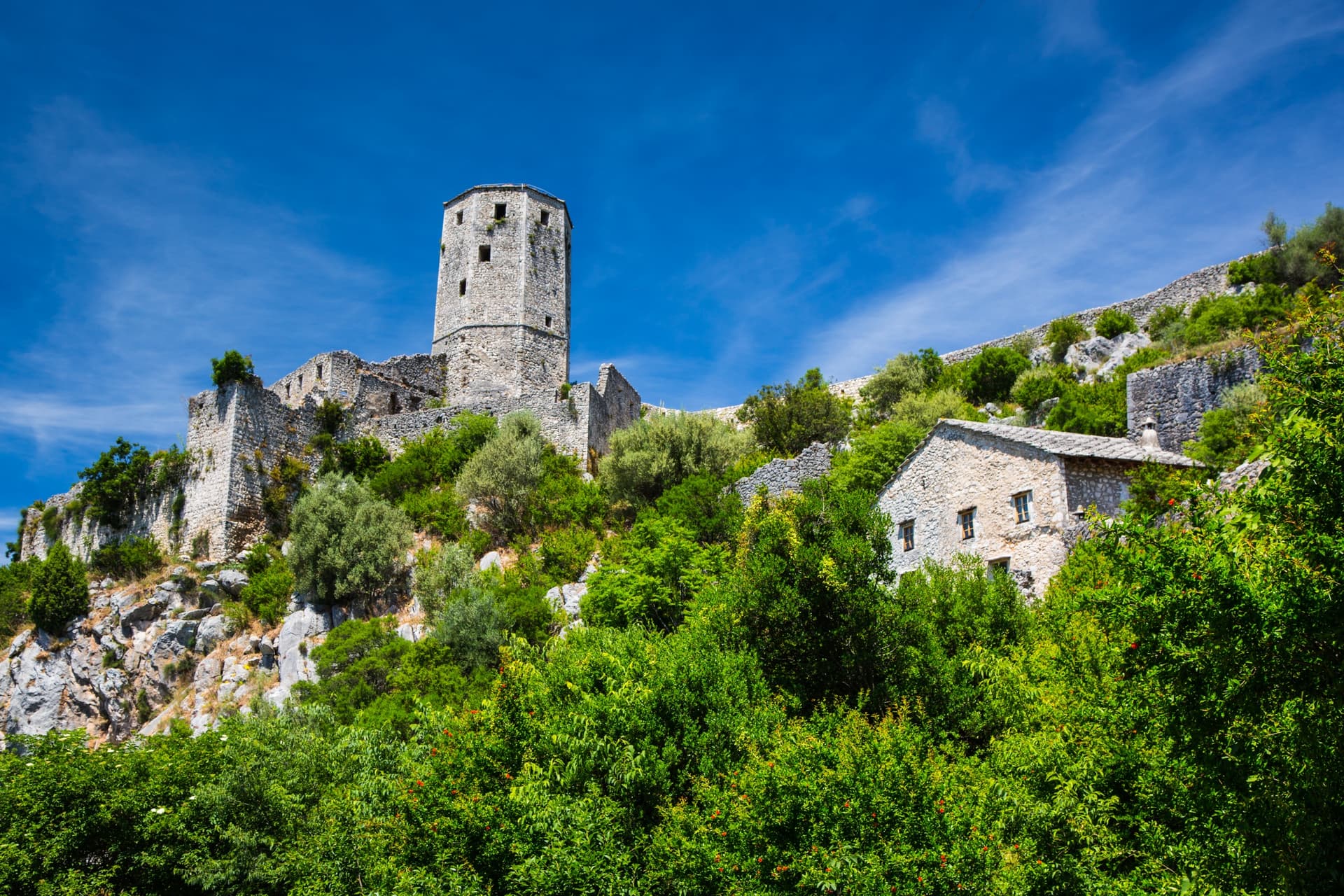
Počitelj presents a coherent architectural ensemble, organized in tiers on a rocky outcrop dominating the Neretva valley. The site combines a medieval fortress, a 16th-century mosque, a 17th-century clock tower, and several still-legible Ottoman civil structures. The village appears on Bosnia and Herzegovina's list of national monuments and is a candidate for UNESCO World Heritage inscription. Its modest size allows for a half-day walking tour, making it a logical stop between Mostar and the Adriatic coast.
History
Počitelj first appears in official documents between 1444 and 1448, but its foundation likely dates to 1383, during the reign of Bosnian King Tvrtko I. The village then served as an administrative center of the župa (county) of Dubrava and benefited from a controlling position over the Neretva valley.
Between 1463 and 1471, facing Ottoman expansion, Počitelj was reinforced by Vladislav Hercegović, with support from Dubrovnik and King Matthias Corvin. Despite these fortifications, the fortress fell to the Ottomans in 1471 and remained under their rule until 1878. This lengthy Ottoman period accounts for most of the structures visible today: mosque, hammam, clock tower, medresa.
Following the Austro-Hungarian arrival in 1878, the village's strategic role faded and its activity declined. This marginalization paradoxically enabled the preservation of the architectural ensemble. During the 1992–1995 war, Počitelj suffered significant damage, particularly to its 16th-century Islamic heritage. Restoration programs have been undertaken since, and the site is today considered one of the best-preserved Ottoman ensembles in the Western Balkans.
What to see in Počitelj
The fortress and Gavrankapetanović Tower
The fortress, built in the 15th century, surveyed the Neretva valley and constitutes the village's highest point. The climb through paved alleyways requires some effort but remains short. At the summit, the Gavrankapetanović Tower, the fortress's main keep, is the site's most visible element and offers panoramic views over the river and surrounding hills.
The Šišman-Ibrahim-Pacha Mosque
Built in 1563, the Šišman-Ibrahim-Pacha Mosque is a representative example of classical Ottoman architecture: square plan topped by a dome, slender minaret, entrance portico. Damaged during the 1990s war, it has been restored and remains one of the village's central buildings.
The clock tower
Dating to the 17th century, the clock tower (sahat-kula) punctuated the village's daily life, signaling both business hours and calls to prayer. Built in local stone, it fits into the characteristic silhouette of Ottoman towns in the Balkans.
Hammam, harem, and civic structures
The center preserves the remains of a hammam and Turkish public bath, as well as a harem (space for women's private life). Walking through the alleyways, one observes traditional houses with stone roofs, staircases, and terraces that structure the village in tiers.
Practical information
- Free entry: the village is open year-round; trails and the fortress are accessible during daytime.
- Recommended duration: allow 1.5 to 2 hours to tour the site and climb to the fortress.
- Closed-toe shoes advised: cobblestones are uneven and the climb features steps.
- Modest fee for access to Gavrankapetanović Tower; alleyways and the mosque are accessible according to opening hours.
- Bring water in summer; few shops on-site beyond a few cafés and seasonal stalls.
When to visit Počitelj
The most favorable period runs from May to October, with mild temperatures suited to walking. July and August are hot, sometimes exceeding 35 °C in the Neretva valley, and concentrate most visitors in mid-day. For a quieter visit and softer light, spring (May–June) and early autumn (September–October) are preferable. In winter, the site remains accessible though some shops close.
How to get there
Počitelj is located in the municipality of Čapljina, in Bosnia and Herzegovina. The E73 highway connects the site to Mostar, roughly 30 km to the north. Several options are available:
- By car: approximately 30 to 40 minutes from Mostar via the E73. Paid parking below the village.
- By bus: regular services from Mostar's East Station toward Čapljina or Metković, with a stop at Počitelj. Expect about 40 minutes of travel time. Check local schedules; frequencies vary by season.
- Organized excursion: Počitelj is often included in full-day circuits such as Dubrovnik–Mostar or Split–Mostar.
A valid passport or identity card is required to cross the Croatie–Bosnia and Herzegovina border.
What to see in the region
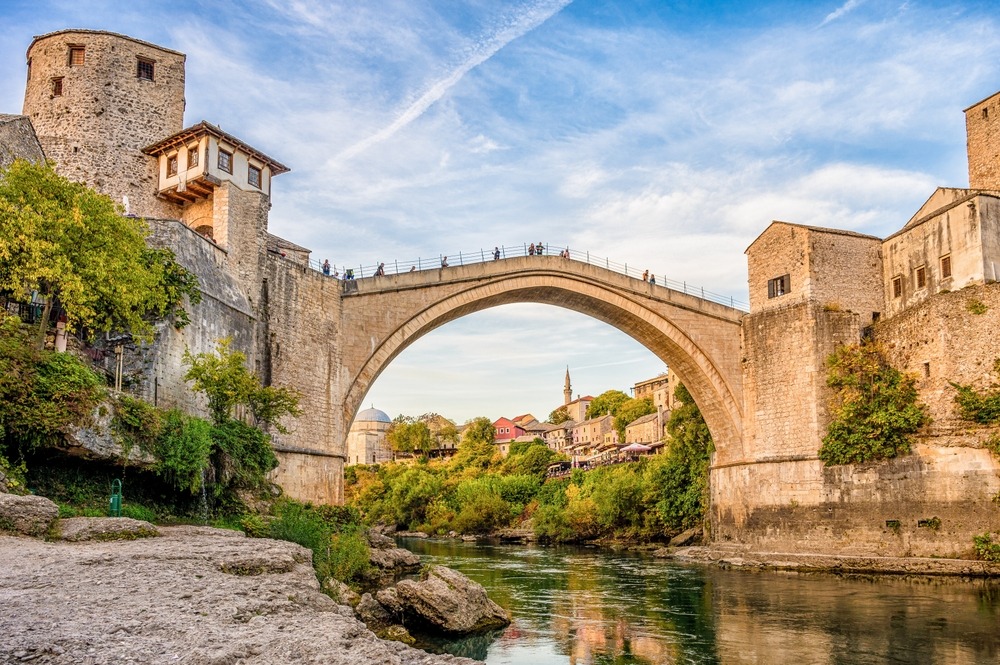
- Mostar and its Stari Most, 30 km to the north, the logical starting point for visiting Počitelj.
- Kravice Waterfall, approximately 25 km away, often combined with the same excursion.
- The Neretva Delta, on the Croatie side, with its rice paddies and canals.
- The Bosnian Pyramids, another unusual Bosnian site to extend your discovery of the country.
Frequently asked questions
Frequently asked questions
Počitelj is located in Bosnia and Herzegovina, in the municipality of Čapljina. However, it is frequently visited from Croatie, particularly from Dubrovnik or Split, due to the border's proximity.
Allow 1.5 to 2 hours to tour the village, climb to the fortress, and visit the mosque. Your visit can extend by stopping at a café with views over the Neretva.
The site is not yet inscribed on the World Heritage List but appears on UNESCO's tentative list and on Bosnia and Herzegovina's list of national monuments.
Yes. Počitelj is typically combined with Mostar and Kravice Waterfall in a full-day excursion from Dubrovnik (approximately 2.5 hours' drive one way).
Yes, crossing the border between Croatie (Schengen) and Bosnia and Herzegovina requires a valid identity document; a passport is recommended.
Planning your trip
Počitelj naturally integrates into an itinerary combining the Dalmatian coast and Bosnian hinterland. To build a comprehensive circuit including Dubrovnik, Split, and an excursion to Mostar and Počitelj, consult our Croatie vacations.
Interested in this visit?
We can include it in your personalised itinerary.