Zagreb Cathedral
Zagreb Cathedral
Croatia's tallest building, Zagreb Cathedral has dominated Kaptol Square since the 11th century. History, architecture and practical access.
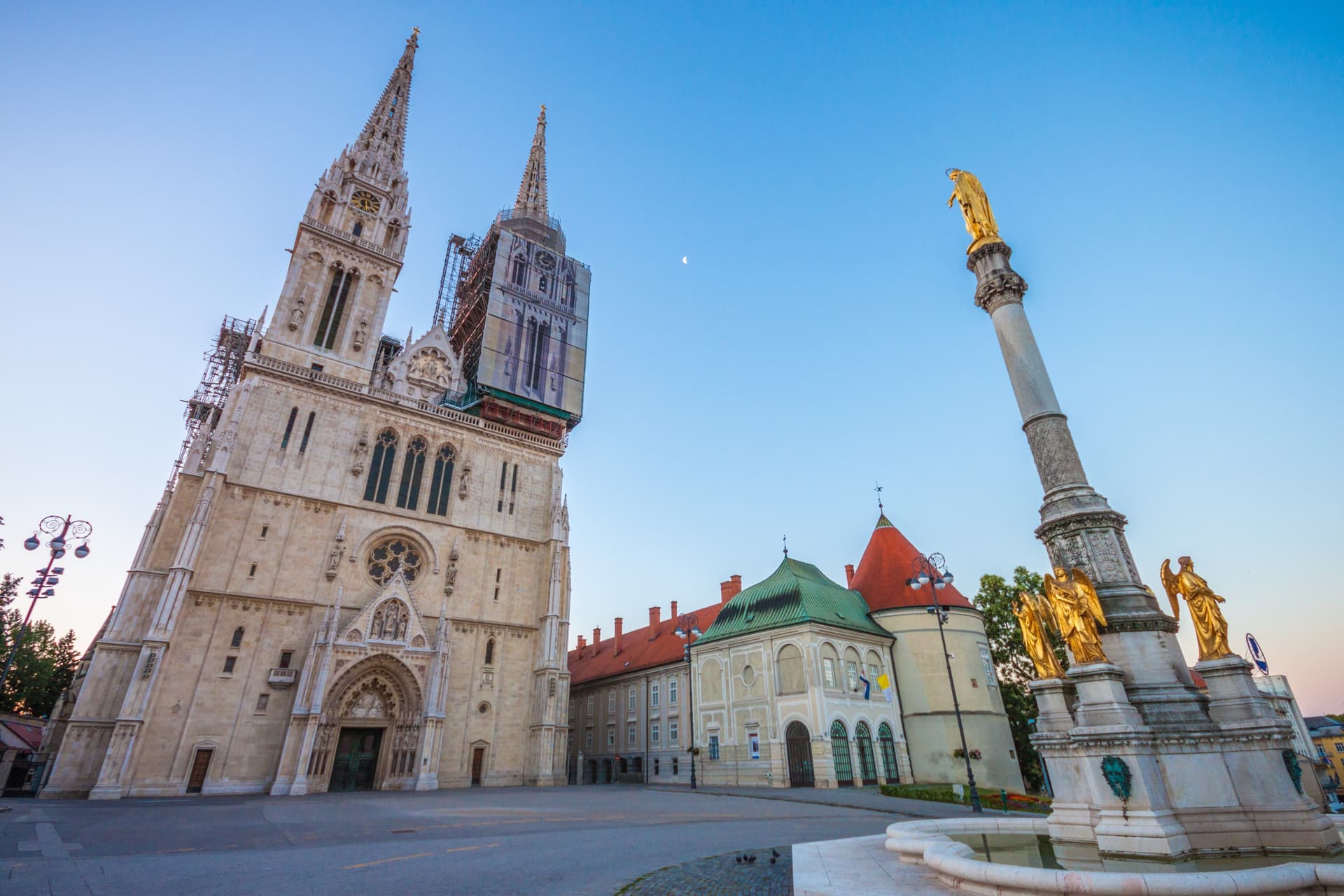
Zagreb Cathedral, officially the Cathedral of the Assumption of the Virgin Mary and Saints Stephen and Ladislaus, has dominated Kaptol Square for more than nine centuries. Standing at 108 metres tall, it is Croatia's highest building and a landmark visible from almost every point in the city. The March 2020 earthquake launched a restoration project still underway.
Why Visit Zagreb Cathedral
A religious and national symbol, the cathedral concentrates nearly a thousand years of Croatian history: Gothic and Neo-Gothic architecture, memory of the Tatar invasion, Ottoman sieges, earthquakes in 1880 and 2020. It houses the shrine of Cardinal Alojzije Stepinac, a figure of resistance against the communist regime, as well as a crypt where several archbishops of Zagreb are laid to rest.
Even when closed to the public due to restoration work, it remains a natural stopping point in the historic centre: its façade, sculptures of saints and biblical reliefs can be admired from the square, just steps away from Dolac Market.
History of the Cathedral
From Medieval Origins to Gothic
The sanctuary's origins trace back to the 10th century, with a pre-Romanesque church elevated to cathedral status in 1093. Transformed into a larger Romanesque building in 1217, it was severely damaged by the Tatar invasion of 1242. The reconstruction in the 13th century adopted the Gothic style while preserving Romanesque elements.
Work progressed in stages: completion of the choir and first bays in the early 14th century, then western bays in Late Gothic style during the 15th century. The Ottoman threat interrupted the completion of the spires.
Fortifications, Baroque and Neo-Gothic Reconstruction
In the 16th century, the cathedral was fortified: ramparts and defensive towers were built against the Ottomans. Once the threat had passed, a Baroque bell tower was added to the south façade in the 17th century; this Baroque silhouette characterised the building for nearly two centuries.
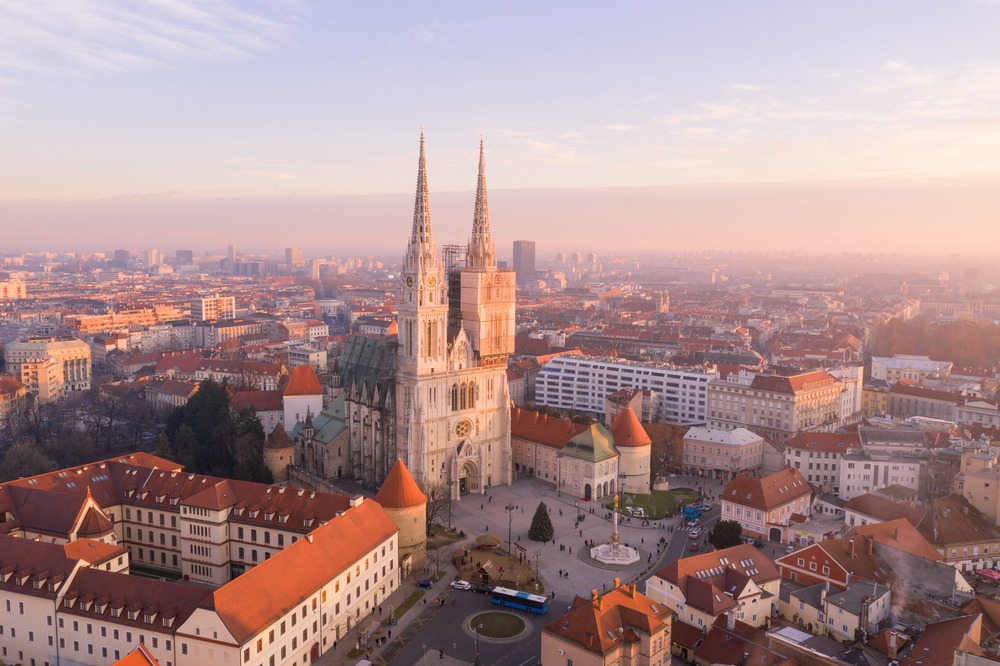
The earthquake of 9 November 1880 caused the collapse of the south tower and the main nave. Reconstruction was entrusted to architect Hermann Bollé, who imposed the Neo-Gothic style responsible for the current silhouette, with its twin spires.
20th and 21st Centuries
Pope Benedict XVI knelt before the shrine of Cardinal Alojzije Stepinac (1898-1960) there on 4 June 2011, who was beatified in 1998 by John Paul II. On 22 March 2020 at 6:24 am, a magnitude 5.5 earthquake struck Zagreb (epicentre 7 km north of the centre): the tip of the south spire collapsed onto the archbishop's palace roof, and the north spire, weakened, was dismantled on 17 April 2020.
What to See On-Site
The Exterior and Spires
The west façade, flanked by twin Neo-Gothic spires, is adorned with sculptures of saints, floral motifs and reliefs illustrating biblical scenes. In the square, you'll notice stone blocks laid out since the 2020 earthquake: each bears a barcode allowing restorers to track its original location and treatment.
A Long-Term Restoration Project
Conservation work began in the 1990s to address the effects of weather and pollution. The 2020 earthquake transformed the operation into a major project: structural stabilisation, restoration of the spires, rehabilitation of decorative elements. No official completion date for the work has been announced to date.
The Interior (Currently Inaccessible)
The interior, closed to the public during restoration, features a central nave with Gothic ribbed vaults, coloured stained glass windows, frescoes, religious sculptures and a monumental 19th-century organ used during sacred music concerts. The main place of prayer is the shrine of Cardinal Stepinac, and the crypt houses the tombs of several archbishops of Zagreb.
Practical Information
- Address: Kaptol Square, historic Kaptol neighbourhood, Zagreb.
- Access: the cathedral is currently closed to the public; only the surroundings and façade are visible.
- Admission: free (exterior visit only).
- Visit Duration: allow 15 to 30 minutes for the square, to combine with Dolac Market and the upper town.
- When to Visit: late morning and late afternoon light enhance the west façade. Spring and early autumn offer the most pleasant conditions for exploring the centre on foot.
How to Get There
- On Foot: from Ban Jelačić Square, allow 3 to 5 minutes via Kaptol Street. From the central train station, approximately 15 minutes via Praška Street.
- Tram: several lines serve the Kaptol stop and Ban Jelačić Square, a short distance from the cathedral (check line numbers on-site, the ZET network changes regularly).
- Tomićeva Funicular: this historic funicular, one of Europe's shortest, connects the lower town to Gornji Grad; from there, the cathedral is a few minutes' walk away.
- Car: traffic and parking are restricted in the centre. The nearest paid car parks are around Kaptol Square.
What to See Nearby
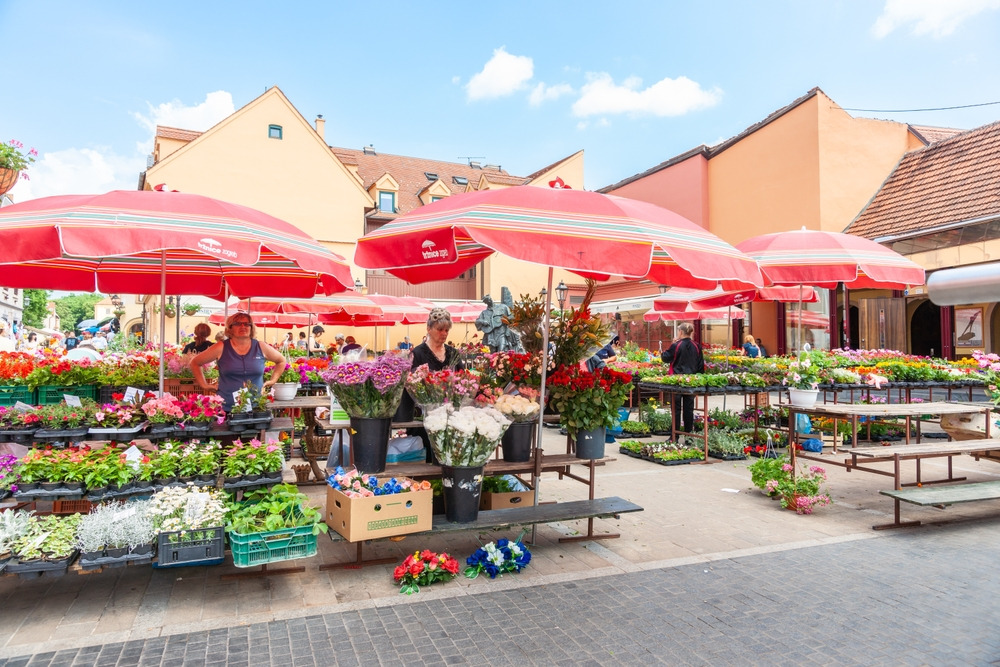
- Dolac Market (2 min on foot): Zagreb's central market, stalls of fruit, vegetables and local produce under red parasols.
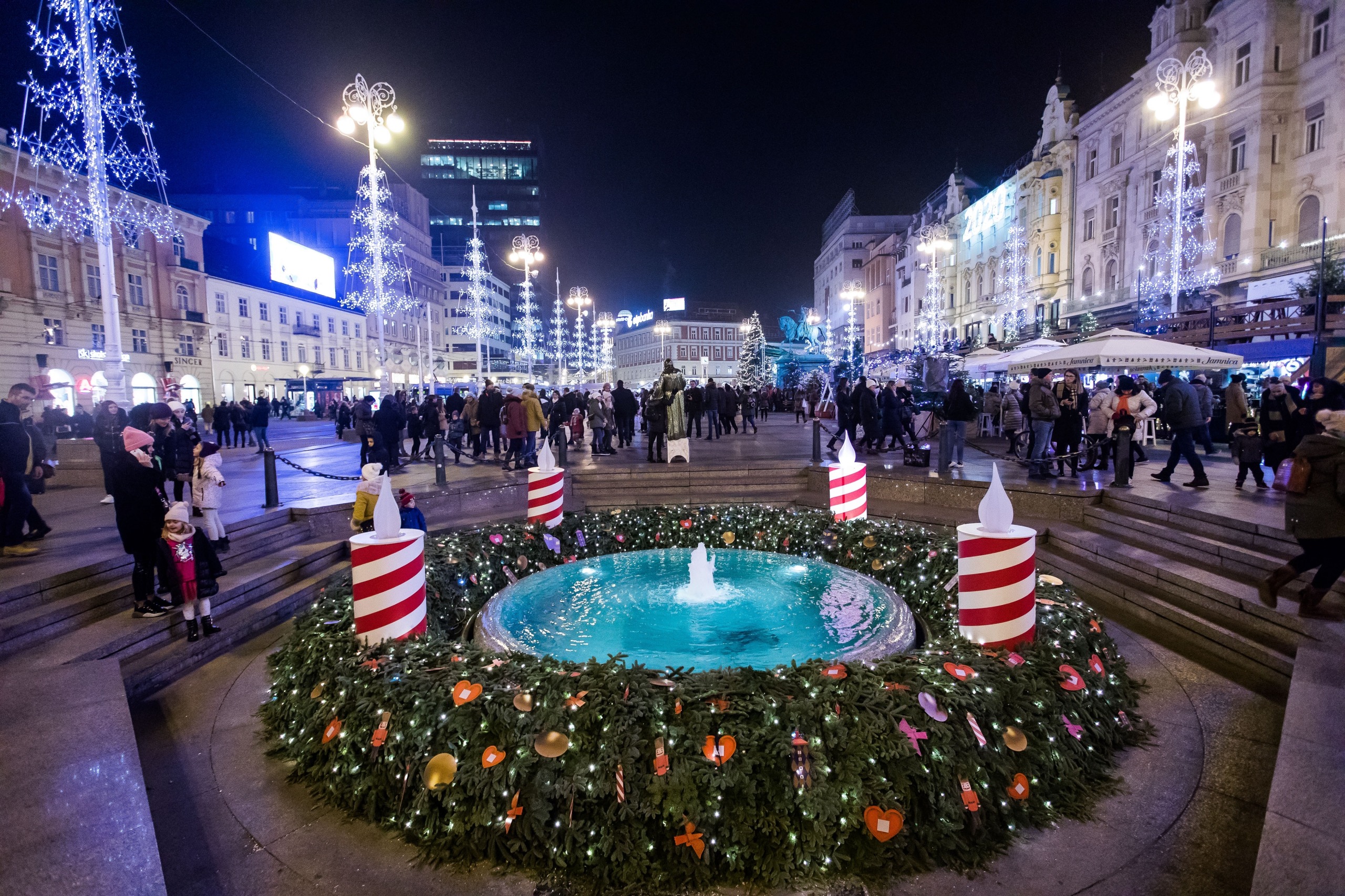
- Ban Jelačić Square (5 min): the city's main square and natural starting point for exploring the centre.
- St. Mark's Church (10 min): recognisable by its coloured tile roof representing Croatia's coat of arms.
- Stone Gate (Kamenita Vrata) (7 min): shrine dedicated to the Virgin Mary, a place of prayer integrated into the fortifications.
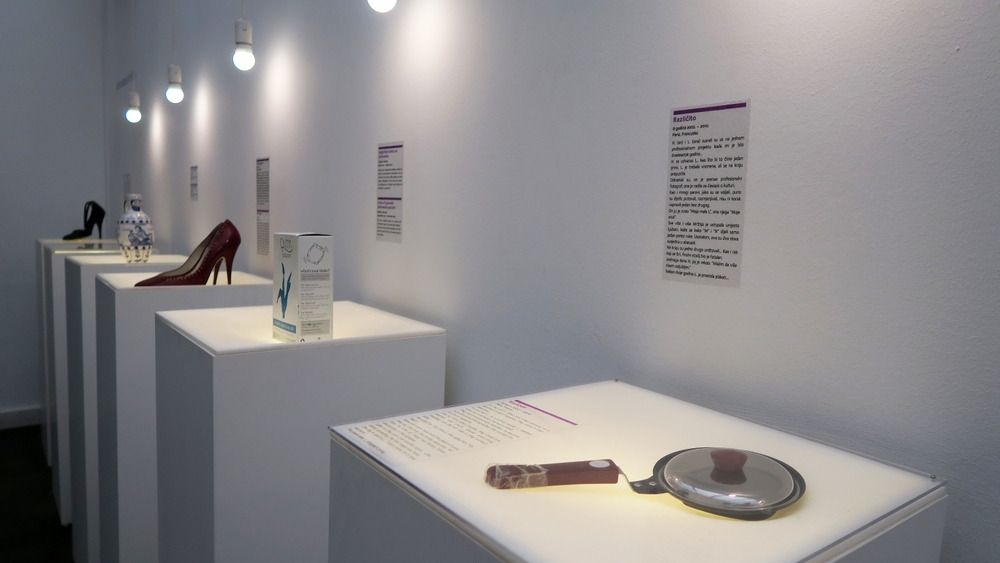
- Museum of Broken Relationships (10 min): an unconventional museum dedicated to romantic break-ups.
To place the cathedral in its Croatian context, also see the Diocletian's Palace in Split and the Euphrasian Basilica in Poreč, other major milestones in the country's religious and ancient heritage.
Frequently Asked Questions
Frequently asked questions
No. Following the 22 March 2020 earthquake, the interior remains closed to the public during stabilisation and restoration work. Only the exterior is accessible from Kaptol Square. No official reopening date has been announced.
These are the stones from the damaged spires. Each bears a barcode allowing restorers to identify its original position and correctly reintegrate it during reconstruction.
108 metres, making it Croatia's tallest building. Before the north spire was removed in April 2020, the twin spires dominated the historic centre.
Alojzije Stepinac (1898-1960) was archbishop of Zagreb. A figure of resistance against the Yugoslav communist regime, he was beatified in 1998 by John Paul II. His shrine, inside the cathedral, is a major place of prayer for Croatian Catholics.
While the interior is closed, allow 15 to 30 minutes in the square. Combined with Dolac Market, Ban Jelačić Square and the upper town, plan half a day for the historic quarter.
Plan Your Trip
Zagreb combines easily with the Adriatic coast, Istria or inland national parks. To build a complete itinerary, consult our travel ideas for Croatia and the Zagreb guide.
Nearby
Interested in this visit?
We can include it in your personalised itinerary.