The Franciscan Monastery of Orebić
The Franciscan Monastery of Orebić
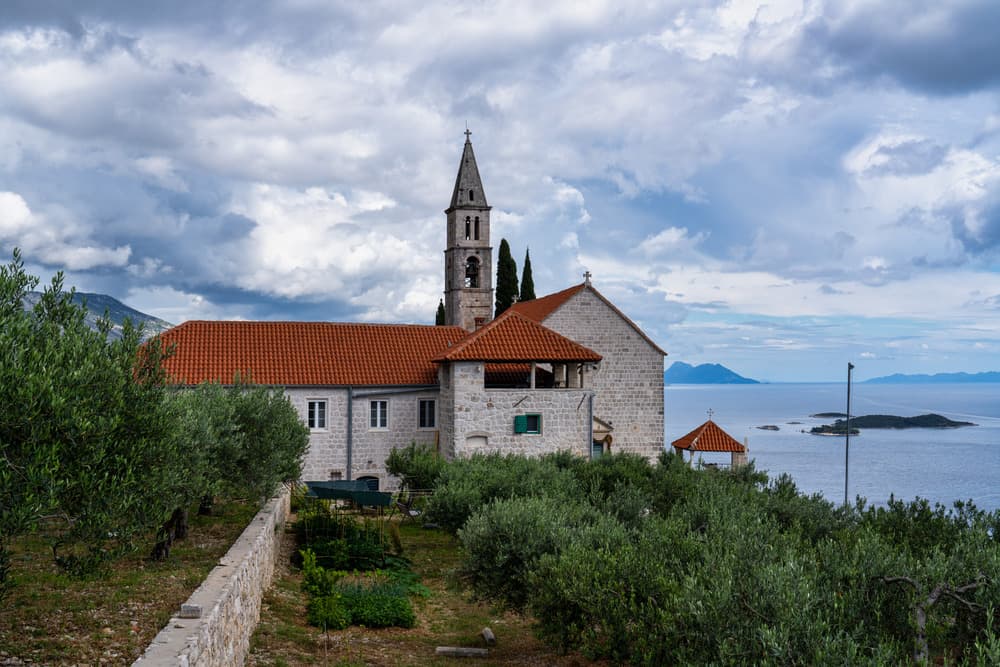
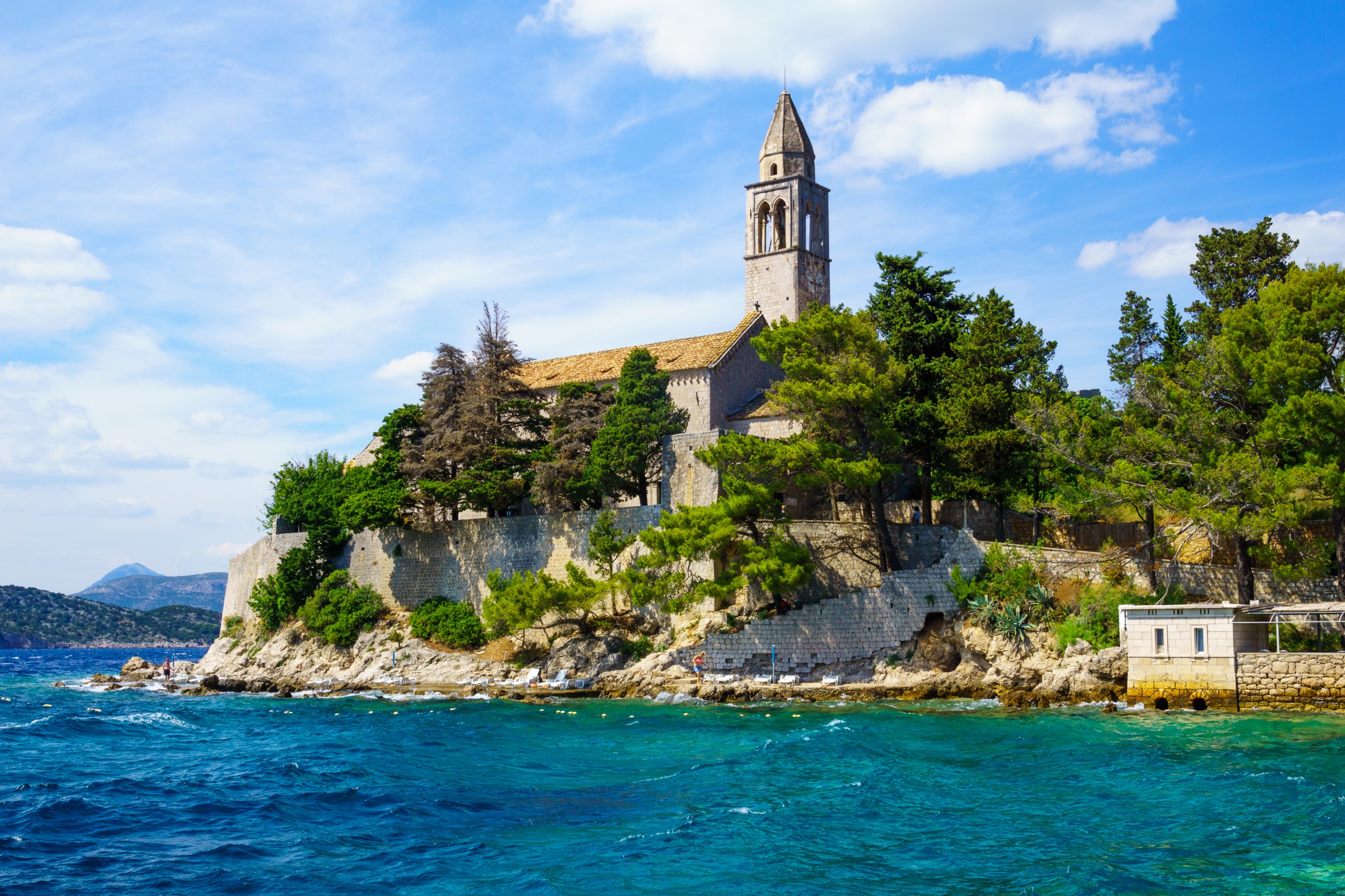
Perched on a 152-meter cliff facing Korčula, the Franciscan Monastery of Our Lady of the Angels in Orebić blends Gothic-Renaissance art with the memory of Pelješac's merchant sea captains.
The Franciscan Monastery of Our Lady of the Angels stands on a 152-meter cliff at the western edge of Orebić, on the Pelješac peninsula. Built in the fifteenth century under the Republic of Ragusa, the ensemble combines religious purpose, maritime observation function, and the memory of merchant captains whose ventures brought prosperity to the town.
Why visit this monastery
Three main reasons draw visitors here:
- The panorama over the Pelješac channel and the silhouette of the old town of Korčula across the water.
- The artistic heritage preserved in the church and the monastery's small museum, with works from the fifteenth to nineteenth centuries.
- Orebić's maritime history, visible in the captains' cemetery behind the church, a rare testimony to the culture of Pelješac's shipowners.
Access is on foot from Orebić, along a trail that combines cultural visits with a short coastal walk.
A sentinel between Ragusa and Venice
The monastery was built in the fifteenth century under the Republic of Ragusa, present-day Dubrovnik. The choice of location was far from arbitrary: perched on a 152-meter coastal cliff, the building overlooked the channel separating Pelješac from Korčula. At the time, Pelješac belonged to Dubrovnik while Korčula was under Venetian rule, and rivalry between the two states made this promontory as much a strategic observation point as a place of worship.
The church preserves an icon of Our Lady of the Angels, believed to protect the sailors of Orebić. A local tradition persisted for centuries: captains returning to port would sound their ships' sirens in salute, and the monks would respond by ringing the monastery bells. The sound would then travel across the channel, signaling the end of the voyage.
In the early twentieth century, the monastery received a few notable visitors. In 1905, German Prince Philip of Coburg stayed here, followed in 1913 by British historian R. W. Seton-Watson, a specialist in Balkan affairs.
What to see on-site
Architecture
The ensemble presents a Gothic-Renaissance style. It is organized around a main floor and four exterior wings, forming an architectural unit with the church, topped by a bell tower.
The church and its artworks
Beyond the icon of Our Lady of the Angels, the church preserves several remarkable pieces:
- Two marble reliefs of the Virgin and Child, in the style of Thomas Fiamberti and Nicolas of Florence.
- The crucifix by J. Petrović.
- The main altar designed by Maffe da Verona.
A small adjoining museum displays ex-votos from the seventeenth to nineteenth centuries, offered by sailors in gratitude for safe returns.
The captains' cemetery
Behind the church lies the captains' cemetery, where the shipowners and navigators of Orebić rest. Here stands the Mimbelli family mausoleum, a work by sculptor Ivan Rendić. A marble sculpture depicting a young girl with an overturned pitcher symbolizes the end of the line of shipowner and philanthropist Anton Mimbelli.
Practical information
- Fee: modest entry, consider making a donation for the museum.
- Hours: open in the morning and late afternoon, with reduced hours off-season and on Sundays. Check locally before heading up.
- Duration of visit: allow 1 to 1.5 hours on-site, not including walking time.
- Dress code: shoulders and knees covered to enter the church.
When to visit
Late spring and early autumn (May-June, September) offer the best balance: manageable temperatures for the climb, favorable light over the channel, and moderate crowds. In high summer, the heat makes the ascent demanding—better to aim for early morning or late afternoon. In winter, hours are reduced and some wings may be closed.
How to get there
The monastery is located about 20 minutes west of Orebić. From the center, access is via the Mount Sveti Ilije road, then by a secondary route leading up to the site. Two options:
- On foot: the 3 to 4 km walk passes through a coastal pine forest and offers views over the channel. This is the most popular approach.
- By car: possible up to the immediate vicinity of the monastery, with small parking on-site.
Nearby
The Pelješac peninsula and the island of Korčula are home to several complementary sites:
- The walls of Ston, Europe's second-longest walls, at the entrance to the peninsula.
- The old town of Korčula, accessible by ferry from Orebić in about twenty minutes.
- Pelješac vineyards (Dingač, Postup), renowned for their Plavac Mali reds.
- The Palace of Diocletian in Split, a typical stop before or after Pelješac.
Frequently asked questions
Frequently asked questions
Plan your trip
The Franciscan Monastery of Our Lady of the Angels fits naturally into an itinerary combining Dubrovnik, the Pelješac peninsula, and the island of Korčula. To build a custom route including this stop, consult our Croatie trips.
Interested in this visit?
We can include it in your personalised itinerary.