Jajce Franciscan Museum
Jajce Franciscan Museum
The Jajce Franciscan Museum houses four collections, from the presumed sarcophagus of Stefan Tomašević to manuscripts linked to the city's founder.
The Jajce Franciscan Museum documents the medieval, archaeological and religious history of the region through four thematic collections. Located within the Saint-Luc Catholic monastery, it notably houses a glass sarcophagus displaying the presumed remains of Stefan Tomašević, the last king of Bosnia who was beheaded by the Ottomans in 1463. A useful note: Jajce is located in Bosnia and Herzegovina, yet the museum is traditionally included in Croat-Bosnian itineraries due to the region's shared history.
Why visit the Franciscan Museum
- See the presumed skeleton of the last medieval king of Bosnia, displayed in a glass sarcophagus
- Explore five centuries of Bosnian history (10th–15th) through the medieval collection
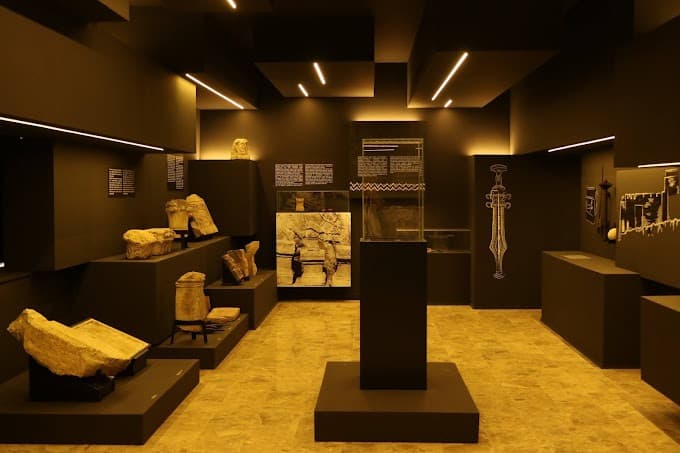
- Observe a Mošunj-type sword dating from the 9th century BC, the crown jewel of the archaeological collection
- Consult reproductions of the Hrvoje Missal and the Hval Codex, manuscripts linked to Jajce's founder
- Understand the coexistence of Bosnia's three religious communities via the ethnological collection
Museum history
The museum was founded in 1905 by the Franciscan order, within the Saint-Luc Catholic monastery (Samostan Svetog Luke), built in 1877. This religious foundation explains the significance of the sacred art collection and the ongoing link between heritage conservation and monastic life.
Closed during the 1990s war, the institution reopened in 2005, marking the centennial of its founding. A renovation carried out in 2018 allowed for the reorganisation of spaces and enrichment of the museum's exhibition layout.
What to see in the museum
The tour revolves around four distinct collections that complement one another.
The medieval Bosnia collection
This section covers the history of Bosnia and Herzegovina from the 10th to 15th century. It forms the heart of the visit. The centrepiece is a glass sarcophagus displaying the presumed remains of the last king of Bosnia (1461–1463), discovered in 1888 near a village in the region. According to curator Franjo Leovac, these bones would belong to Stefan Tomašević, though this attribution has never been formally confirmed scientifically. The collection also gathers pieces from the Church of Saint Mary, the Church of the Coronation of Stjepan Tomašević and the Saint-Luc tower.
The archaeological collection
The Jajce region, like all of Bosnia and Herzegovina, has been inhabited since prehistoric times. The archaeological collection traces this long occupation through household objects, weapons and Roman relics. The oldest piece is a Mošunj-type sword dating from the 9th century BC, evidence of final Bronze Age cultures.
The ethnological collection
This section documents regional daily life through old photographs, reconstructions of Bosnian houses and a series of traditional costumes representing the three major religious communities: Catholic, Orthodox and Muslim. It serves as a good entry point for understanding the cultural mosaic of central Bosnia.
The sacred art collection
You will see reproductions of the Hrvoje Missal and the Hval Codex, two manuscripts linked to Hrvoje Vukčić Hrvatinić, founder of Jajce at the turn of the 15th century. Also on display are a 15th-century chalice in Gothic style and a 17th-century monstrance, among other pieces of liturgical metalwork.
Practical information
- Address: Fra Antuna Kneževića 6, Jajce
- Visit duration: allow 1 to 1.5 hours to explore the four collections
- Admission: moderate entrance fee, same for high and low season
- Hours: open daily during daytime; check current opening hours before your visit
- Languages: labels primarily in Bosnian and English
When to visit
The museum is open year-round. The months from April to October are most pleasant for combining this visit with Jajce's outdoor sites. In winter, visitor numbers are low and the visit is quieter, though some days may have shortened hours.
Nearby attractions
Jajce concentrates several major sites within walking distance of the museum:
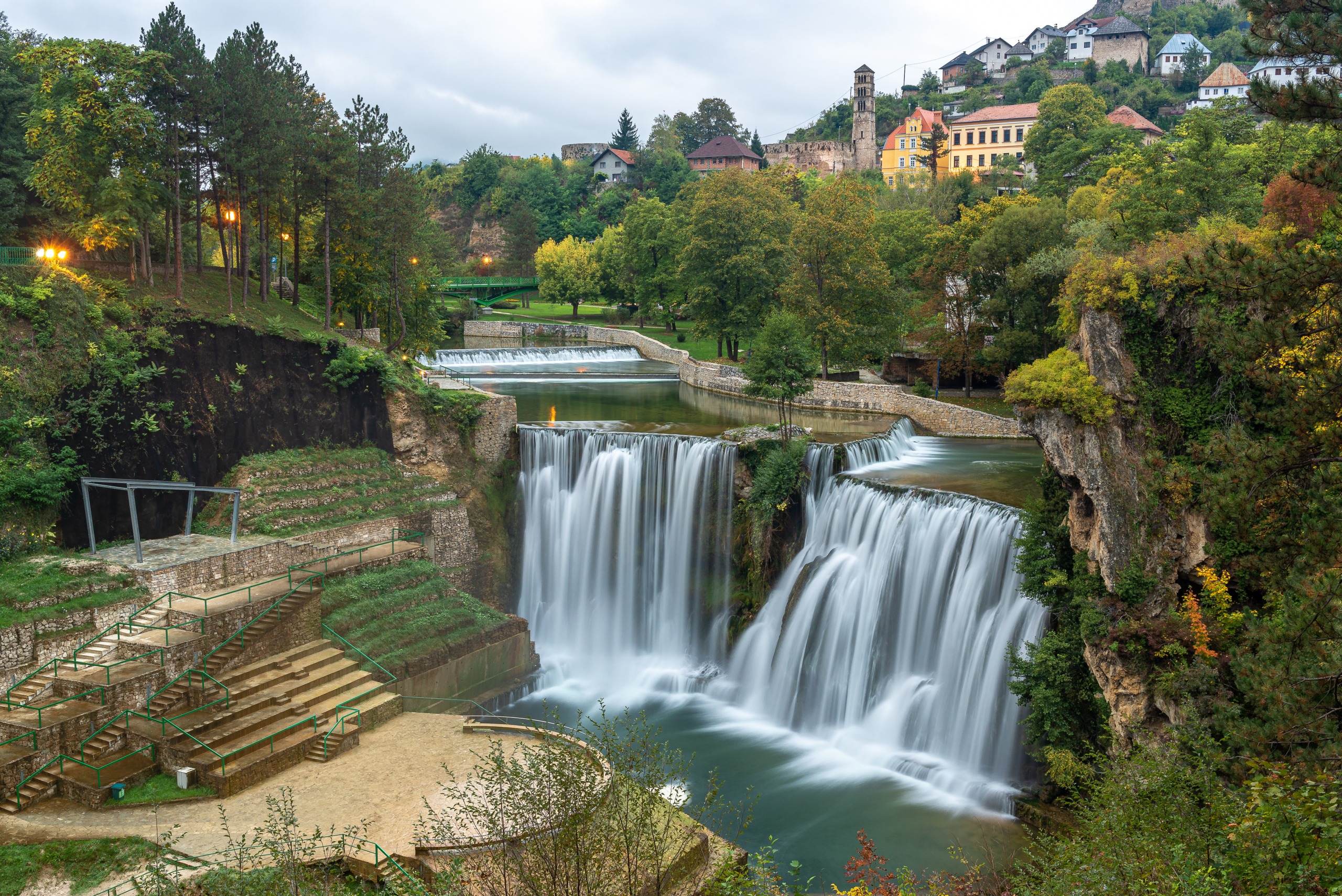
- The Pliva waterfall, roughly 10 minutes on foot, where the river flows into the Vrbas in the heart of the city
- The Jajce fortress, which overlooks the old town and offers panoramic views across the valley
- The catacombs and underground church, medieval remains located in the historic centre
- The water mills of Jajce on the Pliva lakes, a few kilometres away
To extend your exploration of the region, you may also be interested in the pyramids of Bosnia, in Visoko.
How to get there
The museum is located at 6 Fra Antuna Kneževića street, in Jajce's historic centre. From Trg Oslobođenja square, it's a few minutes' walk following signs for "Franjevački Muzej". Since the city centre is compact and pedestrian-friendly, a visit here easily combines with the fortress and Pliva waterfall.
Jajce is connected by road to Sarajevo (approximately 2.5 hours) and Banja Luka (approximately 1.5 hours). From the Croatian coast, road connections exist via Split or Zadar, making it possible to include the museum in an itinerary linking Dalmatia to central Bosnia.
Frequently asked questions
Frequently asked questions
The Franciscan Museum is located in Jajce, Bosnia and Herzegovina. It nevertheless appears in some Croatian itineraries due to geographical proximity and the shared cultural history of the two countries.
A complete tour of the four collections takes approximately 1 to 1.5 hours. Allow longer if you wish to read all the labels in detail and observe the sarcophagus of the last king carefully.
The remains were discovered in 1888 near a village in the region, and curator Franjo Leovac attributes them to the last king of Bosnia. This identification remains, however, a hypothesis not yet confirmed by scientific means.
The Pliva waterfall, the fortress, the catacombs and the Pliva water mills are the main attractions in the city, all accessible within the same day.
Yes, the tour is short and varied. The presence of archaeological objects, ancient weapons and ethnographic reconstructions generally makes it suitable for families with children.
Plan your trip
The Franciscan Museum fits naturally into an itinerary combining central Bosnia and the Dalmatian coast. To learn more, consult our comprehensive travel guide to Croatia and explore other historical sites in the region such as Diocletian's Palace in Split or the Ston walls.
Interested in this visit?
We can include it in your personalised itinerary.