Buna River Source
Buna River Source
At Blagaj, near Mostar, the Buna River Source combines a major European karstic resurgence and a 16th-century Sufi tekke nestled against a cliff face.
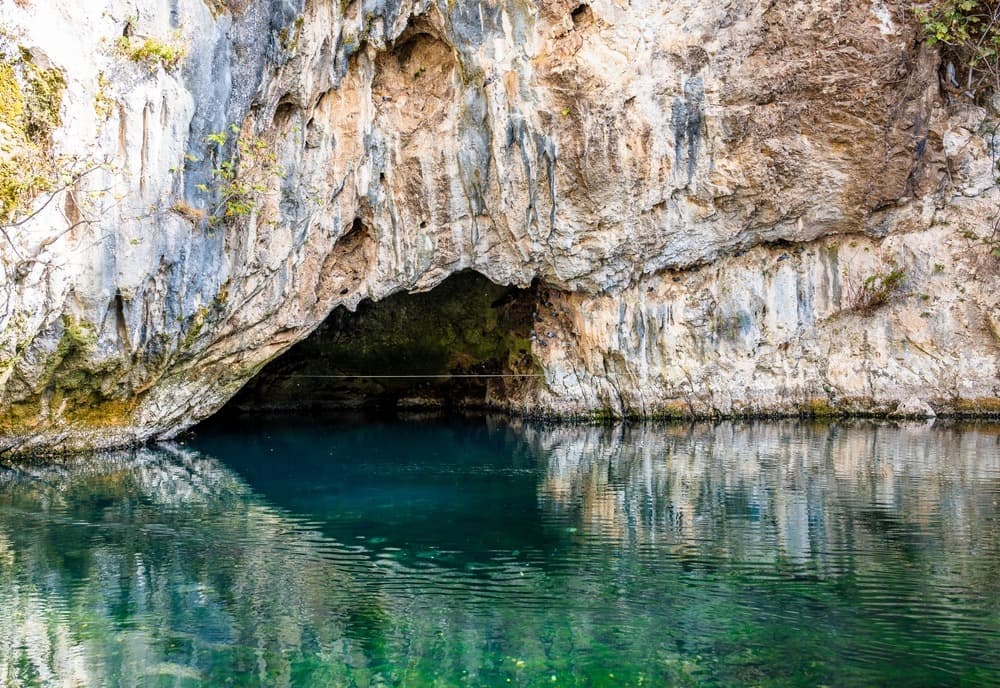
The Buna River Source (Vrelo Bune in Bosnian) is a natural and historical site located near the village of Blagaj, some twelve kilometres south-east of Mostar, in Bosnia and Herzegovina. The river emerges from a vast cavern at the foot of a limestone cliff rising over 200 metres high. It is one of Europe's largest and most powerful karstic resurgences.
Why visit the Buna Source
The site combines in a single location three rare elements: an exceptional geological phenomenon, a 16th-century Sufi monument nestled against the cliff, and a gastronomic setting renowned for local trout. This concentration makes it one of the most rewarding excursions to organise from Mostar, achievable in half a day. The turquoise colour of the water, due to the purity and freshness of the resurgence, contrasts beautifully with the pale stone of the cliff and the wooden framework of the tekke.
A site shaped by the Ottoman Empire
The power of the source has attracted human attention since antiquity, but it was under the Ottoman Empire that the site acquired its present character. In the early 16th century, a tekke (monastery) was built here for the order of the Bektashi dervishes, a Sufi order that made it a place of spiritual retreat and teaching.
The neighbouring village of Blagaj was also a major political centre in the late Middle Ages. It was the seat of Duke Stjepan Vukčić Kosača, who gave his name to the historical region of Herzegovina. His citadel, perched above the village, still bears witness to this period.
What to see on site
The resurgence and its footbridges
Wooden footbridges allow you to get as close as possible to where the water emerges. Small boats also offer brief journeys into the interior of the cavern, when hydrological conditions permit. The water temperature remains low throughout the year.
The Blagaj tekke
Nestled against the cliff and overlooking the river, the Blagaj tekke (Blagaj Tekija) can be visited inside. You will observe traditional woodcraft and Islamic decorative elements. Modest dress is required to enter the prayer halls; scarves and skirts are often provided at the entrance to visitors who need them.
Stjepan Grad Fortress
A marked trail leads from the village up to the Stjepan Grad Fortress, a ruined medieval citadel. The climb is short but exposed in the height of summer; it offers sweeping views over the Buna valley and the Herzegovinian landscape.
Restaurants along the water
Several traditional establishments are situated above the river. The local speciality is fresh-caught trout, prepared over charcoal, accompanied by Herzegovinian regional produce.
Practical information
- Access to the natural site and village is free.
- Entry to the tekke is charged (modest fee, a few euros) and generally includes the loan of appropriate clothing.
- Allow 2 to 3 hours on site to visit the source, tekke and have lunch; add 1 hour for the fortress.
- Tekke opening hours vary by season; it is advisable to check on the day itself, particularly in winter.
- Paid parking available immediately near the site.
When to visit
The site is accessible year-round, but light and water flow vary considerably by season. Spring (April-May) is when the resurgence is most powerful, following snowmelt and rainfall. Autumn (September-October) offers pleasant temperatures and lighter crowds. Summer is very hot in the valley, and the site fills up mid-morning: visit early. In winter, the tekke operates on shorter hours and some restaurants close.
How to get there
The site is easily reached from Mostar.
- By car: the journey from Mostar to Buna takes 20 to 30 minutes via a well-signposted road. Car parks are available at the village entrance.
- By local bus: regular services run from Mostar's bus station to Blagaj. The journey is economical, but allow about ten minutes' walk from the bus stop to the source.
- By taxi or ride-hailing: a practical option for a group; negotiate the price in advance, including return and waiting time.
- By organised tour: many agencies in Mostar combine Blagaj with other Herzegovinian sites (Počitelj, Kravica waterfalls).
What to combine in the region
The Buna Source lends itself well to a wider itinerary. Mostar and its reconstructed bridge are about twenty minutes away. Further afield lies the Croatian coast with sites such as Diocletian's Palace in Split, or the Dalmatian islands and Zlatni Rat beach. For nature lovers, the Vrana Lake Nature Park pairs well with a karstic stop. Those interested in alternative archaeology can extend on the Bosnian side with the Bosnian pyramids.
Frequently asked questions
Frequently asked questions
Allow 2 to 3 hours to visit the source, explore the tekke and have lunch on site. Add approximately 1 hour if you climb up to Stjepan Grad Fortress.
Clothing covering shoulders and knees is required. Women must cover their heads. Scarves and skirts are generally provided at the entrance for visitors who need them.
Yes, boats offer short journeys to the cave entrance when water levels and safety conditions permit. Entry may be suspended during periods of very high water.
Yes, the site remains accessible year-round. The tekke operates on shorter hours and some restaurants close, but the resurgence and village can be visited without difficulty.
Local buses regularly connect Mostar's bus station to Blagaj. A taxi is a straightforward alternative, particularly in a group, provided you agree on the price beforehand.
Extend the experience
The Buna Source fits naturally into an itinerary combining Bosnia and Herzegovina with the Dalmatian coast. To build your bespoke journey, explore our suggestions for itineraries in Croatie and neighbouring regions.
Interested in this visit?
We can include it in your personalised itinerary.