Vrana Lake Nature Park
Vrana Lake Nature Park
Croatia's largest lake and a major wetland, Vrana Park combines bird watching, trails, cycling and kayaking near Pakoštane.
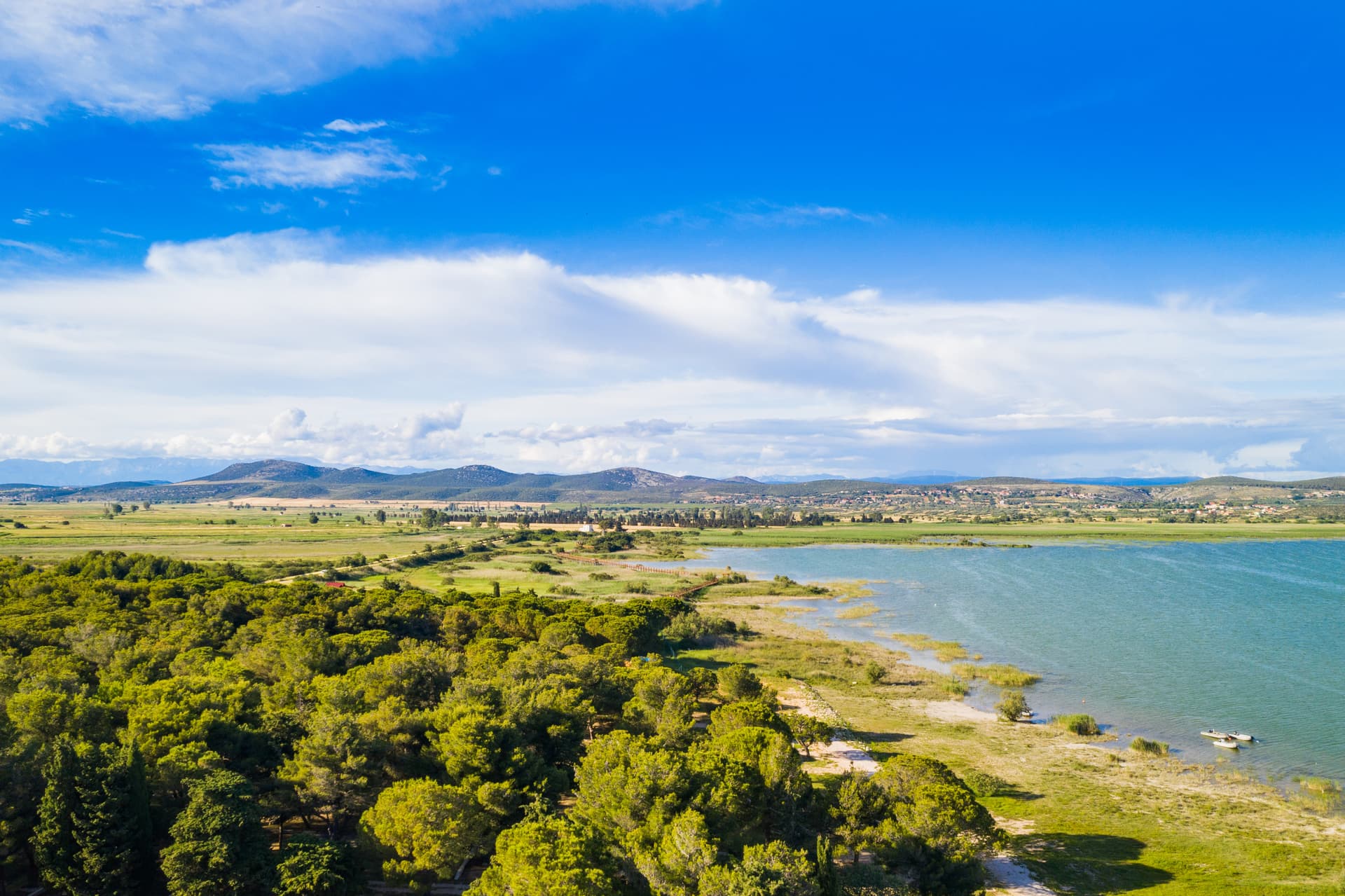
The Vrana Lake Nature Park (Vransko Jezero) stretches across Dalmatia, between Zadar and Šibenik, around Croatia's largest lake. Just minutes from Pakoštane, this protected 57 km² site combines a wetland of European importance, archaeological remains and outdoor activities accessible as a day trip or over several days.
Why visit this park
The park stands out for three complementary strengths. First, it is home to one of the Mediterranean's richest wetlands, with 260 bird species recorded and over one million migratory individuals counted each year according to park authorities. It then offers a coherent network of trails and cycling paths (44 km), navigable without a guide. Finally, it occupies a strategic position between the main cities of the Dalmatian coast, making it a natural stop for those traveling between Zadar and Šibenik.
History of the site
The first traces of human occupation around the lake date back 2,000 years before our era. Near Crkvine, archaeologists have uncovered remains of Roman farms along the ancient aqueduct linking Vrana to Zadar.
In the 18th century, the Borelli family undertook major hydraulic works. The digging of a canal halved the lake level and freed agricultural land around Pakoštane, a landscape configuration still visible today.
Environmental protection of the site began in 1983 with its inclusion on the European list of Important Bird Areas (IBA). It was strengthened in 1999 with the creation of the nature park, which covers 57 km².
What to see and do
The lake and its characteristics
Vrana Lake measures 30.7 km², stretches for 14 km long and 2 km wide. A strip of land just 1 km wide separates it from the Adriatic Sea at its narrowest point. Nevertheless, it is not a lagoon: it is a true freshwater lake, whose level lies below that of the sea.
Bird watching
The park is home to 102 breeding species and 87 wintering species. It contains one of Croatia's last refuges for the purple heron and pygmy cormorant. To make the most of the observation hides and reed beds, bring binoculars or a telescope, as well as an identification guide.
Walking trails
- Vrana Lake Bird Trail: 600 m on a wooden boardwalk through the reeds, route marked with educational panels. Allow approximately 45 minutes, family-friendly.
- Botanical Trail: 5 km loop from Kamenjak viewpoint, passing through Mernjača canyon. Allow approximately 2 hours, intermediate level.
Cycling and mountain biking
The park has 44 km of cycling paths. The MTB 29 Vrana 1 route, 6 km long on asphalt, suits families and casual cyclists. Other longer or more technical routes are marked for experienced practitioners.
Kayaking and fishing
At the information centre at Prosika port, you can rent a single or double kayak for an hour or a full day. Fishing is open for pike and carp, with a permit (daily, 3-day or weekly, moderate rates). A motorised boat can be rented for the day. Fishing is practised only 300 m minimum from the shore, from a kayak or boat; eel, a protected species, is forbidden to catch.
Camping
The Crkvine campsite, integrated into the park and located 2.5 km from Pakoštane, offers tents and mobile homes. It serves as a convenient base for combining early morning bird watching, kayaking trips and cycling trails.
When to visit
Spring and autumn correspond to peak migration times: it is during these periods that species diversity is highest and temperatures remain pleasant for hiking and cycling.
Winter attracts over 100,000 aquatic birds and offers ideal conditions for bird watching, despite very low tourist numbers. Summer is still possible but less interesting for bird life; the heat requires early morning or late afternoon outings.
How to get there
The park has three main entrances: Crkvine, Kamenjak and Prosika port. Crkvine, a 5-minute drive from Pakoštane, is the easiest access from the coast.
Without a vehicle, regular buses connect Zadar and Šibenik to the village of Vrana. A small electric tourist train also runs between Pakoštane and the Crkvine information centre, by prior booking with the park.
Nearby
The park fits logically into an itinerary along the Dalmatian coast. To the south, Diocletian's Palace in Split offers a striking urban and heritage contrast. Further along, on the island of Brač, Zlatni Rat beach completes the visit with an iconic seaside landmark. Inland, the Plitvice Lakes National Park remains the great reference for Croatian aquatic landscapes.
Frequently asked questions
Frequently asked questions
Half a day is enough to combine the Bird Trail and a viewpoint. Allow a full day if you add a kayaking trip or cycling route, and two days to fully enjoy bird watching at sunrise.
Yes. The information centre at Prosika port offers single and double kayak rentals. For bikes, several providers in Pakoštane and around the park rent hybrid and mountain bikes by the hour or day.
Yes. Buses connect Zadar and Šibenik to the village of Vrana, and an electric tourist train runs between Pakoštane and the Crkvine entrance by reservation. Once there, trails and cycling paths allow you to get around without a vehicle.
Spring and autumn, which correspond to migration periods, offer the greatest diversity. Winter remains very interesting for aquatic birds, with over 100,000 individuals present on the lake.
Integrating the park into a trip to Croatia
Vrana Lake Nature Park fits easily into an itinerary between Zadar, Šibenik and the national parks of northern Dalmatia. To build a coherent stay around nature, heritage and islands, consult our ideas for tailor-made trips to Croatia.
Interested in this visit?
We can include it in your personalised itinerary.