Grič Tunnel
Grič Tunnel
A former bomb shelter from 1943 running through Gornji Grad for 350 metres, Grič Tunnel now welcomes exhibitions and events at the heart of Zagreb.
Grič Tunnel cuts through the Gornji Grad hillside, the historic heart of Zagreb, stretching 350 metres from east to west. Designed during World War II as a bomb shelter, it also serves as a pedestrian shortcut between the Upper Town and the lower city. Reopened to the public in 2016 following comprehensive renovation, this underground passage combines historical significance, summer coolness, and regular cultural exhibitions and events.
Why visit Grič Tunnel
- A witness to World War II carved beneath Zagreb's medieval quarter.
- A practical shortcut between the Upper Town and Ilica Street, ideal for connecting the two levels of the capital without climbing stairs.
- A refreshing escape in summer, with stable indoor temperatures year-round.
- Regular cultural programming: temporary exhibitions, artistic installations, activities during the Advent season.
- Free and quick access, taking approximately 5 minutes to traverse completely.
Tunnel history
Grič Tunnel originated during World War II. In 1943, fearing Allied bombing raids, Nikola Mandić, Prime Minister of the Independent State of Croatie (NDH), ordered construction of a bomb shelter beneath Gornji Grad hill, running east to west. The budgeted cost was set at 141.2 million kuna NDH. Due to wartime inflation, the total cost soared to 490 million kuna. The initial 90-day work schedule was far exceeded: completion didn't occur until 1944.
Despite criticism from Zagreb's Construction Committee, which deemed the tunnel too expensive and unsuitable given its limited capacity of 5,000 people, work continued. Certain aspects of the original plan, such as a large central chamber, were abandoned in favour of a single main corridor.
After the war, the tunnel was renovated to reinforce its structure against water infiltration. It was used as a storage facility by the food company Malina in 1949. Several expansion projects toward the Gupčeva Zvijezda area were considered but never materialised.
The tunnel fell into disuse from the mid-20th century onwards, becoming a refuge for the homeless and drug users. It resurfaced in 1993 during the Under City Rave, one of Croatie's first raves, which attracted 3,000 people. It resumed its original role as an air raid shelter during the Croatie independence war (1991-1995), with temporary toilets installed at the Radić Street exit.
Several redevelopment projects were studied in the early 21st century, including a "museum of senses" and an elevator linking Gornji Grad to Tuškanac parking, but were abandoned. A comprehensive renovation plan was adopted in 2015, and the site reopened to the public on 6 July 2016.
What to see and do
The tunnel measures 350 metres long, with a width varying from 3.2 to 5.5 metres in its central section. The journey takes approximately 5 minutes. Raw stone walls and soft lighting emphasise the space's character, and the acoustics lend themselves well to sound installations.
The main section regularly hosts temporary exhibitions and cultural events. During the Advent season, the tunnel becomes part of Zagreb's Christmas market with thematic decorations and light installations, one of the year's most lively periods.
When to visit
The tunnel is open year-round, but two periods stand out:
- Summer (June to September): the underground's coolness provides a welcome respite during hot days in Zagreb.
- Advent (late November to early January): the tunnel is integrated into Zagreb's Christmas market activities, with festive decorations and atmosphere.
The rest of the year, attendance is quieter, allowing you to appreciate the site's raw architecture and occasional exhibitions.
Practical information
- Access: generally free for passage. Some temporary exhibitions may charge admission.
- Hours: daytime and early evening opening. Hours vary by season and events; check before your visit.
- Visit duration: 5 to 15 minutes depending on current exhibitions.
- Comfort: stable and cool temperature; bring an extra layer for summer.
Five entrances
The tunnel has five entrances: Mesnička, Radićeva 19, Art Park 1, Art Park 2, and Ilica. During events, only Mesnička and Radićeva entrances are typically open.
- Mesnička entrance: recommended, located just next to the stairs leading to Strossmayer promenade. Practical if you park at Tuškanac to quickly reach the city centre.
- Radićeva 19 entrance: opposite the Bloody Bridge passage, identifiable by large green doors.
- Art Park and Ilica entrances: useful for connecting the tunnel to cultural spaces in Gornji Grad and Zagreb's main shopping street.
How to get there
The tunnel is located in the heart of Zagreb's historic centre, just a few minutes' walk from Ban Jelačić Square. From the lower city, the Ilica entrance is most direct; from the Upper Town, choose Mesnička or Radićeva. Zagreb's public transport (tram, bus) serves the area via Ban Jelačić Square and Ilica Street.
Nearby attractions
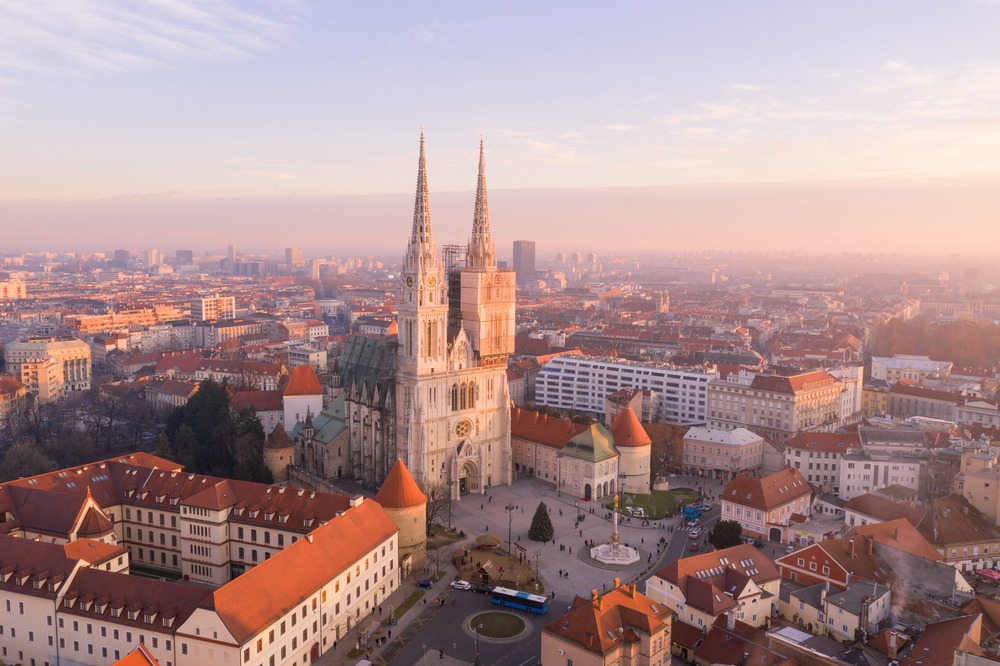
Grič Tunnel sits within the dense fabric of the Gornji Grad neighbourhood. Once you exit, you're just minutes away on foot from the cathedral, Saint Mark's Church and its distinctive coloured tiles, the Museum of Broken Relationships, and Strossmayer promenade overlooking the old fortifications. To extend your exploration of Croatie, consider the Plitvice Lakes National Park or Zlatni Rat Beach in Bol.
Plan your trip
Grič Tunnel naturally fits into a visit to the Croatie capital, complementing the country's major sites. To create a custom itinerary including Zagreb and neighbouring regions, explore our Croatie trips.
Interested in this visit?
We can include it in your personalised itinerary.