The Colored Mosque of Travnik
The Colored Mosque of Travnik
Built in 1815–1816 in Travnik, the Šarena Mosque combines floral painted décor, lateral minaret, and ground-floor shops — a unique example of mixed Ottoman architecture.
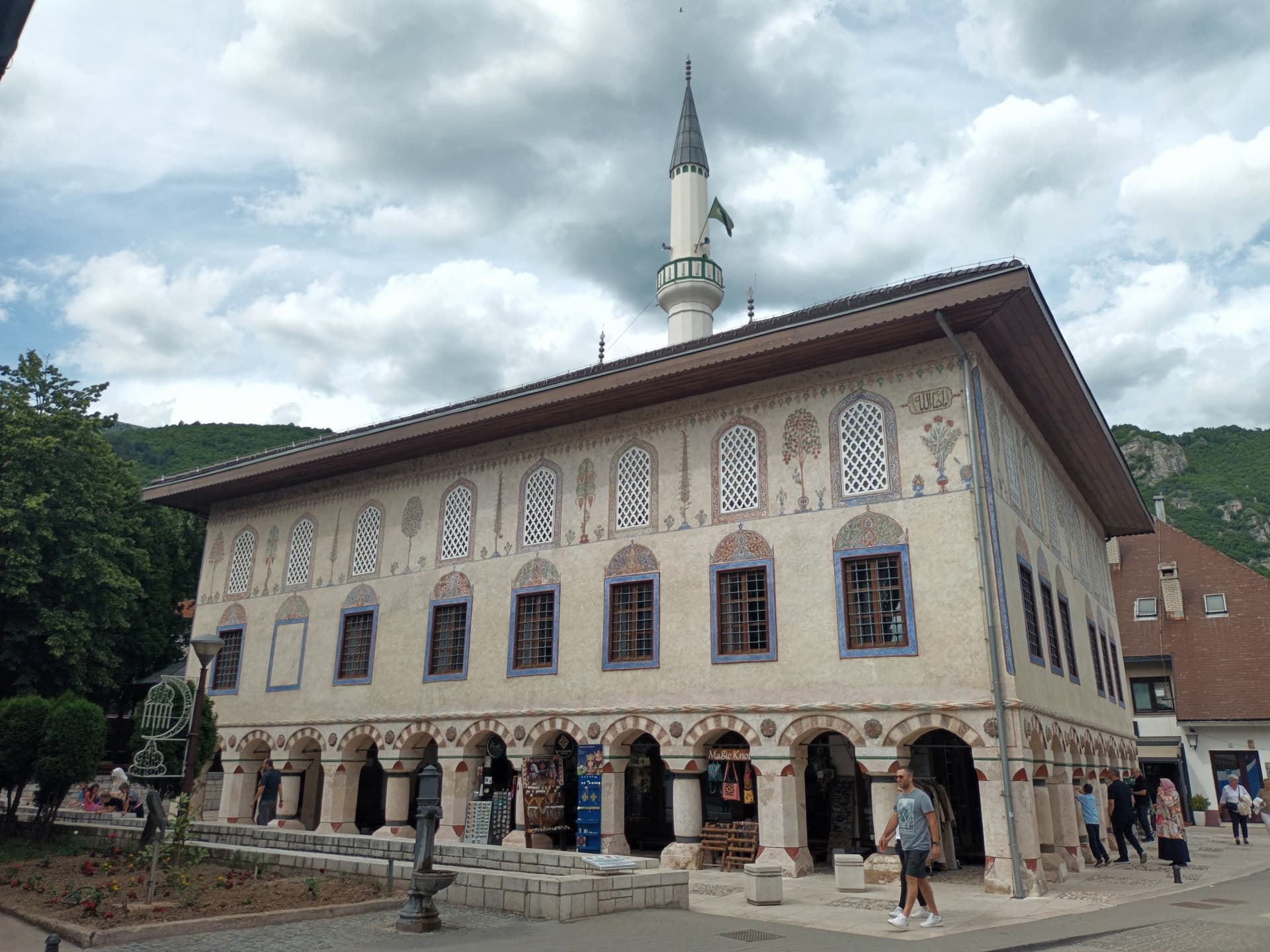
The Colored Mosque of Travnik (Šarena Džamija), also known as Sulejmanija, stands among the most singular religious buildings in Bosnia and Herzegovina. Built between 1815 and 1816 in the Donja čaršija quarter, it merges religious function with commercial activity: its ground-floor shops make it a rare example of mixed Ottoman architecture. Note: Travnik lies in Bosnia and Herzegovina, but appears in our regional guides to the Balkans alongside Croatie.
Why Visit the Colored Mosque
Three qualities set this monument apart:
- Painted decoration with floral and vegetable motifs, exceptional within the Ottoman sphere of the Balkans, which gave rise to its nickname "colored mosque."
- An atypical layout blending a place of worship on the upper floor with a merchant gallery on the ground floor — a direct legacy of Ottoman urbanism.
- An urban position at the heart of the historic bazaar, steps away from Travnik's fortress and the birthplace of Ivo Andrić.
History of the Šarena Mosque
The site has housed a religious building since the late 16th century. The Gazi-agina Mosque was then constructed before being destroyed in 1757. That same year, a new mosque named "Chamilja" was erected in its place, upon short stone pillars, overlooking a bezistan (covered market). The building already had two entrances, ten shops inside and seventy others arranged around it.
Following the fire of 1815, the entire complex was rebuilt by Skopljak Sulejman-pacha, in whose honor the mosque took the name Sulejmanija. In 1903, another fire caused significant damage. The building also suffered harm during World War II, was subsequently used as a residential building, and underwent complete restoration in the 1980s.
What to See On Site
Exterior Architecture
The mosque features a rectangular plan, unusual for local Ottoman architecture. The minaret is positioned on the left side of the building — an atypical arrangement in Islamic architecture, justified here by the instability of the damp soil on the western side. The ground floor retains its original commercial vocation, with shops still operating.
Outside, a historic fountain listed as national heritage is an integral part of the site.
Interior Décor
The interior preserves remarkable decorative elements:
- Painted ornamental sections above the mihrab, the niche indicating the direction of Mecca.
- Vaulted fields surrounding windows, adorned with vegetable motifs.
- Arabic calligraphies on the galleries, citing the names of the companions of the Prophet Muhammad.
- A painted coffered ceiling and wooden columns supporting the upper gallery.
Practical Information
- Visit Duration: allow 20 to 40 minutes for the mosque tour and its immediate surroundings.
- Admission: generally free or modest donation for maintenance.
- Dress Code: as in any Muslim place of worship, plan to wear clothing covering shoulders and knees. Women must cover their hair; a scarf is often available at the entrance.
- Shoes: to be removed before entering the prayer hall.
- Visiting Hours: avoid prayer times to enter. The hall remains closed to non-Muslims during services.
- Photography: permitted outside; ask before photographing the interior.
How to Get There
The Colored Mosque is located in the Donja čaršija quarter (the lower bazaar), easily accessible on foot from central Travnik. Travnik sits approximately 90 km northwest of Sarajevo and 130 km southeast of Banja Luka.
- By Car: from Sarajevo, allow about 1.5 hours via the M5; from Mostar, about 3 hours. Paid parking available downtown.
- By Bus: regular connections from Sarajevo, Banja Luka, Zenica and Mostar. Travnik's bus station is a 15-minute walk from the mosque.
- On Foot: from Travnik's fortress, descend the main street Bosanska — the mosque is recognizable by its lateral minaret.
Nearby Attractions
- Travnik Fortress (Stari grad): medieval citadel overlooking the city, a 10-minute walk away.
- Ivo Andrić's Birthplace: museum dedicated to the Nobel Prize in Literature winner, in the historic center.
- The Hadži Ali-bey Mosque: another Ottoman building in the bazaar.
- The Plava voda Springs: natural site at the town's edge, popular for its waterside restaurants.
To further explore the region, consult our guide on the Pyramids of Bosnia, in Visoko, accessible the same day.
Frequently Asked Questions
Frequently asked questions
The local name Šarena Džamija literally means "motley mosque" or "colored mosque," referring to the painted decoration with floral and vegetable motifs adorning its facades and interior, rare in Ottoman architecture of the Balkans.
Yes, outside prayer times and with appropriate clothing (shoulders, knees and hair covered for women; shoes removed). Discreet behavior is expected.
This arrangement, atypical in Islamic architecture, stems from the instability of damp soil on the western side of the building. The builders chose to anchor the minaret on more stable ground on the eastern side.
Unlike most mosques, the ground floor houses shops. This blend of a place of worship on the upper floor with commercial activity below is a legacy of Ottoman urbanism, preserved since the Chamilja Mosque of 1757.
Half an hour suffices for the mosque itself. Allow 2 to 3 hours to also explore the Donja čaršija bazaar and nearby fortress.
Continue Your Journey in the Region
Travnik fits into a broader Balkan itinerary blending Ottoman heritage, natural sites and coastal towns. To plan your route, consult our suggestions for trips to Croatie and the Balkans, and our guides on Diocletian's Palace in Split or the Walls of Ston.
Interested in this visit?
We can include it in your personalised itinerary.