Pliva Waterfall
Pliva Waterfall
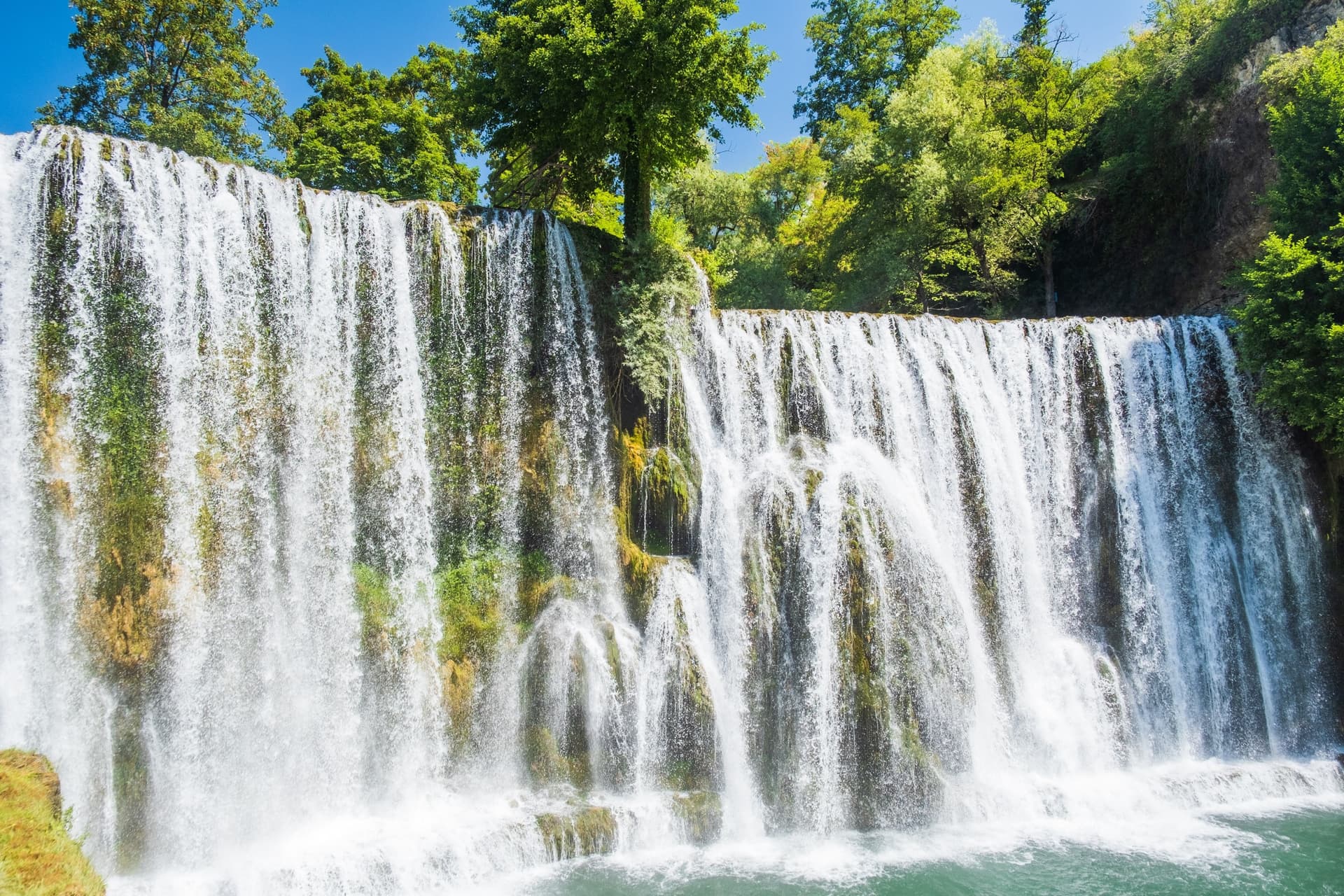
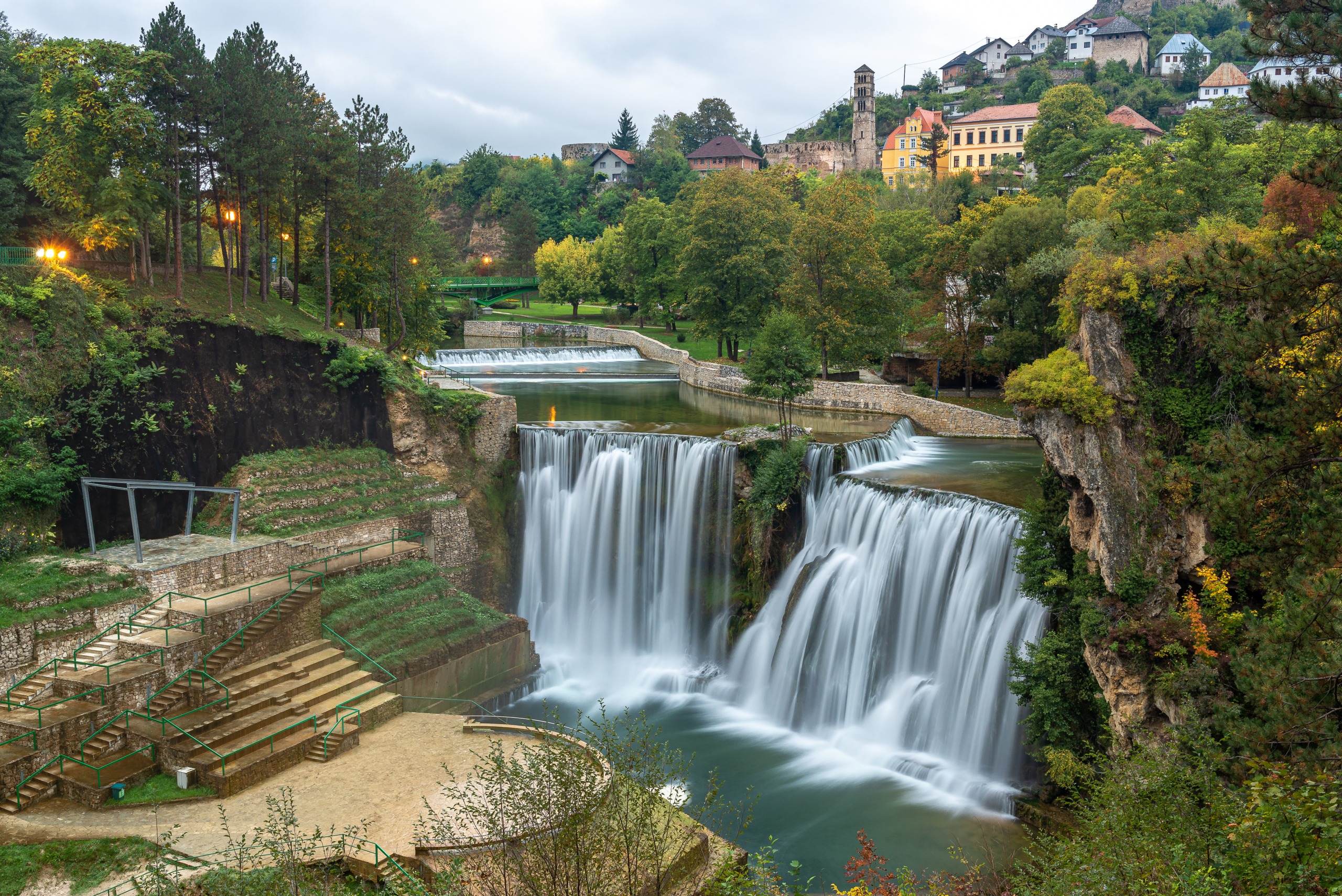
Nicknamed the 'Niagara Falls of Bosnia', the Pliva Waterfall cascades in the heart of Jajce, at the confluence of the Pliva and Vrbas rivers.
Nicknamed the 'Niagara Falls of Bosnia', the Pliva Waterfall is the main attraction of Jajce, in Bosnia and Herzegovina, roughly 162 km from Sarajevo. Ranked among the world's finest waterfalls by National Geographic, it forms at the confluence of the Pliva River and the Vrbas River, right in the heart of the old town.
Why visit the Pliva Waterfall
Three elements make this site truly singular:
- An urban waterfall standing 22 metres high, plunging into the very centre of a historic town—a rare configuration on a global scale.
- Recognition by National Geographic among the world's finest waterfalls, alongside a UNESCO World Heritage candidacy shared with Jajce's fortified old town and the Mithraeum.
- An immediate, densely packed setting: a medieval fortress, catacombs, the Pliva Lakes, and traditional water mills all lie within minutes of the cascade.
History and formation
The waterfall formed approximately 50,000 years ago, following a subsidence of the earth and the gradual accumulation of limestone deposits (tufa) at the junction of the two rivers. Local legend recounts that it appeared at the spot where a young woman took her own life—a tale passed down through generations in Jajce.
The drop once measured nearly 30 metres. Today it stands at just 22. Several factors explain this gradual diminishment:
- the construction of a hydroelectric power station upstream, which altered water flow;
- successive flooding events;
- water course pollution;
- earthquakes;
- damage from the war of the 1990s.
For locals, the waterfall remains a powerful symbol of identity for their town, as emblematic as the fortress that crowns it.
What to see and do
The observation platform
An observation platform built at the foot of the falls allows you to approach the water curtain at its closest and witness its full force. Access is ticketed at a modest rate.
The zipline
A zipline traverses the site just above the waterfall. It's one of Jajce's most thrilling activities, available during the season.
The panoramic viewpoint
To photograph the waterfall with the old town as backdrop, follow this route from the centre:
- Head past the bus station.
- Cross the bridge spanning the Vrbas at the town's edge.
- Continue until a Bosnian cemetery appears on your right.
- A discreet path on the left, just beyond the cemetery, leads to the observation area.
Practical information
- Location: centre of Jajce, immediately near the bus station.
- Visit duration: allow 30 minutes for the platform, 1 to 2 hours if you combine it with the panoramic viewpoint and the old town.
- Platform fee: modest, payable on site.
- Accessibility: the platform and viewpoint involve several steps and a trail; wear closed-toe shoes.
When to visit
The waterfall's flow varies considerably by season:
- Spring (April–June): the most spectacular period, with flow swollen by snowmelt.
- Summer (July–August): more modest flow, but favourable weather and easier access to the zipline and activities on the nearby Pliva Lakes.
- Autumn: interesting colours for photography, fewer crowds.
- Winter: the waterfall may partially freeze in extreme cold, creating an unusual sight; however, some activities (zipline, platform) may be suspended.
How to get there
- From Sarajevo: roughly 162 km, allow 3 hours by road via the M5/M16. Direct buses run several times daily from Sarajevo's bus station.
- From Banja Luka: approximately 80 km south, 1.5 hours by road; regular bus connections available.
- On site: the waterfall is reachable on foot from any point in the old town in under 10 minutes.
Nearby attractions
Jajce, listed by TimeOut among the world's most beautiful places, brings together several remarkable sites:
- The medieval fortress of Jajce, perched at 470 metres altitude, its restored ramparts offering sweeping views over the town and valley.
- The Mithraeum, a Roman temple dedicated to the cult of Mithra, among Europe's best-preserved examples.
- The Pliva Lakes, 5 km away, prized for kayaking and swimming.
- The traditional 19th-century water mills, lined along the canal connecting the two Pliva Lakes—iconic wooden cabins on stilts unique to the region.
When exploring the wider region, other historic sites in the Balkan area warrant a visit, such as the pyramids of Bosnia at Visoko, or along the Adriatic coast, Diocletian's Palace in Split and Frankopan Castle.
Frequently asked questions
Frequently asked questions
It sits in Jajce, Bosnia and Herzegovina, at the confluence of the Pliva and Vrbas rivers, right in the town centre and near the bus station.
Today it measures 22 metres, down from nearly 30 metres historically. Its reduction is due to several factors: the hydroelectric power station, flooding, earthquakes, pollution, and wartime damage.
Viewing from the town is free. The close-up observation platform is ticketed at a modest rate. The elevated panoramic viewpoint is free.
Yes, a zipline crosses the site just above the cascade. The activity operates mainly in season, from spring through autumn, depending on weather.
Spring offers the most impressive flow thanks to snowmelt. Summer is more comfortable for combining the waterfall, Pliva Lakes, and outdoor activities.
30 minutes is sufficient for the platform. Allow 1 to 2 hours if you add the panoramic viewpoint and a walk through the fortified old town.
Include the Pliva Waterfall in your trip
The Pliva Waterfall fits naturally into an itinerary combining Bosnia and Herzegovina with neighbouring Croatie. To plan a bespoke journey through this Balkan region, consult our Croatie trips, which can be extended to major Bosnia sites like Jajce, Sarajevo, or Mostar.
Interested in this visit?
We can include it in your personalised itinerary.