Frankopan Castle
Frankopan Castle
Medieval fortress of the Frankopan family on Krk, built between the 12th and 15th centuries, a witness to the island's Croatian and Venetian past.
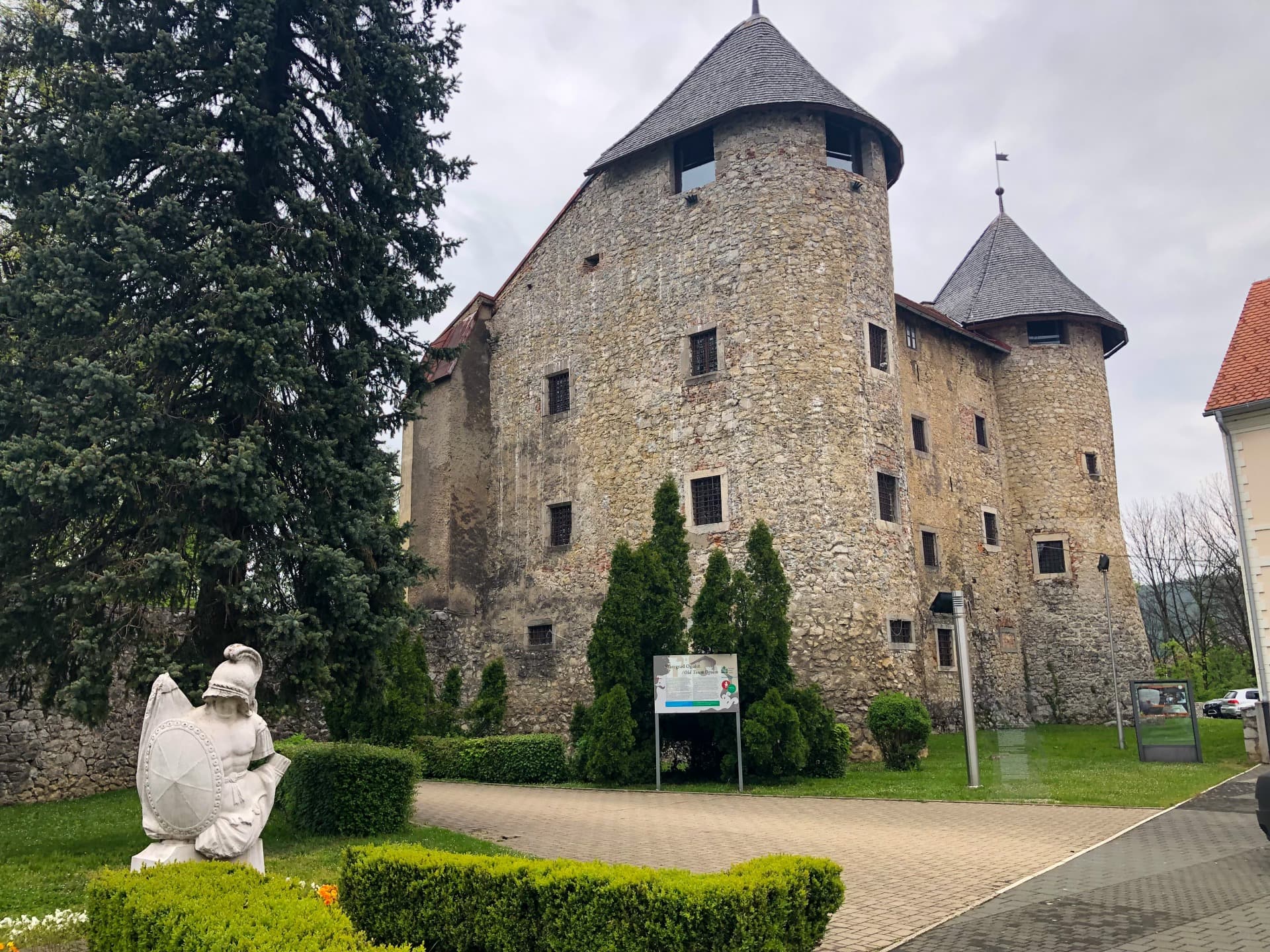
Frankopan Castle dominates the old town of Krk, on the island of the same name, in the north of the Croatian Adriatic. Built by the Croatian princely family of the Frankopan, it was constructed gradually between the 12th and 15th centuries to protect the episcopal city and its port. Its walls blend several construction periods and today preserve readable defensive elements: corner towers, arrow slits, a cistern and medieval inscriptions.
Why visit Frankopan Castle
Three main reasons justify a visit:
- A rare defensive complex in the northern Adriatic, which superimposes Croatian, Venetian and local layers over nearly four centuries.
- Inscriptions and archaeological remains visible on site, including a 4th-century tombstone bearing the earliest written mention of the name Krk.
- A central position, on the waterfront and backed by the cathedral, which makes it easy to link with other monuments in the historic centre.
Allow 45 minutes to 1.5 hours for a visit depending on your interest in epigraphy and military architecture.
Castle history
The castle was built gradually between the 12th and 15th centuries. The oldest part is the square tower adjacent to the bishop's residence. An inscription above its entrance indicates it was built in 1191, under Bishop János and Dukes Bertalan and Vid of Veglia, thanks to the contribution of the community. This tower housed the Frankopan tribunal.
In the 13th century, the complex was enlarged by the addition of a cylindrical tower and low structures. A second square tower was also erected to the east, facing the sea, to extend surveillance beyond what had previously been concentrated on the western side.
The castle underwent two renovation campaigns, one around 1480, another around 1600. A stone tablet bearing the inscription "Aureae Venetorum libertati", placed beneath the winged lion of Saint Mark, testifies to the Venetian renovation. It was during this same period that the second floor and roof of the cylindrical tower were added.
What to see on site
The square tower and its inscriptions
On the ground floor of the square tower, a 4th-century tombstone bears the earliest inscription of the name Krk. An exhibition installed at this level presents an overview of the city's Roman and medieval origins.
The cylindrical tower
Accessible by following the fortress walls, the large cylindrical tower preserves the remains of a door once grilled, now walled up. Inside, the gun placements remain visible, testifying to the structure's defensive role against threats from the sea.
The "Masikult" and southern defences
To the northwest, at the location of the corner tower, stands the structure known as the "Masikult": a covered and enclosed guard post, which was not a true tower. On the southern walls, rifle ports are equipped with elements designed to protect the shooters.
The inner courtyard and cistern
The courtyard formed a vast reception area for soldiers and inhabitants in case of siege. On the southern and western sides, a two-outlet cistern provided drinking water to the occupants.
Practical information
- Duration of visit: 45 minutes to 1.5 hours.
- Entrance fee: paid entry at moderate rates, with reductions for children and seniors.
- Opening hours: daily opening in high season, reduced hours and partial closures on weekends in winter. Check current hours with the Krk tourist office before your visit.
- Accessibility: uneven floors, narrow stairs in the towers, not well suited for pushchairs.
When to visit
The castle can be visited all year round, but conditions vary considerably:
- May to June and September to early October: most comfortable period, mild temperatures, moderate crowds and extended opening hours.
- July-August: maximum opening but high visitor numbers and heat on exposed ramparts.
- November to March: restricted opening, sometimes closed on weekends. Check ahead before travelling.
Prefer late morning or late afternoon to enjoy favourable light on the Venetian inscriptions and the bay.
How to get there
The island of Krk is connected to the mainland by a road bridge since 1980, making it one of Croatia's most easily accessible islands:
- By car: from Rijeka, allow approximately 30 to 45 minutes to the town of Krk via the Krk Bridge (toll on entry).
- By plane: Rijeka Airport is located on the island itself, about thirty kilometres north of Krk.
- By bus: regular connections link Rijeka, Zagreb and several coastal cities to Krk's bus station.
Once in town, the castle is reached on foot from any point in the historic centre: it borders the waterfront, just next to the cathedral.
Nearby
To extend your discovery of Croatia's coastline and heritage, several sites complement a visit to Krk well:
- The Euphrasian Basilica in Poreč, a palaeochristian masterpiece UNESCO-listed in Istria.
- Diocletian's Palace in Split, a Roman complex still inhabited.
- Zlatni Rat Beach on the island of Brač, for a seaside stop in Dalmatia.
- Blaca Hermitage, a former cave monastery in the heart of Brač.
Plan your trip
Frankopan Castle naturally fits into an itinerary combining the northern Adriatic coast, Istria and Dalmatia. To build a tailor-made route blending medieval heritage, islands and coastal cities, consult our Croatia travel ideas.
Interested in this visit?
We can include it in your personalised itinerary.