Zlatni Rat Beach in Bol
Zlatni Rat Beach in Bol
On the island of Brač, near Bol, Zlatni Rat is a 500-meter tongue of shingle that shifts shape with the wind. Beach, pine forest and Roman vestiges.
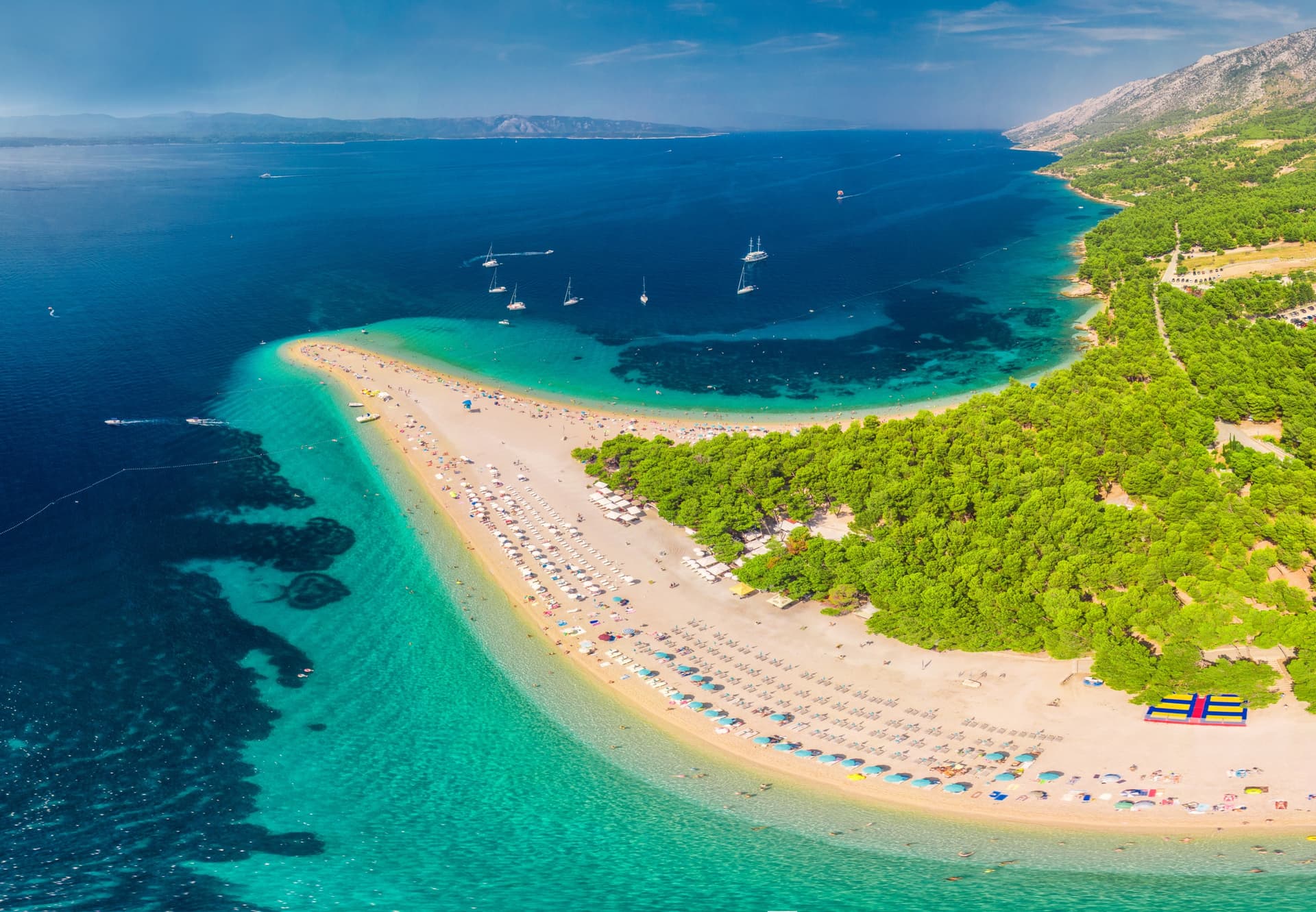
At the southern tip of the island of Brač, near the small town of Bol, Zlatni Rat beach ("Golden Horn") forms a spit of land stretching over 500 meters into the Adriatic. Its V-shaped silhouette, which changes form according to winds and currents, makes it one of Croatie's most photographed coastal landscapes and a recurring landmark in international rankings (New York Times, National Geographic).
Why visit Zlatni Rat
Zlatni Rat owes its reputation to a rare geomorphological feature in the Mediterranean: the spit shifts and curves according to prevailing winds, mainly the Maestral. Measurements taken between 2006 and 2024 indicate an extension of about 80 meters over that period. Contrary to popular belief, it is not a sandy beach but an accumulation of smooth shingle, bordered by water that ranges from turquoise to deep blue depending on depth.
The beach is backed by a century-old pine forest planted in the 1950s, which provides shade and structures the site. The location thus combines scenic appeal, recognized conditions for windsurfing and kitesurfing, and discreet archaeological heritage within the pines.
History hidden in the pine forest
In the midst of the pine forest lie the remains of a Roman Villa Rustica dating from the 2nd century. Roman presence on Brač is further evidenced by tombs uncovered on the road to the village of Murvica, a few kilometers to the west, attributed to the inhabitants of this villa.
The best-preserved element of the site is a rectangular water cistern measuring 6.35 × 3.10 meters. Its base is made of stone blocks, its walls of small cut stones covered with a thick layer of hydraulic plaster. The entire structure was once closed by a barrel vault, now collapsed. The site can be visited freely along the path that runs through the pine forest.
What to see and do here
Swimming
The western part of the beach, with a gentle slope, is suitable for families and inexperienced swimmers. The eastern part descends more steeply and is suited to confident swimmers. The tip itself is exposed to currents that can strengthen rapidly: it is recommended to stay within the zones marked by buoys.
Water sports
The Hvar channel concentrates the Maestral, a regular thermal wind that blows in the afternoon during summer. Several schools located here offer rentals and courses for:
- Windsurfing
- Kitesurfing
- Sea kayaking and stand-up paddle
- Pedalo, jet ski, parasailing
The Borak beach, adjacent to Zlatni Rat on the Bol side, extends the offering with tennis courts, beach volleyball and a diving center.
Roman remains
The path through the pine forest behind the beach leads to the ruins of the Villa Rustica and the cistern described above. Allow about thirty minutes to explore the whole area at a leisurely pace.
Boat excursions
Many coves difficult to access on foot line the southern coast of Brač, to the east and west of Bol. Providers at the port rent motorboats (with or without a license depending on the model) and organize day trips to:
- The Dominican monastery of Bol
- The island of Biševo and its Blue Grotto (Modra Špilja)
- The island of Hvar
- The Pakleni archipelago
Practical information
Loungers and parasols can be rented on the beach during high season. Several beach bars and restaurants offer drinks, ice cream and light refreshments. No area is sandy: water shoes are useful for entering the water comfortably.
If you arrive by car, a paid parking lot is available nearby (hourly or daily rates, to be confirmed on-site). During high season, it becomes full by mid-morning.
As for outdoor accommodation, two campsites are located in the immediate vicinity:
- Camp No.1 Bol, about 50 meters from the beach, under pine forest.
- Camping Aloa, 1.5 km on the waterfront, with its own beach and water activities (kitesurfing, windsurfing, kayaking) as well as access to hiking trails.
When to visit
The bathing season runs from June to September, with peak crowds in July-August. To enjoy the beach with fewer visitors, aim for early morning or late afternoon. Windsurfers and kitesurfers come mainly in July-August, when the Maestral is most regular (usually midday). May-June and September offer a good compromise: pleasant water, fewer crowds and softer light for photography.
How to get there
Bol is not directly connected to the mainland by road: you must take a ferry from Split, then reach Zlatni Rat from the port of Bol.
- Via Supetar: Split–Supetar ferry (about 50 minutes), then Supetar–Bol bus (about 1 hour). This option operates year-round with several daily rotations.
- Direct Split–Bol link (about 1 hour): available mainly during the season, with reduced frequency. Check schedules on the Jadrolinija website.
From Bol port, the beach is about 2 km to the west. You can walk via the coastal promenade (20-25 minutes), by bike, or take the small tourist train that operates in high season at regular intervals.
What to see in the surrounding area
To extend your stay in Croatie, several sites complement a visit to Brač well:
- Plitvice Lakes National Park, inland, for its waterfalls and terraced lakes.
- Vrana Lake Nature Park, the country's largest natural lake, ideal for birdwatching.
- Grič Tunnel in Zagreb, for an urban stop at the beginning or end of your trip.
Frequently asked questions
Frequently asked questions
No. Despite its light appearance in photos, Zlatni Rat is a shingle beach. Water shoes make entering the water more comfortable.
The spit is shaped by winds and currents in the Hvar channel. It shifts with the seasons and has extended by about 80 meters between 2006 and 2024.
Two options: a ferry to Supetar then a bus to Bol (about 2 hours total), or a direct Split–Bol ferry in season (about 1 hour). From Bol port, the beach is 2 km to the west.
Yes. The remains of the Villa Rustica (2nd century), including a well-preserved rectangular cistern, are located in the pine forest behind the beach and are freely accessible via the trail.
From June to late August, when the Maestral thermal wind blows regularly at midday. Several schools rent equipment on-site.
Include Zlatni Rat in your trip
Brač fits easily into an itinerary in central Dalmatia, between Split, Hvar and the continental interior. To build a tailor-made trip including Zlatni Rat beach and other Croatian destinations, consult our suggestions for trips to Croatie.
Interested in this visit?
We can include it in your personalised itinerary.