Paklenica National Park
Paklenica National Park
Between the Adriatic and Velebit, Paklenica National Park protects two karst canyons, over 400 climbing routes and 150 km of trails near Starigrad.
Paklenica National Park spans 95 km² between the Adriatic Sea and the heights of the Velebit massif in northern Dalmatia. It protects two spectacular karst canyons, vertical limestone cliffs favored by climbers, and a dense network of mountain trails. Accessible from Starigrad, it is one of Croatie's major protected natural areas.
Why visit Paklenica
Paklenica concentrates several contrasting landscapes within a confined territory: deep gorges, forests of beech and black pine, peaks exceeding 1,700 meters and karst caves. The park is integrated into the Velebit massif, designated a UNESCO Biosphere Reserve in 1977. Part of its ancient beech forests was further inscribed in 2017 as a UNESCO World Heritage site, as part of the transnational serial property Primary Beech Forests of the Carpathians and Other Regions of Europe.
Hiking, climbing and caving enthusiasts will find some of the country's most demanding terrain. Visitors coming for just a day can enjoy the lower section of Velika Paklenica canyon, accessible without particular experience.
Park history
Paklenica National Park was established in 1949 to protect Dalmatia's largest preserved forest complex. Its name derives from paklina, resin extracted from local black pines. This resin was once used to waterproof boat hulls and was also used in traditional remedies.
The park is part of the Velebit massif, designated a UNESCO Biosphere Reserve in 1977. In 2017, its ancient beech forests were added to UNESCO World Heritage, strengthening its status as a priority conservation zone.
What to see and do
The canyons of Velika and Mala Paklenica
The park is organized around two parallel gorges. Velika Paklenica, stretching 14.5 km, is the most accessible: a trail follows the river between walls reaching 400 meters in height. The route crosses forests, rock boulders and ancient stone buildings, leading to a mountain refuge that serves as a base for ascents.
Mala Paklenica, narrower and wilder, remains little frequented. Its route is considerably more technical and is suited for self-sufficient walkers.
Climbing on Anića Kuk
Paklenica is one of the Balkans' premier climbing sites, with over 400 equipped routes covering all levels. The emblematic wall is Anića Kuk, which rises to 350 meters. Each May 1st, the park hosts the Big Wall Speed Climbing competition, which brings together international climbers.
Trails and peaks
The network of marked trails exceeds 150 km. From the refuge, experienced hikers can reach the summits of Sveto Brdo and Vaganski Vrh (1,757 m), the park's highest point, offering views of the Adriatic and the Velebit range.
Manita Peć cave
Manita Peć is the only cave equipped for visitors in the park. It features stalactites, stalagmites and mineral columns, some formations bearing evocative names such as the Helmet or the Witch. The cavity is also an important habitat for several species of bats and rare invertebrates studied by biospeleologists.
The visit lasts approximately 30 minutes and takes place only with an official guide. The temperature remains constant around 9 °C, so bring a jacket even in the height of summer.
Flora and fauna
The park records nearly 1,000 plant species and subspecies. Forests blend oaks, oriental hornbeams, beeches and black pines. Among birds, you can observe the griffon vulture, peregrine falcon, golden eagle, Neumayer's nuthatch and blue rock thrush. Mammals present include roe deer, chamois and brown bear, the more elusive.
Practical information
The park is open year-round, with extended hours during the high summer season. Admission is paid (moderate fee, varies by season), with a supplement for the guided tour of Manita Peć cave, accessible only on certain fixed days. A multi-day pass is offered for visitors wishing to combine hiking and climbing. Check current conditions on the park's official website before your visit, especially for the cave.
- Allow half a day for the lower section of Velika Paklenica canyon.
- A full day to reach the refuge and return.
- A minimum of two days for summits or long climbing routes.
When to go
The best periods are spring (April to June) and early autumn (September-October), when temperatures remain moderate and high mountain trails are passable. In the height of summer, heat can be strong in the canyon, but dense forests provide welcome shade. In winter, snow-capped peaks are reserved for equipped hikers.
How to get there
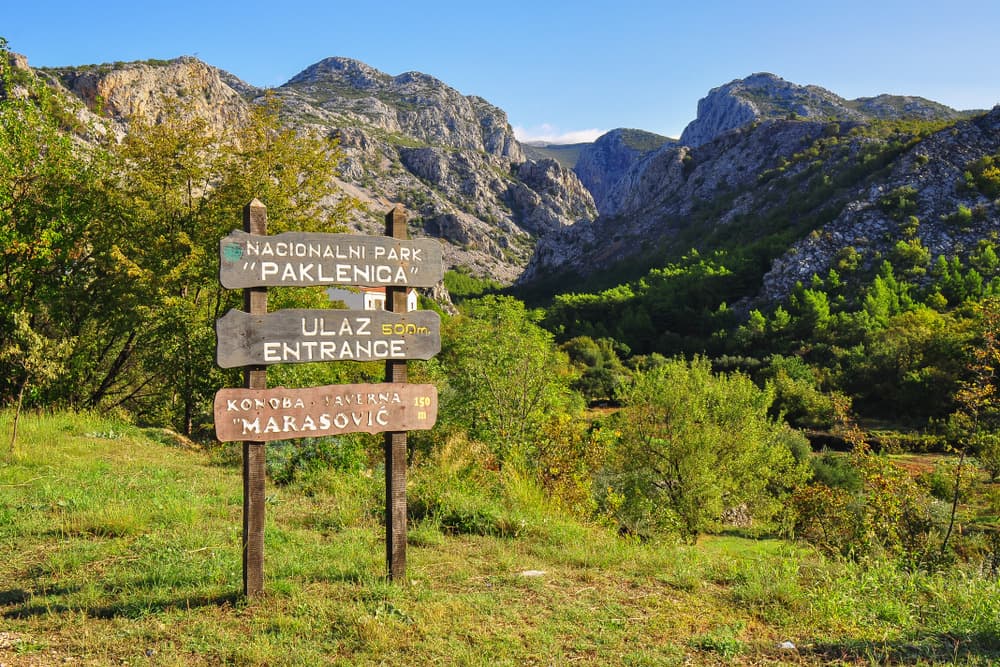
The park's main entrance is approximately 1.3 km from Starigrad, on the Dalmatian coast. From Zadar, buses regularly serve Starigrad; simply get off at the park stop and walk to the entrance. By car, allow approximately 45 minutes from Zadar via the coastal road.
Nearby
The region offers several natural and cultural extensions:
- The Vrana Lake Nature Park, Croatie's largest natural lake, approximately one hour's drive away.
- The Zlatni Rat beach, on the island of Brač, to combine mountains and coast.
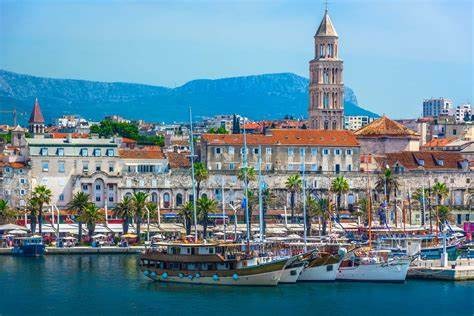
- The Diocletian's Palace in Split, approximately three hours' drive to the south.
Frequently asked questions
Frequently asked questions
Half a day is enough to walk the lower section of Velika Paklenica canyon. To reach the refuge or summits, plan a full day or even two days with an overnight stay.
No. The main trail through Velika Paklenica is accessible to families. More demanding routes to Vaganski Vrh or Mala Paklenica, however, require good fitness and self-sufficiency.
No, it is only accessible certain fixed days per week, primarily between spring and autumn, and only with an official guide. Check the schedule with the park before your visit.
Yes, several routes are suitable for beginners and local climbing schools offer introductory lessons. For long routes on Anića Kuk, confirmed experience is essential.
Yes. Buses connect Zadar to Starigrad; the park entrance is 1.3 km from the stop, accessible on foot.
Organize your trip
Paklenica National Park fits easily into an itinerary combining the Dalmatian coast and mountainous hinterland. To build a custom itinerary including hiking, UNESCO sites and coastline, consult our trips to Croatie.
Interested in this visit?
We can include it in your personalised itinerary.