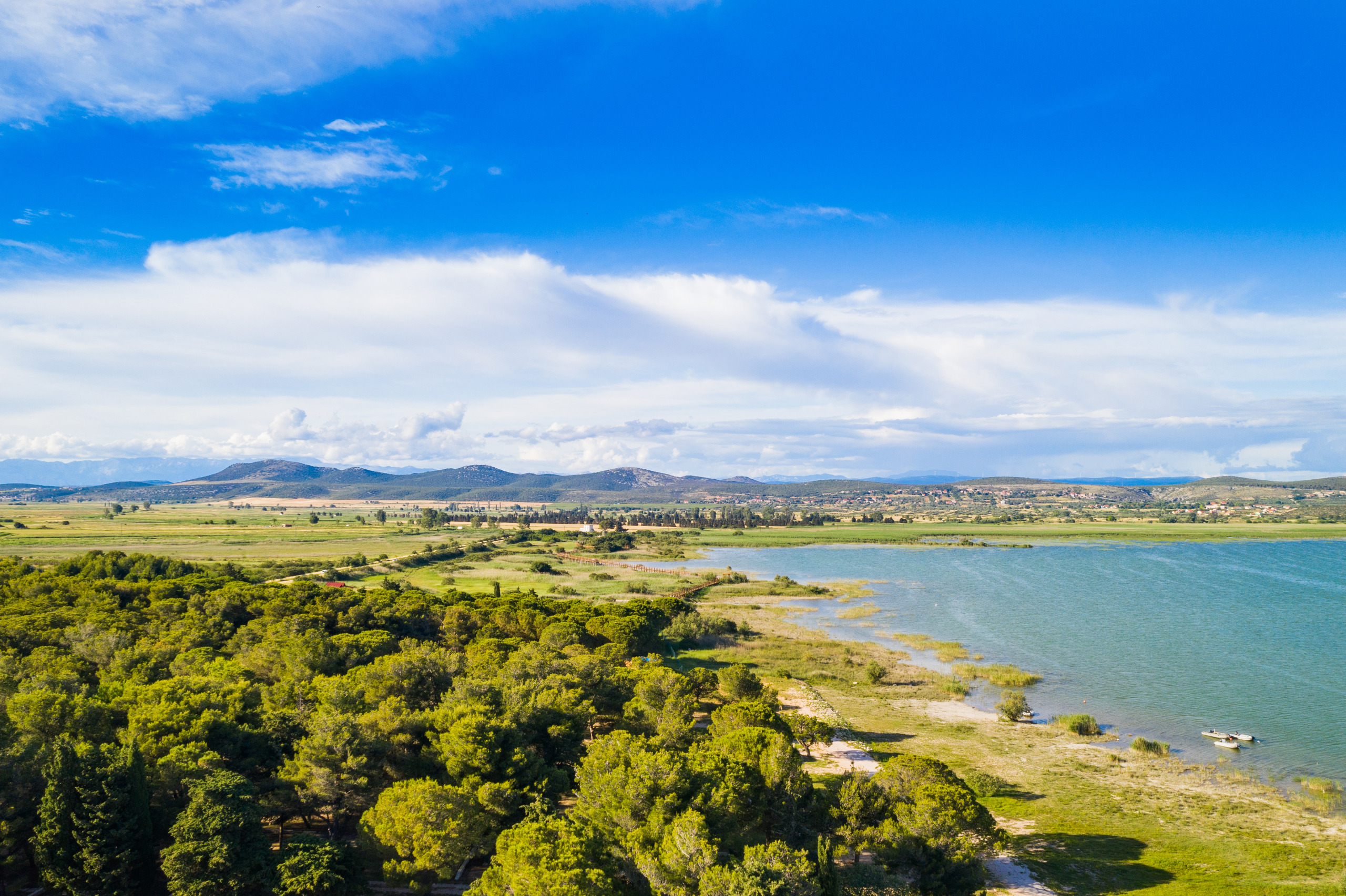
Plitvice Lakes National Park
Plitvice Lakes National Park
A UNESCO World Heritage site, Plitvice Lakes National Park features 16 terraced lakes and 92 waterfalls between Zagreb and Zadar, sprawling across nearly 30,000 hectares of forest.
The Plitvice Lakes National Park, situated between Zagreb and Zadar, is Croatia's oldest and largest national park. Listed as a UNESCO World Heritage site since 1979, it spans nearly 30,000 hectares and owes its fame to a remarkable complex of 16 terraced lakes linked by 92 waterfalls, sculpted by travertine deposits over millennia.
Why Visit Plitvice
The park brings together active karst geology, dense biodiversity, and a network of trails and wooden boardwalks that allow visitors to get close to the water. The lakes display a spectrum of blues and greens that shift with the light, depth, and dissolved minerals. Surrounding the lakes, a mixed forest of beech, fir and maple trees shelters over 1,400 plant species and fauna including deer, foxes, otters, bats, and more elusive creatures such as lynx, wildcat and brown bear.
The site can be explored on foot in half a day to a full day, with trails of varying difficulty levels.
A Bit of History
The area was originally inhabited by the Thracians and has seen continuous occupation since antiquity. Tourist interest emerged in the 19th century with the opening of the first inn, then took more formal shape in 1893 with the establishment of a preservation association. The region was officially declared a national park in 1949, then inscribed as a UNESCO World Heritage site in 1979.
During the Bosnian War, several buildings on the site were destroyed or burned, leading UNESCO to place it on the World Heritage in Danger list. After the conflict, cleanup and renovation efforts allowed its removal from that endangered list in 1998.
What to See and Do
Trails and Waterfalls
The park offers eight marked circular walking routes, distributed between the lower and upper lakes. The shortest itineraries cover the lower lakes in 2 to 3 hours, while longer loops include a boat crossing and take 3 to 4 hours, up to a full day to explore everything. Wooden boardwalks run along the water's edge close to the falls, including the dramatic Veliki Slap, the park's highest waterfall.
Electric Boat Tour
An electric boat shuttle crosses Lake Kozjak, the largest of the sixteen lakes. It connects the upper lakes to the lower lakes and serves as a logical junction point between itineraries. The electric motor was chosen to avoid disturbing the ecosystem.
Flora, Fauna and Caves
In spring, meadows burst with orchids and anemones; in autumn, deciduous trees turn gold and red. Several karst caves are accessible from the trails and offer insight into the region's unique geological formations. Wildlife watching remains discreet: large mammals are rarely spotted, but birdlife is abundant.
When to Visit
The park is open year-round and each season offers a different experience:
- Spring (April-June): maximum waterfall flow thanks to snowmelt, vegetation in full recovery.
- Summer (July-August): warm and sunny weather, but heavy crowds; arrive early morning.
- Autumn (September-October): mild temperatures, vibrant colours and moderate visitor numbers.
- Winter (November-March): quieter atmosphere with partially frozen lakes; certain trail sections and boat shuttles may be closed depending on weather.
Practical Information
The park has two entrances. Entrance 1 is closest to the lower lakes and the great waterfall. Entrance 2 provides direct access to the upper lakes and Lake Kozjak. Both are connected by the park's internal shuttles (buses and boats).
Opening hours and admission fees vary significantly by season: budget-friendly entry in winter, higher rates in July-August, with earlier last entry times in winter due to early darkness. Young children are exempt and a 2-day ticket offers savings. It's best to check the official website before departure to verify current conditions and, during peak season, book your time slot online.
Swimming is prohibited throughout the park to preserve the fragile travertine formations that structure the basins. To cool off, visitors can swim in the nearby rivers Korana, Gacka and Una.
How to Get There
The park is located in central Croatia, 129 km south of Zagreb and 113 km north of Zadar. Car rental or private transfer remain the most flexible options, especially to reach the entrance best suited to your itinerary. Direct buses also link both park entrances to Zagreb, Zadar and Karlovac, with higher frequencies during peak season.
Nearby Attractions
The nearest town is Slunj, approximately 30 km to the north, known for its water mills at Rastoke. Korenica (25 km to the south) and Rakovica (20 km to the northeast) provide alternative accommodation options.
The region lends itself to various outdoor activities: tandem paragliding above Bjelopolje, whitewater rafting on the Mrežnica river, horse riding in the Korenica valley, quad biking or cycling trails around Rakovica. On the culinary side, villages in the Lika region offer rustic cuisine featuring specialties such as roasted lamb and škripavac cheese.
If you extend your stay toward the coast, you can follow up with Diocletian's Palace in Split or Zlatni Rat beach on the island of Brač. From Zagreb, the Grič Tunnel and the Museum of Broken Relationships round out an urban visit.
FAQ
Frequently asked questions
No. Swimming is prohibited throughout the park to preserve the travertine formations that make up the natural barriers between the lakes. For swimming, visitors should head to the nearby rivers Korana, Gacka and Una.
Slunj, approximately 30 km to the north, is the nearest town. Korenica (25 km to the south) and Rakovica (20 km to the northeast) also offer accommodation options and good access to the park entrances.
Allow 2 to 4 hours for short loops (lower or upper lakes only) and a full day to explore the entire site, including the boat shuttle.
Entrance 1 opens onto the lower lakes and the great waterfall; Entrance 2 opens onto the upper lakes and Lake Kozjak. Both are connected by internal shuttles, so the choice depends mainly on your arrival route.
To incorporate Plitvice into a complete itinerary, check out our ideas for travel in Croatia.
Interested in this visit?
We can include it in your personalised itinerary.