Marco Polo Museum
Marco Polo Museum
In Korčula, the Marco Polo Centre occupies three medieval houses and explores the life of the 13th-century explorer, whose birthplace the city claims.
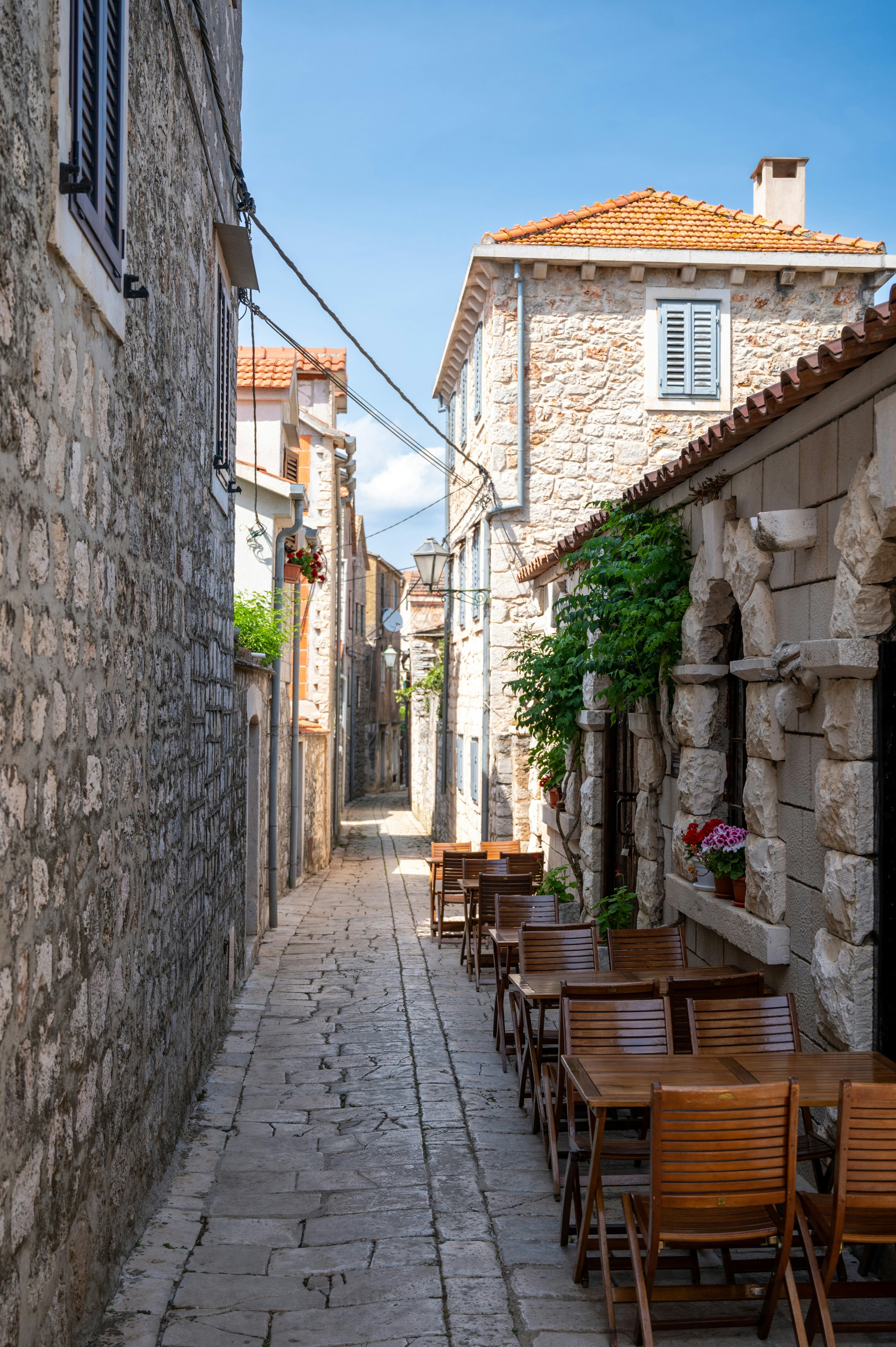
On the island of Korčula, in southern Dalmatia, the Marco Polo Centre (formerly the House of Marco Polo) occupies three medieval buildings in the heart of the fortified town. The site explores the life and travels of the 13th-century merchant-explorer, whose birthplace the town claims — a contested but locally rooted tradition.
Why visit the Marco Polo Centre
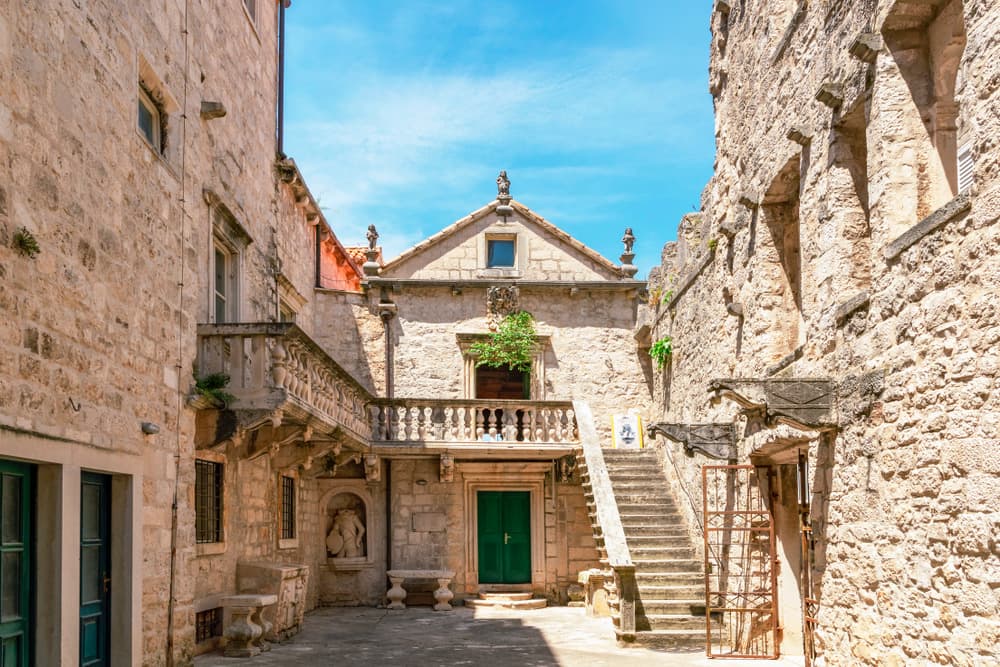
The appeal of the place lies in three elements. First, the buildings themselves: three medieval houses whose interior walls revealed, during recent work, the oldest remains on the island. Next, the museum content: thematic exhibitions on the Polo family, the Silk Road, and the 1298 naval battle of Korčula. Finally, the loggia at the top of the tour, which opens onto a panoramic view of the red roofs of the old town and the Pelješac channel.
The centre appeals equally to history enthusiasts and passing visitors seeking to contextualise their stop. Allow 1 to 1.5 hours for your visit depending on your pace.
Was Marco Polo really born in Korčula?
Marco Polo's birthplace remains a subject of debate. Historical consensus places his birth in Venice in 1254, but Korčula also claims this heritage. At the time, the island was part of the Republic of Venice, which makes both theories coherent from an administrative standpoint.
According to local tradition, Marco Polo was descended from a family of merchants established in Korčula before emigrating to the lagoon. One argument often arises in the debate: his father and uncle left on an expedition to Asia before his birth and only met him upon their return, fifteen years later. For proponents of the Croatian thesis, it is hard to imagine a motherless child crossing the Adriatic alone to join Venice.
No formal proof allows us to settle the matter. The centre presents both accounts without imposing an official version.
What to see inside
Architecture of the buildings
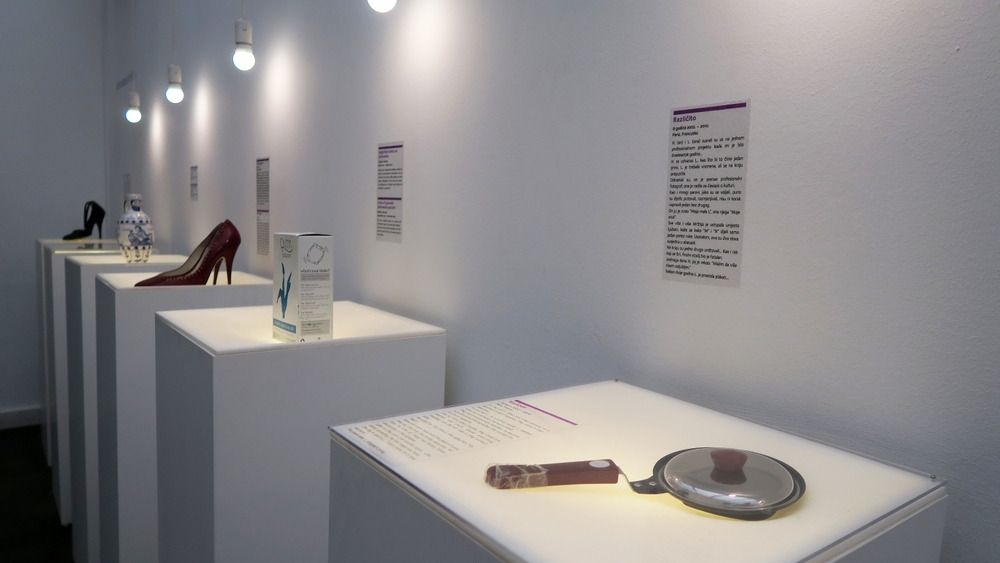
The three structures preserve Gothic and Renaissance elements: carved stone niches, period fireplaces, built-in wall shelves. The tour highlights these details rather than concealing them behind scenography.
Thematic exhibitions
- The Polo family: genealogy, Venetian merchant context, early voyages of father and uncle.
- The Silk Road: reconstructed route of his 24-year journey through Asia, to the court of Kublai Khan.
- The naval battle of Korčula (1298): confrontation between Venice and Genoa during which Marco Polo was reportedly captured.
- The Devisement du Monde: the account dictated in prison to Rustichello of Pisa, which became one of the most widely translated works in the world.
The loggia
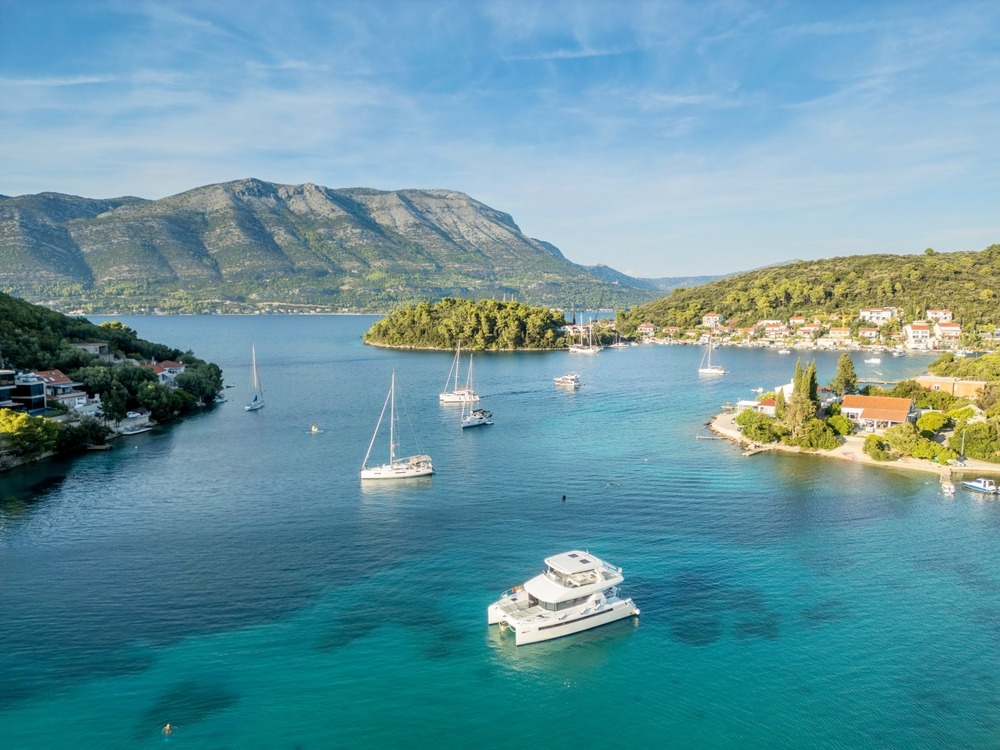
At the end of the tour, the terrace-loggia offers a clear view of the old town, the port, and the Pelješac peninsula opposite. It is a good vantage point for photography before descending back into the narrow streets.
When to go
The centre is open year-round, but with very different operating hours depending on the season. In summer (May to October), it welcomes visitors during continuous daytime hours, often until evening. For the rest of the year, opening is limited to weekdays and office hours. Check current opening times on-site or with the tourist office before your visit.
The best time to visit Korčula remains May-June and September: mild temperatures, moderate crowds, ferries in operation. In July-August, the old town becomes crowded mid-day — prefer a visit early morning or late afternoon.
Practical information
- Address: historic heart of Korčula, access via the main East gate of the old town.
- Landmark: from the Torre Revelin, the centre is a few minutes' walk along the main street.
- Admission: moderate entrance fee; English-language guided tours available by reservation at a premium rate.
- Duration of visit: 1 to 1.5 hours.
- Shop: merchandise related to Marco Polo and his travels at the end of the tour.
How to get there
Korčula is an island; access is necessarily by sea.
- Ferry from Orebić (Pelješac peninsula): short and frequent crossing in high season, more spaced out in low season.
- High-speed catamarans from Split and Dubrovnik: daily connections in season, to be booked in advance in July-August.
- Shuttle service to Hvar and Mljet to combine several Dalmatian islands.
By car, leave your vehicle at the municipal car park on the outskirts of the old town — the latter is pedestrian-only. The centre is accessible on foot in minutes from the port.
Nearby attractions
Korčula fits into a broader Dalmatian itinerary. To the north, Split is home to the Palace of Diocletian, a Roman complex inscribed on the UNESCO list. The nearby island of Brač stands out for the Zlatni Rat beach, a horn-shaped tongue of white pebbles. On the Pelješac peninsula, just across from Korčula, the walls of Ston protect the ancient salt pans of the Republic of Ragusa.
Frequently asked questions
Frequently asked questions
No formal proof confirms it. The majority of historians place his birth in Venice in 1254, but Korčula, then part of the Republic of Venice, also claims this heritage. The centre presents both theses.
Allow 1 to 1.5 hours to tour the three buildings, read the exhibitions, and enjoy the panoramic loggia.
Yes, but with very limited hours outside the season (weekdays only, daytime only). In summer, hours are considerably more extensive. Check current opening times before making the trip.
High-speed catamarans connect Split and Dubrovnik to Korčula daily in season. A shuttle service also operates to Hvar and Mljet, making it possible to combine several islands without a vehicle.
To include Korčula and the Marco Polo Centre in a tailor-made Dalmatian itinerary, explore our trips to Croatie.
Interested in this visit?
We can include it in your personalised itinerary.