Mirogoj Cemetery
Mirogoj Cemetery
Monumental cemetery in Zagreb designed by Hermann Bollé, celebrated for its neo-Renaissance arcades, funerary sculptures and multi-faith character.
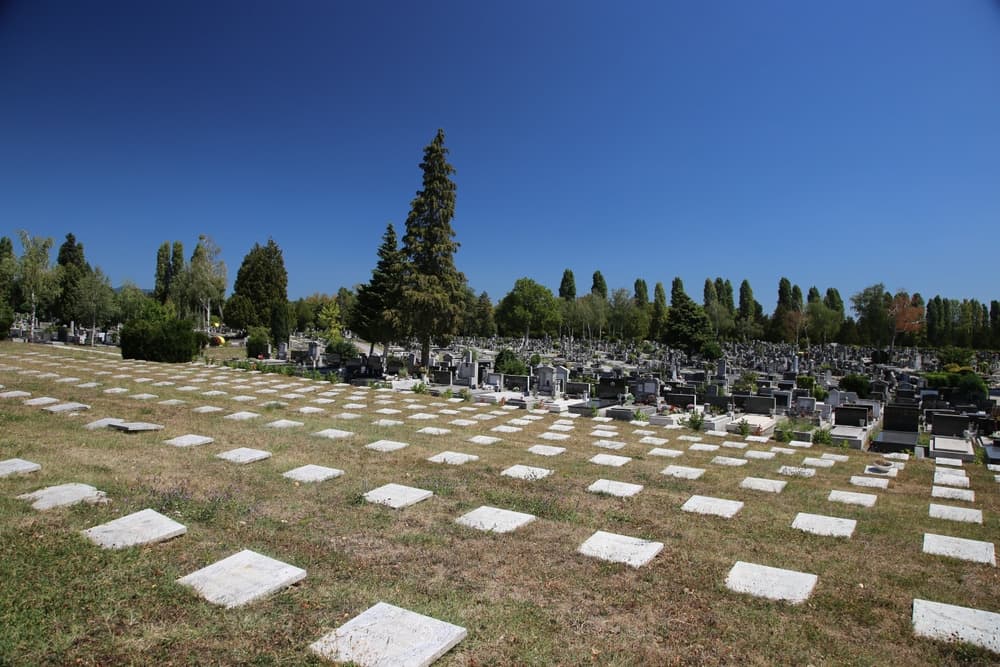
The Mirogoj Cemetery, situated at the foot of Mount Medvednica north of central Zagreb, stands as one of Central Europe's great funerary complexes. Designed in the late 19th century by architect Hermann Bollé, it brings together on a single site a neo-Renaissance necropolis, a landscaped park and several memorials linked to Croatie's history. Its multi-faith character and the quality of its funerary sculptures make it a compelling destination for lovers of art, history and taphophilia (passion for cemeteries and funerary art).
Why visit Mirogoj
Mirogoj concentrates in one place several layers of Zagreb's heritage: 19th-century architecture, funerary sculpture from the 19th and 20th centuries, memory of the conflicts that marked Croatie, and a living tradition of remembrance. Unlike many historic European cemeteries, it remains an active place, visited daily by residents. The visit is suited to a leisurely walk, with no entrance fee, at a reasonable distance from the city centre.
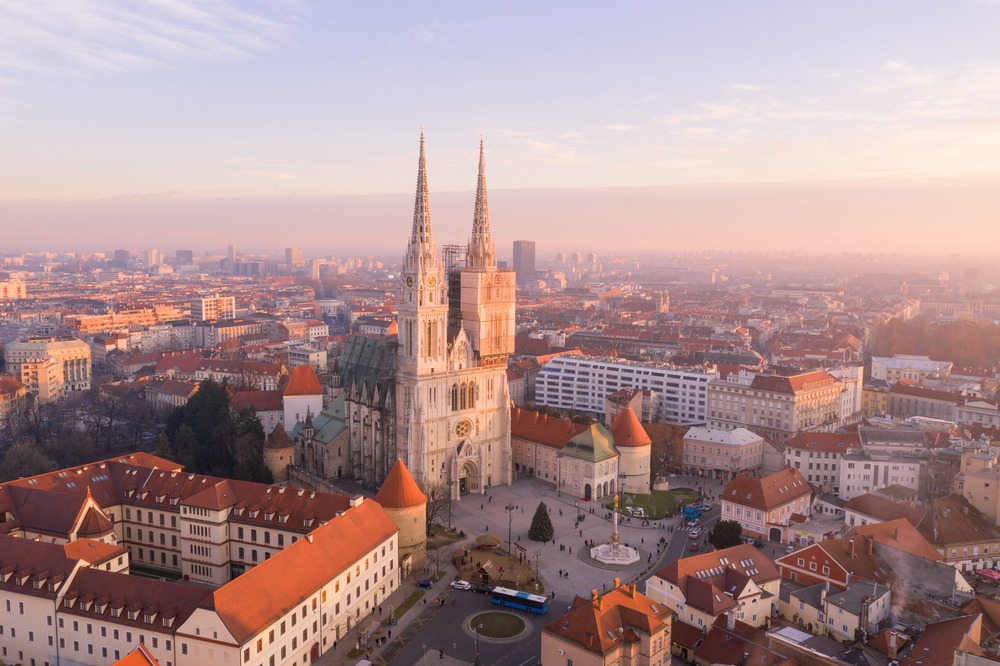
To situate the site within its urban context, see our Zagreb guide.
History of the cemetery
Mirogoj was inaugurated on 6 November 1876. It was established on land that had belonged to linguist Ljudevit Gaj, a major figure in the Croatian national revival, acquired by the city after his death in 1872. Architectural design was entrusted to Hermann Bollé, who was also responsible for the renovation of Zagreb Cathedral.
Work on the arcades, domes and the church at the entrance began in 1879. Due to lack of continuous funding, they were not completed until 1929, some fifty years later. The ensemble represents one of the finest examples of neo-Renaissance style in the region.
On 22 March 2020, during the COVID-19 pandemic, a magnitude 5.5 earthquake struck Zagreb and caused significant damage to the cemetery, particularly to its iconic arcades. Restoration work has been ongoing since.
What to see
The arcades and Bollé's architecture
The main entrance opens onto arcades stretching 500 metres long, punctuated by domes topped with oxidised green copper. Ivy clings to the columns, forming in summer a continuous verdant mantle over the pale stone. The painted motifs inside the domes and the regular rhythm of the arches illustrate Bollé's eclectic approach, combining Italian Renaissance references with Austro-Hungarian historicist vocabulary.
Sculptures and artists' graves
Along the pathways, family tombs gather works signed by Croatien sculptors from different eras. Styles range from 19th-century academicism to 20th-century modernism. The arcades shelter the remains of many notable figures from Croatie and former Austria-Hungary: writers, composers, scientists, politicians. Among the most visited graves is that of Franjo Tuđman, first president of the Republic of Croatie.
Commemorative monuments
Mirogoj houses several monuments linked to 20th-century conflicts:
- Monument to Croatien soldiers who fell during the First World War (1919).
- Monument to victims of Bleiburg and the Way of the Cross (1994), dedicated to victims from the end of the Second World War.
- German military cemetery (1996), containing more than 4,430 soldiers.
- 'Voices of Croatien Victims – Wall of Pain', in tribute to victims of the Croatien War of Independence (1991–1995).
A multi-faith cemetery
Mirogoj has the distinction of bringing together Catholic, Orthodox, Muslim, Jewish and Protestant burials on a single site. This characteristic, rare at the time of its creation, is evident in the diversity of symbols, inscriptions and architectural treatments. Several sections are organised by faith, yet the ensemble forms a single municipal cemetery.
When to visit
The cemetery is open year-round. Spring and summer highlight the ivy-clad arcades and park vegetation; autumn offers softer light, ideal for photography.
The most poignant time remains All Saints' Day, 1 November, when residents come to lay flowers and light candles at graves. In the evening, thousands of flames illuminate the arcades and pathways. This is also the busiest day; it is best to avoid late afternoon to move about peacefully.
How to get there
Mirogoj is located approximately 2.5 km north of the main square (Trg bana Jelačića).
- Bus 106: departing from Kaptol, beside the cathedral. Journey of about 7 minutes to the Krematorij terminus. For the monumental entrance, get off at the Mirogoj stop.
- Bus 226: alternative route, continuing eastward thereafter.
- On foot: approximately 30 minutes from Kaptol, via a steady climb.
Practical information
- Access: free.
- Hours: daytime opening, with extended hours in summer compared to winter. Check current opening hours with the tourist office before visiting.
- Duration: allow 1 to 2 hours for a general overview, longer if you wish to locate the graves of notable figures.
- Dress code: a place of remembrance, smart casual dress recommended; discreet photography near occupied graves.
Nearby
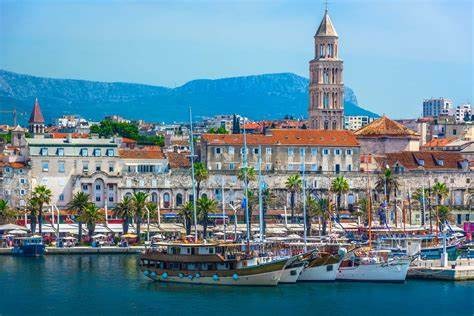
Mirogoj combines well with a day in Zagreb's Upper Town (Kaptol, Gornji Grad), the departure point for bus 106. To extend the subterranean and memorial theme, the Grič tunnel, a Second World War shelter converted into a public passage, is minutes from the centre. If your Croatien itinerary extends to the coast, the Diocletian's Palace in Split offers another perspective on the country's historic architecture.
Include Mirogoj in your journey
Mirogoj Cemetery fits naturally into a stay in Zagreb, complementing the museums, markets and historic quarters of the capital. To craft a bespoke itinerary blending city, interior and coastline, consult our Croatie tours.
Nearby
Interested in this visit?
We can include it in your personalised itinerary.