Blaca Hermitage
Blaca Hermitage
A Glagolitic monastery founded in the 16th century in an isolated valley on the island of Brač, accessible only by trail or boat from Bol.
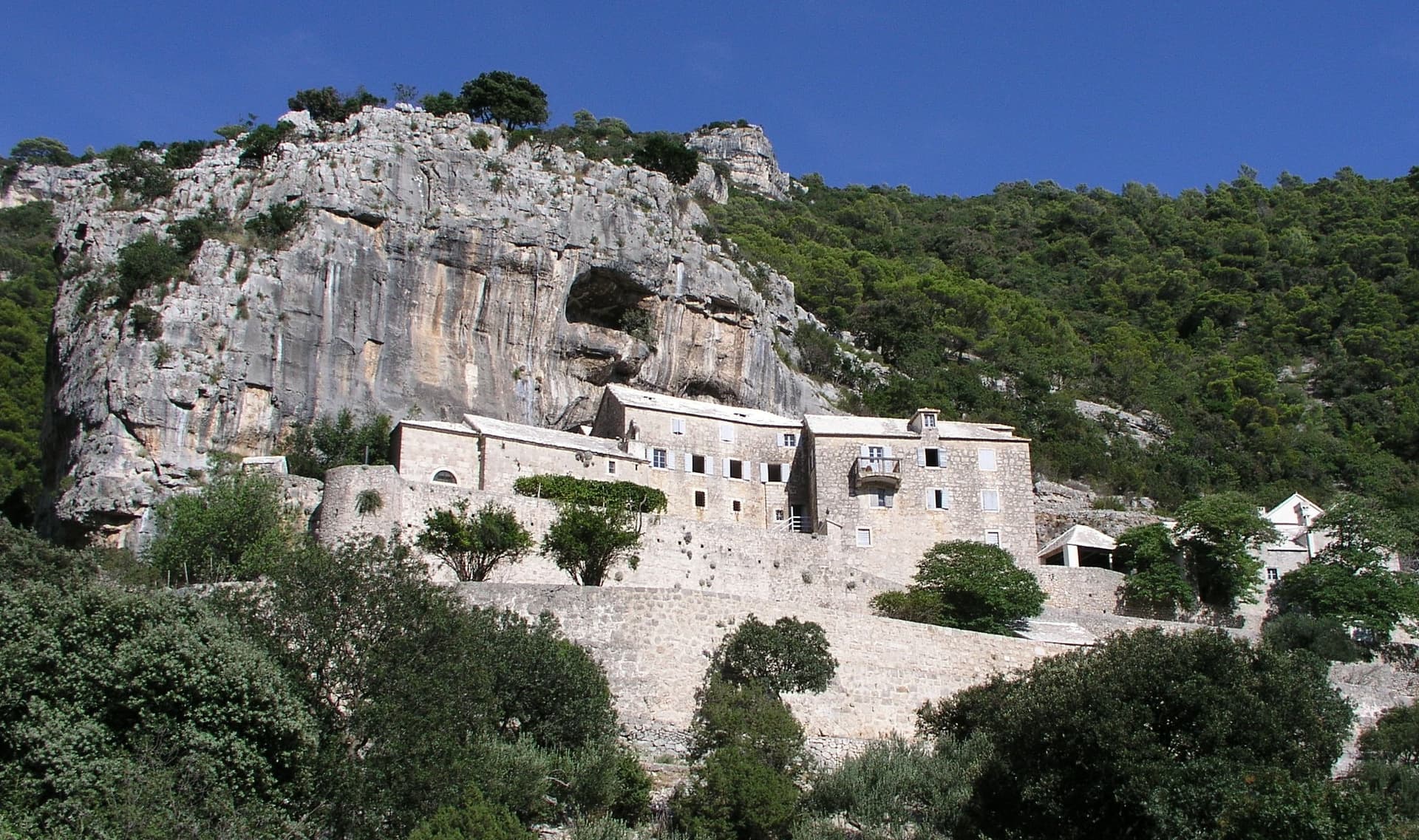
Blaca Hermitage occupies an isolated valley on the southern coast of the island of Brač, in Croatie. Founded in the mid-16th century by Glagolitic priests fleeing Turkish attacks, this monastery evolved from a simple rock shelter into a complex housing a church, cells, library, school, and astronomical observatory. Listed on UNESCO's tentative World Heritage list since 2007, it demands effort to reach: no direct road access, only by foot or boat from Bol.
Why visit Blaca Hermitage
- A unique monastic site in Dalmatia, clinging to limestone cliffs and accessible only by trail or sea.
- Rare Glagolitic heritage, with manuscripts predating the 16th century preserved on site.
- A 19th-century astronomical observatory, an atypical testament to a monastic community devoted to science.
- A hiking approach through preserved karst landscape, to combine with visits to Bol and Vidova Gora.
History of the hermitage
The community's origins trace back to 1551, when Glagolitic priests from Poljica, on the mainland, fled Turkish attacks and found refuge on the island of Brač. These religious figures celebrated the liturgy in Old Church Slavonic using the Glagolitic script, a particularity that Catholic authorities tolerated in Dalmatia. In 1552, they settled beneath the Ljubitovica Cave, in a steep valley far from the coast.
The community developed the lands granted by the Duke of Brač: wine, honey, and olive oil were produced and then exported from a cove now called Popova vala (the priest's bay). In 1570, authorities finally authorized the construction of a proper monastery and church.
The community's operation was unusual: priests and lay folk shared possessions and elected a superior for a three-year renewable term. This arrangement was confirmed during a visit by bishop Petar Cedulin on July 12, 1621. Over the centuries, Blaca became a hub of regional culture. The monks assembled a library of over 11,000 works and ran a school where children learned to read and write in Croatian and Latin.
In the 19th century, the community installed an astronomical observatory equipped with a telescope renowned for its size at the European scale of the era. The monks corresponded with foreign researchers and published their observations. The hermitage remained inhabited until 1963, the year of the death of its last monk, Father Niko Miličević. In 2005, the International Astronomical Union named asteroid (10241) Miličević after him and baptized another celestial body (10645) Brač. The site was inscribed on UNESCO's tentative World Heritage list in 2007.
What to see on site
The church and monastic buildings
The complex is built into the limestone cliff face, in local white stone. The single-nave church dedicated to the Assumption of the Virgin opens onto a courtyard around which cells, kitchen, and storerooms are arranged. The narrow windows attest to architecture designed to withstand the thermal extremes of the island's interior.
The museum and library
The hermitage is now a museum. You can see part of the library, including Glagolitic manuscripts predating the 16th century, scientific instruments linked to the observatory, the monks' furnishings, agricultural tools, as well as the wine cellar and olive press that served production exported from Popova vala.
The observatory
The observatory dome overlooks the complex. It housed the telescope used by Father Miličević to observe comets and asteroids, and constitutes the site's most singular element, a rare example of astronomy practiced in a Balkan monastic setting.
Practical information
- Admission: paid entry, moderate rate for adults, reduced rate for children. Check current prices before departure.
- Hours: daily opening during high summer season, reduced schedule off-season, generally closed Mondays. Confirm opening days in low season.
- Duration of visit: allow 1 hour on site, not including approach hiking time.
- Equipment: closed-toe shoes essential, water, hat in summer. The trail is rocky and exposed.
How to get there
No road provides direct access to the hermitage. Two routes are possible from the island of Brač:
- Via the heights: drive to the Vidova Gora sector, the highest point of the Adriatic islands, then descend on foot via a marked trail. Allow approximately thirty minutes of hiking downhill, longer on the return.
- Via the sea: board from Bol to Blaca Bay, then walk up the valley on foot for a similar distance.
Both options require reasonable fitness. The hike takes place in full sun on certain sections.
When to go
The end of spring (May-June) and early autumn (September-October) offer the best conditions: temperatures suitable for hiking and the site open. In mid-summer, heat on the trail makes the approach difficult during midday hours; it's better to start early in the morning. In winter, the hermitage operates with reduced hours and some closure days; check before traveling.
To combine in the surrounding area
- Zlatni Rat beach in Bol, about ten kilometers away, the usual departure point for boats to Blaca.
- The town of Bol and its port, a logical base for exploring southern Brač.
- The village of Pučišća, on the north coast, known for its school of stonemasons.
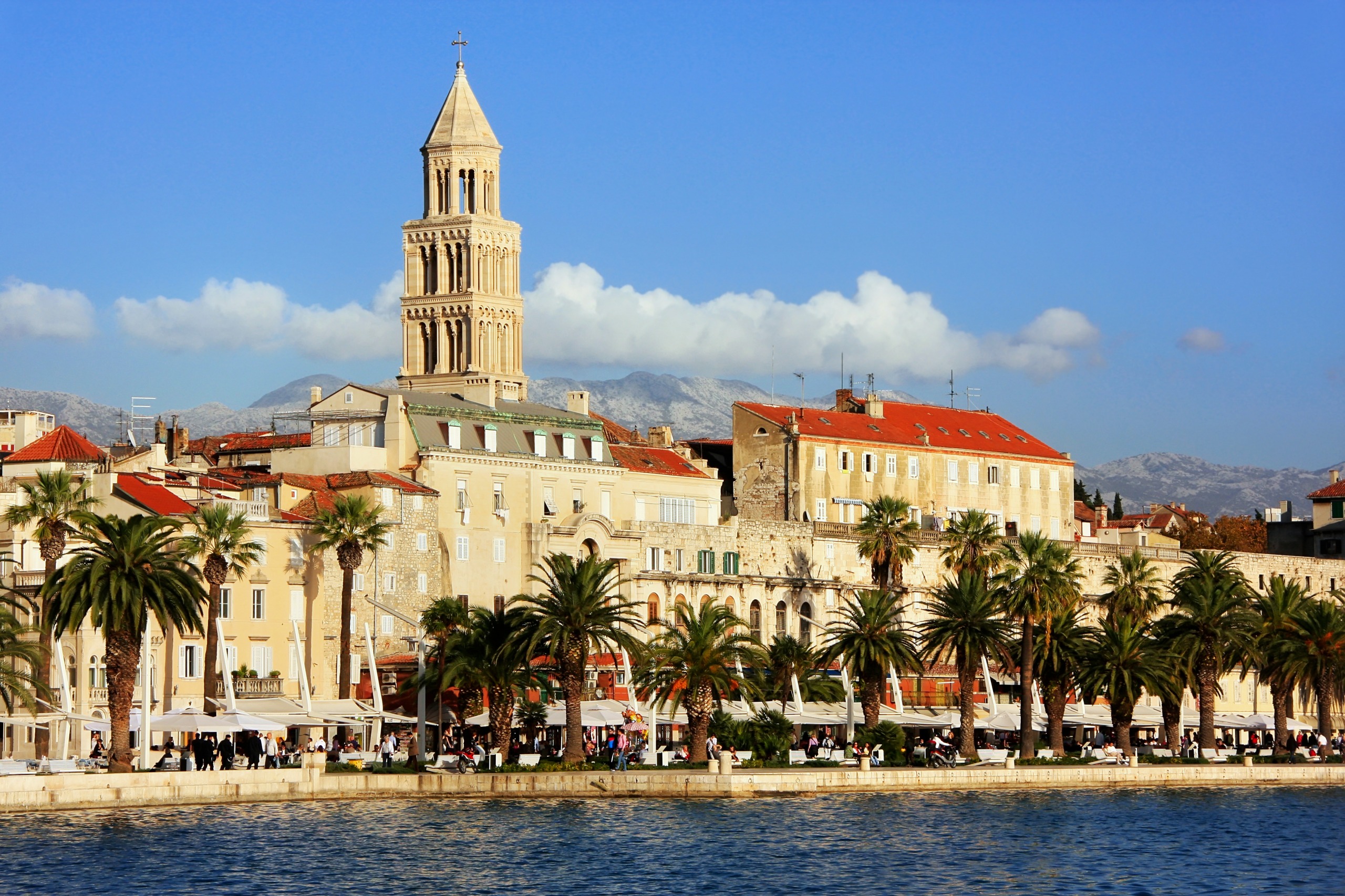
- Diocletian's Palace in Split, accessible by ferry from Supetar.
- The walls of Ston, further south, to extend a Dalmatian itinerary.
Frequently asked questions
Frequently asked questions
Allow approximately 3 to 4 hours total: about thirty minutes of hiking each way, and roughly one hour on site to visit the museum and church.
The trail is short but rocky and sun-exposed. No technical difficulty, but basic fitness and good shoes are necessary. Avoid during the hottest hours in summer.
No. The lack of road access and rocky trail make the visit incompatible with a wheelchair or significant walking difficulties.
Yes, but with reduced hours and closure days. Check with the Bol tourist office before traveling.
Museum visits are generally made with a guide on site. Booking is not mandatory but may be useful during high season.
Planning your trip
Blaca Hermitage fits naturally into an itinerary in central Dalmatia, between Split and the islands. To build a stay combining Brač, its coastal villages, and the interior, consult our bespoke travel in Croatie.
Interested in this visit?
We can include it in your personalised itinerary.