Baška (Island of Krk)
Baška (Island of Krk)
A seaside resort in southern Krk, Baška combines an 1,800-meter pebble beach, unique Glagolitic heritage, and a network of coastal trails.
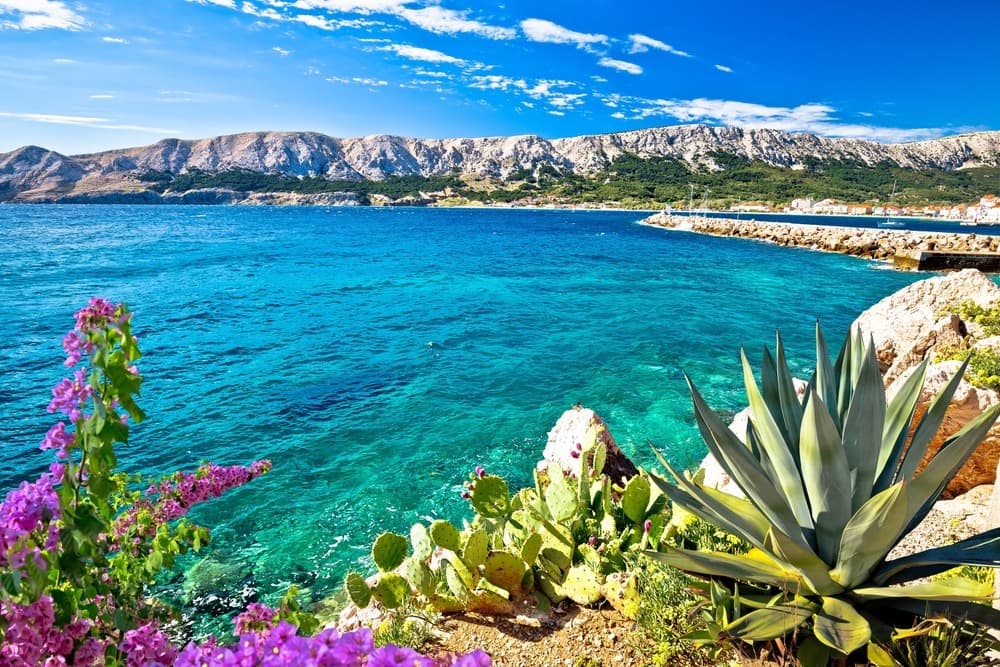
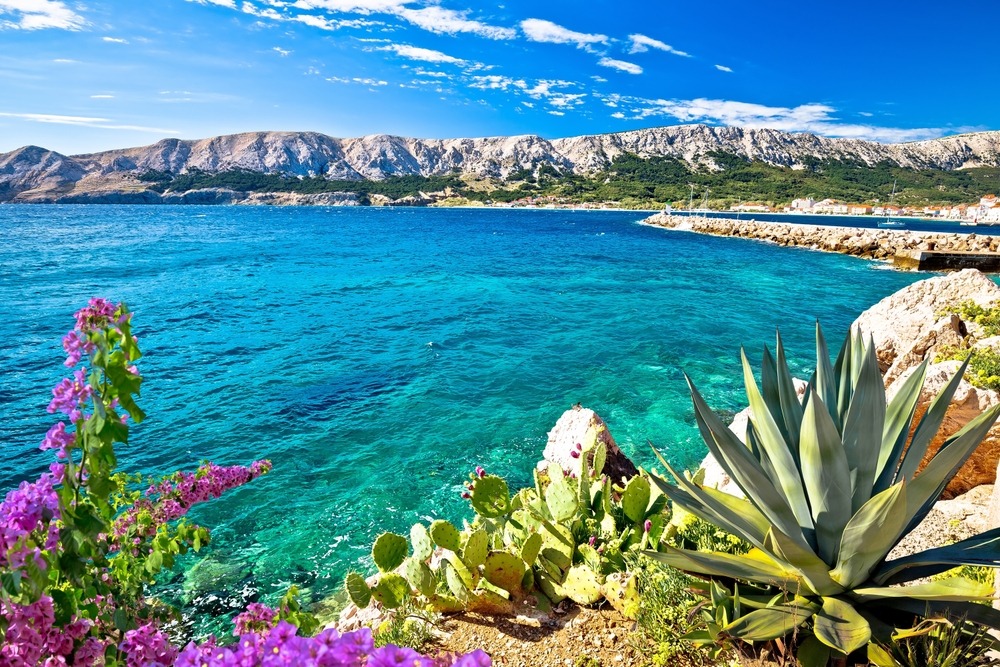
Baška is located on the southeast coast of the island of Krk, in the Gulf of Kvarner. The seaside resort is known for its 1,800-meter pebble beach, its old village set against karst reliefs, and its connection to the Baška Stele, one of the oldest documents written in Croatian. The site combines swimming, hiking, and Glagolitic heritage in a compact area, making it a convenient stop for exploring Krk.
Why visit Baška
Three reasons to stop in Baška:
- Vela Plaža, a 1,800-meter pebble beach, one of the longest on the island of Krk, framed by bare hillsides.
- Rich historical heritage, from Illyrian occupation to medieval churches, through to the Baška Stele dated to around 1100 CE.
- A network of marked trails connecting isolated coves, viewpoints, and the Glagolitic trail within a few hours of walking.
History
Archaeological discoveries made in local caves testify to occupation of the site from prehistoric times. The first identified inhabitants are Illyrians, specifically the Liburnians. A Roman colony later settled near the shoreline, with remains dating back to the 2nd century BCE.
From 418 CE onward, the town developed on Saint John's Hill, above the present-day city, for defensive reasons. Baška Castle is first mentioned in 1232 under the name castellum Besca.
In 1851, the Baška Stele was discovered there, dated to around 1100 CE. This limestone slab is the oldest Glagolitic tablet mentioning both the name "Croatia" and the adjective "Croatian." It is today considered a foundational act of Croatian identity. The town, which had fewer than a thousand inhabitants in the 2011 census, lives primarily on summer tourism.
What to see and do
Vela Plaža beach
Vela Plaža is Baška's main beach: a bay of light-colored pebbles stretching 1,800 meters, bordered by clear waters and backed by bare reliefs. It concentrates the bars, restaurants, and beach services of the resort. For quieter coves, several alternatives are accessible on foot:
- Bunculuka: naturist beach about 10 minutes' walk away, framed by cliffs.
- Mali Raj: isolated cove 30 minutes' walk away, overlooking high rock walls.
- Sveti Ivan: quiet coastal section suitable for snorkeling, near a holiday village.
The old town and seaside promenade
The promenade connects the harbor to the beach through the old village, whose cobbled lanes and narrow facades date partly from the Venetian period. Along the way, the Sveti Trojice church (Holy Trinity), built in 1722, houses liturgical objects and a small museum collection devoted to local history. Several cafés and konobas (taverns) dot the promenade.
The Church of Saint John the Baptist
The Crkva Sv. Ivan church, built in the 11th century and remodeled several times, is the town's oldest parish church. Located on a hillside overlooking Baška, it is reached by a short trail and offers an open viewpoint over the bay. The site is a favorite landmark for hikers and cyclists.
The viewpoint and lighthouse
South of town, a twenty-minute trail leads to an open viewpoint over the coast and interior reliefs. The hike extends to a red lighthouse overlooking Skuljica Bay, facing Prvić, the griffon vulture island. A pebble beach below allows for swimming at the end of the walk.
Vela Luka Bay
Vela Luka is a remote bay west of Baška. Two options to reach it: a water taxi from the harbor or a hike of approximately 1 hour 30 minutes. Trail No. 9 crosses the interior mountains, while coastal trail No. 8 follows the Vrženica gorges. The Rebica viewpoint, on the route, opens a panorama over the twin bays of Vela and Mala Luka.
The Church of Saint Lucy in Jurandvor
The village of Jurandvor, a few kilometers from Baška, houses the Sveta Lucija church, where the Baška Stele was discovered in 1851. The original is now preserved at the Croatian Academy of Sciences and Arts in Zagreb; a faithful replica is displayed on site.
The Glagolitic trail
Established in 2006, this hiking route connects several villages around Baška. It is marked with 34 stone monuments, each representing a letter of the Glagolitic alphabet. The route is marked and accessible by sections, allowing you to adapt the duration of the walk.
Practical information
- Duration of visit: 1 to 2 days to combine beaches, old town, and a hike. Plan 3 days to explore the Glagolitic trail and the southern bays.
- Fees: free access to beaches and trails. Some sites (museums, interiors of certain churches) require a modest entrance fee.
- Accommodation: the resort has several beachside campgrounds, including a complex with a pool near Vela Plaža and a quieter site in Bunculuka cove. Hotels and short-term rentals are available in the center.
- Equipment: closed-toe shoes for walking on pebbles and water sandals for swimming; water and a hat for exposed trails.
When to visit
The beach season runs from May to October. July and August see peak crowds, highest temperatures, and all bus and water taxi connections. May-June and September are better suited for hiking: milder temperatures, accessible trails, and the sea is still swimmable in September. The bora, a cold wind descending from the reliefs, can blow strongly in winter and occasionally close the Krk bridge.
How to get there
Access to Baška is via the island of Krk, connected to the mainland by a bridge that became free in 2023. Several options:
- By car: from Rijeka, allow approximately one and a half hours via the A7 motorway and then across the island from north to south. Car rental remains the most flexible option for visiting coves and trails.
- By air: Rijeka Airport is located on the island of Krk itself (municipality of Omišalj). Allow approximately 45 minutes to 1 hour of driving to Baška.
- By bus: regular connections link Rijeka to Baška several times daily. The journey takes approximately 2 hours.
- Shared taxis: available from the airport, especially in high season.
Nearby
The island of Krk and the Croatian coast offer several natural extensions:
- The Frankopan Castle, in Krk Town, former seat of the island's lords.
- The Diocletian's Palace, in Split, a major stop on the Roman heritage trail in Dalmatia.
- The Euphrasian Basilica in Poreč, in Istria, a UNESCO World Heritage site.
- The Blaca Hermitage, on the island of Brač, for those continuing south.
Frequently asked questions
Frequently asked questions
Extend the experience
Baška fits easily into an itinerary mixing the Adriatic coast, Kvarner islands, and historic towns. For a tailor-made trip including Krk and other stops, consult our trips to Croatia.
Interested in this visit?
We can include it in your personalised itinerary.