Zagreb and Slavonia
Continental Croatia, without a coastline but with Austro-Hungarian Zagreb, the Danube wetlands at Kopački Rit and the Slavonian vineyards of Kutjevo.
Zagreb and Slavonia form continental Croatia, the part most English-speaking travelers pass through without stopping, hurrying toward the coast. Our team believes you miss another reading of the country here: no Adriatic, no islands, but wheat and sunflower plains, oak forests, the Danube and Drave rivers, and a cuisine of smoked meats and paprika that owes as much to Hungary and Vojvodina as to Vienna.
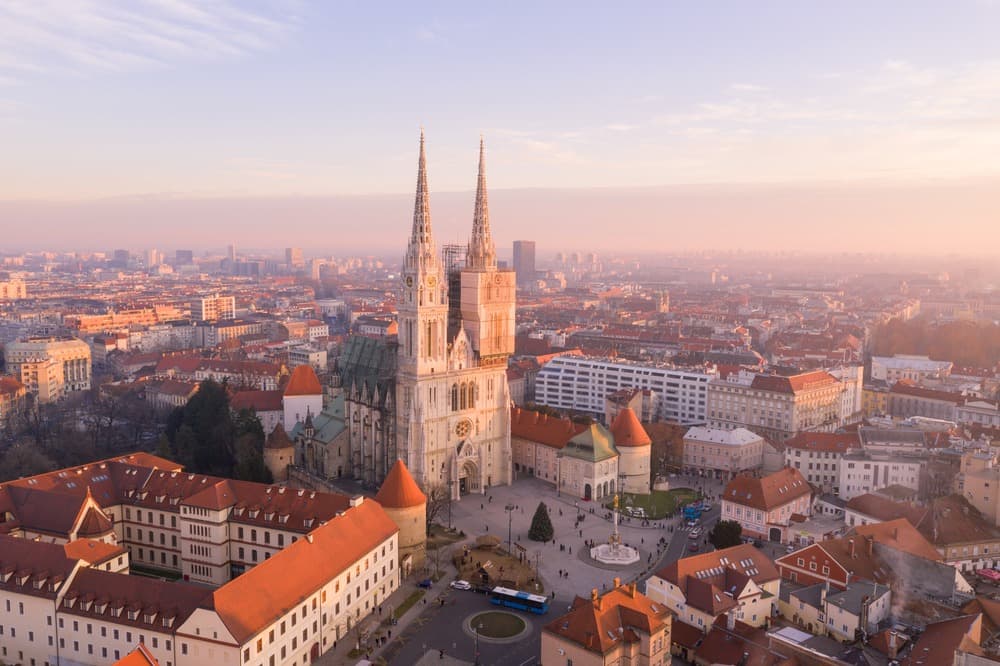
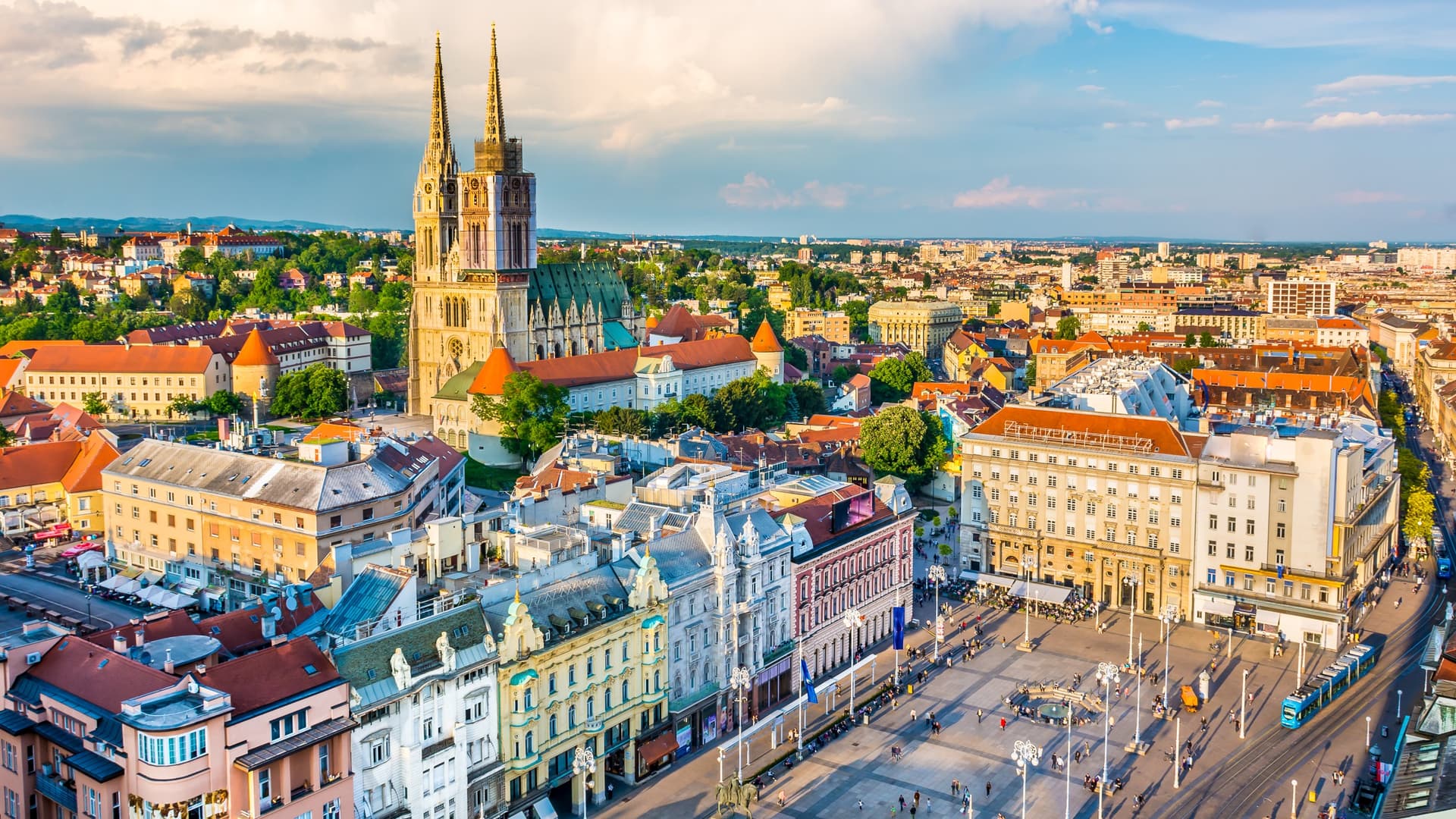
Zagreb, home to 800,000 people, is our point of entry. The city divides into two layers: Gornji Grad, the medieval Upper Town around the Church of St. Mark and its glazed tiles, and Donji Grad, the Austro-Hungarian Lower Town laid out in a green grid in the 19th century, with its yellow palaces and a horseshoe arrangement of squares and parks. Between them, the Tomićeva funicular (66 meters, one of Europe's shortest) and Dolac market, where peasant women from the periphery sell fresh cheese, acacia honey and čvarci beneath red umbrellas. Tkalčićeva Street, a filled-in former stream, concentrates the cafés where the city finds its rhythm: long pauses, espresso, conversation, entire Saturday mornings devoted to the špica.
Southeast of Zagreb, Lonjsko Polje nature reserve protects one of the Danube's last remaining flood plains, with its villages of oak wood houses (Čigoč, Krapje) and storks nesting on rooftops from April to August. Further east still begins Slavonia proper, stretching 250 kilometers to the Serbian border. The landscape becomes horizontal, punctuated by silos, the vineyards of Kutjevo and Ilok, the ruined Baroque castles of Hungarian aristocrats (Valpovo, Našice) and villages lined up along a single street with their Catholic church at the center.
Osijek, the regional capital on the Drave river, preserves an 18th-century Baroque citadel, the Tvrđa, built by the Habsburgs to face the Ottoman threat. The city still bears visible traces of the 1991 siege, and our local guides willingly discuss the independence war, a subject inseparable from Vukovar, 35 kilometers to the east, whose water tower, pocked with bullet holes, has been preserved as a memorial. This memorial dimension changes the nature of travel: you are no longer in the Dalmatian postcard.
Half an hour from Osijek, Kopački Rit nature park occupies the Drave-Danube confluence: 230 km² of wetlands, dead channels and alluvial forests, explored by flat-bottomed boat or wooden pontoons. About 300 bird species are recorded here, including the white-tailed eagle, and dense populations of deer and wild boar. Slavonian gastronomy is rooted in this terrain: kulen (paprika sausage aged six months minimum, PGI), fiš paprikaš (freshwater fish soup with red paprika), čobanac (meat stew), accompanied by the white Graševina wines of Kutjevo, whose Benedictine cellar dates to 1232. Autumn harvest festivals (Vinkovačke jeseni, in September) restage embroidered costumes, five-string tamburica and kolo dances.
This is a Croatia without a sea, then, but with its rivers, forests and still-visible agricultural way of life. For a traveler who has already seen the coast or who seeks to understand how the country articulates between Mediterranean and Mitteleuropa, the Zagreb-Slavonia combination is the angle we recommend.
Must-see
Upper Town and Dolac market in Zagreb. Ride the Tomićeva funicular up to St. Mark, then descend to Dolac early morning for the peasant market: fresh Zagorje cheeses, acacia honey, čvarci, beneath red umbrellas.
Kopački Rit by boat. Two-hour flat-bottomed boat excursion through the dead channels of the Danube, in search of white-tailed eagles and purple herons. Best light in late afternoon between April and June.
Osijek's Tvrđa and the memory of Vukovar. A morning in Osijek's Baroque citadel, then drive to Vukovar (35 km) with a local guide who recounts the 1991 siege and reconstruction. A frank reading of recent history.
Kutjevo cellars and Slavonian villages. Graševina tasting in the Benedictine cellar active since 1232, lunch of kulen and fiš paprikaš at a farm inn in the Požega hills.
Storks of Čigoč. Village designated European Stork Village in Lonjsko Polje park: about fifty couples nest from April to August on the roofs of oak wood houses. Short visit, best combined with the Zagreb-Slavonia route.
When to go
The main season runs from April to October. Spring (April-May) is our preferred window: 15 to 22°C during the day, orchards in bloom, storks returning, high water levels at Kopački Rit that facilitate navigation. Summer (June-August) is hot and humid, with peaks of 32-35°C in the Slavonian plain and brief afternoon storms; Zagreb empties in August, many restaurants close for two weeks. September is the month of harvests and traditional festivals (vintage time at Kutjevo, Vinkovačke jeseni at Vinkovci), still with 22 to 25°C during the day—our second recommendation.
From November to March, the continental plain is cold and often gray: -2 to 5°C, persistent fog over the Save and Drave, possible snow in Zagreb. December is an exception thanks to Zagreb Advent (Christmas market voted Europe's best for several years), a short but intense period between late November and early January. January and February are best avoided unless you have a specific interest in the city and its museums.
Practical advice
We recommend a minimum of 4 days for this region: 2 days in Zagreb (Upper Town, Lower Town, museums including the Museum of Broken Relationships and the Mimara, a day on Medvednica mount or in Samobor), then 2 days in Slavonia via Lonjsko Polje, Osijek, Kopački Rit and Kutjevo. Plan for 280 kilometers on motorway A3 between Zagreb and Osijek, roughly 3 hours of direct driving. Franjo Tuđman Airport in Zagreb is served by direct flights from Paris, Brussels and Geneva; Osijek has a small seasonal airport.
The most coherent combination is Zagreb-Slavonia at the beginning or end of your itinerary, linked with Plitvice and the interior karst (2.5 hours south of Zagreb) before moving toward Northern Dalmatia or Istria. Hotel comfort is adequate without being luxurious: in Zagreb, charming hotels in the Lower Town; in Slavonia, small 3-4 star hotels in Osijek and rural guesthouses (seoski turizam) in the Kutjevo vineyards and around Kopački Rit. This region suits the traveler curious about history, agriculture and cuisine, not drawn to crowds and ready to engage with local hosts; it suits less those seeking swimming and spectacular landscapes.