Plitvice and the inner karst
Limestone plateaus, terraced lakes of Plitvice, canyons of the Velebit and mill villages of Rastoke: continental Croatia between Zagreb and the Dalmatian coast.
Lika and the inner karst occupy this vast limestone plateau lying between Zagreb to the north and the Velebit mountain range, which separates the hinterland from the sea. It is continental Croatia, sparsely populated, marked by sinkholes, underground rivers and forests of beech and fir trees. Altitude ranges between 450 and 1,700 metres at the summit of Vaganski Vrh, which radically changes the climate and vegetation compared to Dalmatia, located just an hour's drive further west.
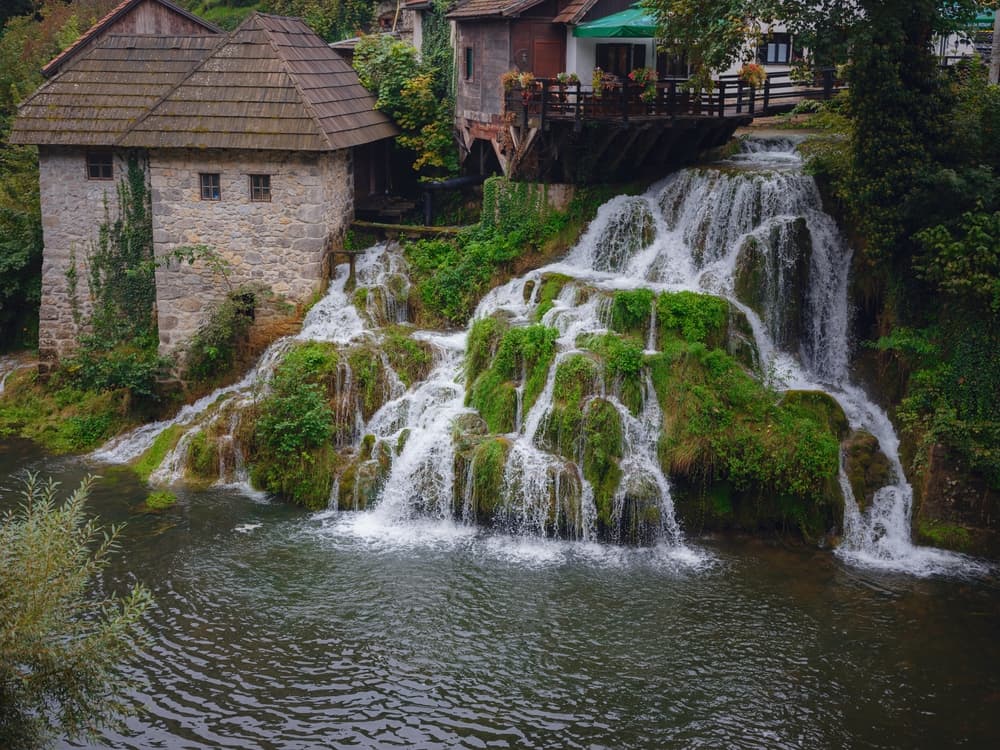
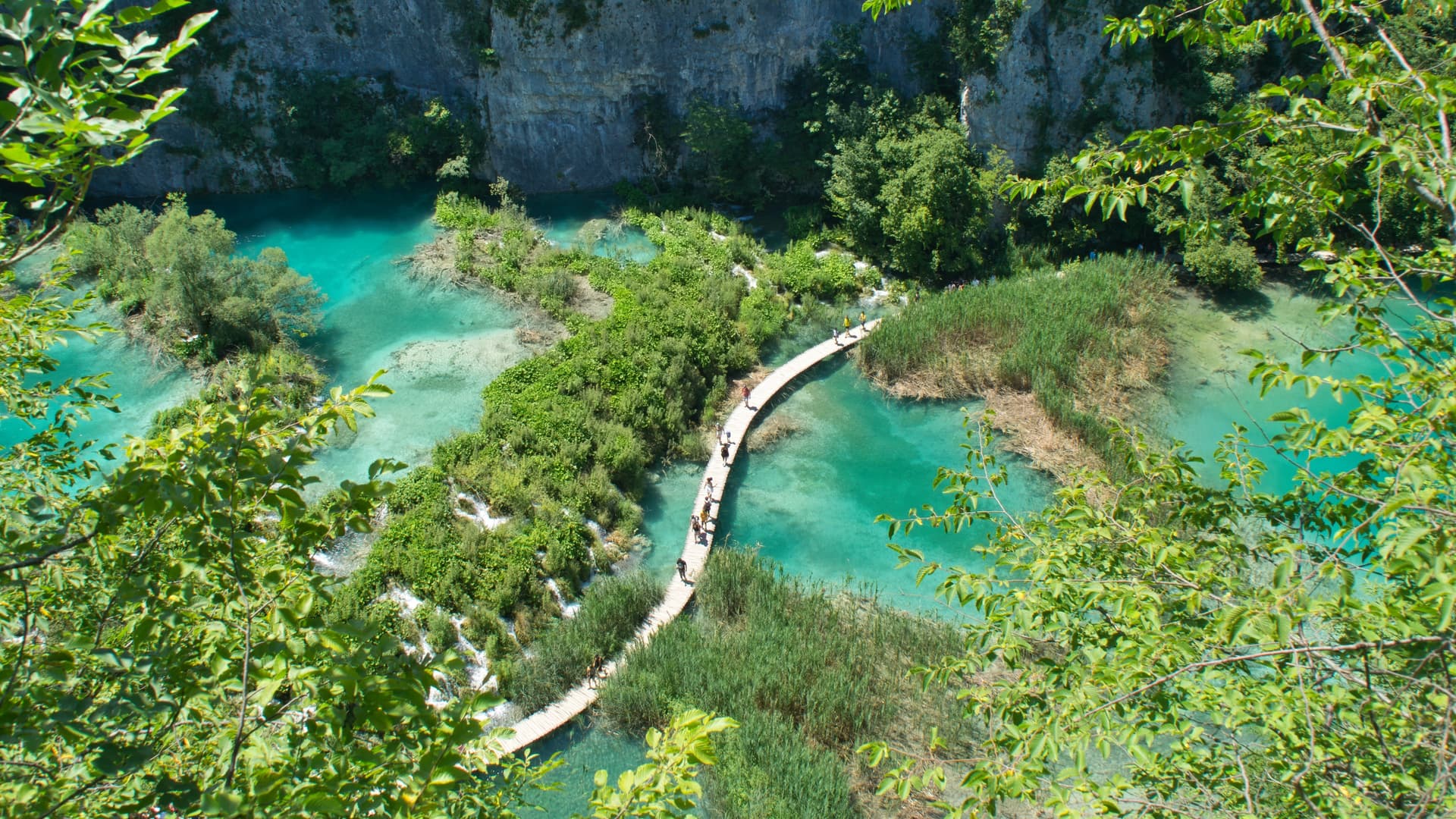
Plitvice Lakes National Park remains the tourism epicentre. Sixteen terraced lakes over 8 kilometres, connected by 92 waterfalls, were formed by travertine deposits—a porous limestone that moss gradually anchors in place. The trail crosses wooden boardwalks flush with the water, then climbs through forested heights. We recommend dedicating a full day to it, starting from Entrance 2, which is less crowded in the morning, and combining it with an overnight stay in the village of Korana or Rastoke, the latter built at the confluence of the Korana and Slunjčica rivers, with water mills still in operation.
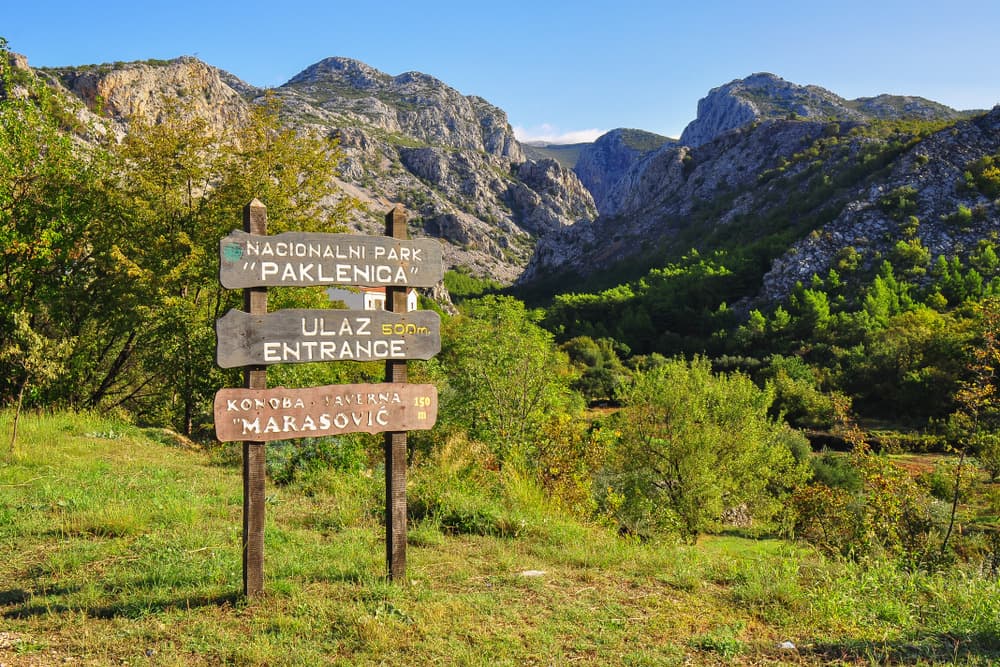
Further south, Paklenica National Park cuts two limestone canyons, Velika and Mala Paklenica, into the southern Velebit, each more than 400 metres deep. It is the most popular climbing terrain in the country, with over 500 equipped routes, but also a starting point for hiking to the Paklenički dom refuge, reachable in 2 hours on foot. Sjeverni Velebit National Park, further north, attracts hikers to the Premužić trail, a rocky ledge carved out in 1933 along 57 kilometres of ridge.
Lika long lived from sheep farming and small-scale agriculture. Here you find Pag sheep's cheese, aged in the region, potatoes cooked under the peka (cast-iron dome covered with embers), trout from karst rivers, and lički lonac, a stew of mutton, cabbage and potatoes. Villages like Smiljan, birthplace of Nikola Tesla and now a museum, or Kuterevo, which houses a sanctuary for orphaned brown bears, put a human face on a territory many pass through without stopping.
Recent history has marked the landscape. The region was on the front line during the 1991-1995 war, and some villages still bear visible scars. Plitvice itself was the scene of the first clashes in March 1991. Its sparse population has since begun offering rural accommodation and guesthouses, often in renovated old farms around Korenica, Smoljanac or Grabovac.
Beyond Plitvice, two sites of hydrological karst deserve a detour. The Krka waterfalls, accessed via the Skradin entrance, line a succession of cascades along the Krka river, with the Orthodox Krka monastery above and the former Jaruga hydroelectric plant, the second in the world to be commissioned after Niagara in 1895. And Cerovac cave, near Gračac, 4 kilometres long, offers a guided tour of about an hour through an underground network carved by waters from the Velebit.
To discover
The sixteen lakes of Plitvice. An 8-kilometre loop on wooden boardwalks between turquoise lakes and travertine cascades, to be walked in 5 to 7 hours.
Paklenica canyons in the Velebit. Hiking through a limestone fissure 400 metres deep, climb to Paklenički dom refuge in 2 hours, with the possibility of equipped climbing.
The cascade village of Rastoke. At the confluence of the Korana and Slunjčica, a hamlet of stone and wood water mills still inhabited, 30 kilometres north of Plitvice.
The bear sanctuary of Kuterevo. An associative sanctuary welcoming orphaned brown bears from the Velebit, guided tours by volunteers in a forest village at 800 metres altitude.
Premužić trail on the Velebit ridge. A dry stone path traced in the 1930s over 57 kilometres, walkable in day stages from Zavižan.
When to go
The climate is continental at altitude, harsher than in Dalmatia. Expect 22 to 26 °C in the afternoon in July and August at Plitvice, but cool nights around 12 °C. Winter is crisp: snow possible from December to March, frequent negative temperatures, and some trails in Paklenica or Velebit close then. Spring brings the highest water flows, but also rain: April and early May often accumulate 100 to 130 mm.
Our preferred periods are mid-May to mid-June and mid-September to mid-October. The cascades are vigorous, the forests colourful (tender green in spring, ochre in autumn), and Plitvice's visitor numbers remain manageable outside weekends. July and August concentrate up to 15,000 visitors per day at the park: if you are travelling in this season, we book an early entrance (7.30am) and arrange the visit in the opposite direction to the main flow.
Practical advice
One to two nights are enough to visit Plitvice and Rastoke without rushing. Add an extra night if you wish to include Paklenica or a day's hiking in the Velebit. Access is by car or private transfer from Zagreb airport (2 hours, 140 km) or Zadar airport (1.5 hours, 130 km). No airport directly serves the region. The D1 road crosses the plateau from north to south and remains passable all year round.
The region fits naturally between Zagreb and Slavonia to the north and Northern Dalmatia to the south, a logical stop on an itinerary heading down towards Zadar, Šibenik or Split. Accommodation ranges from guestrooms in renovated rural farmhouses to a handful of 4-star hotels in direct proximity to the park. It is a territory that appeals to hikers, families with school-age children (from 6-7 years for Plitvice), and travellers seeking a nature respite between two coastal stops. The contemplative will prefer Rastoke or a village in the Velebit foothills to the immediate surroundings of Plitvice.