Île de Krk
Île de Krk
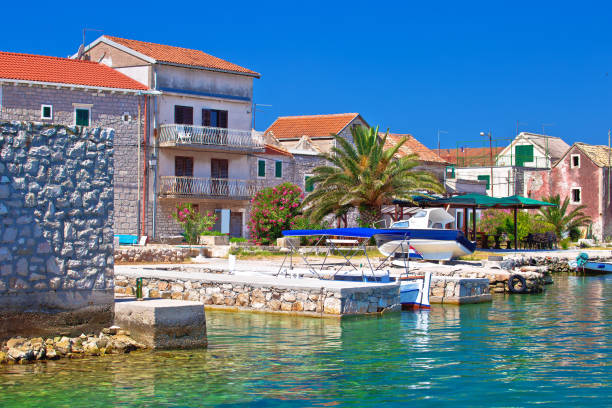
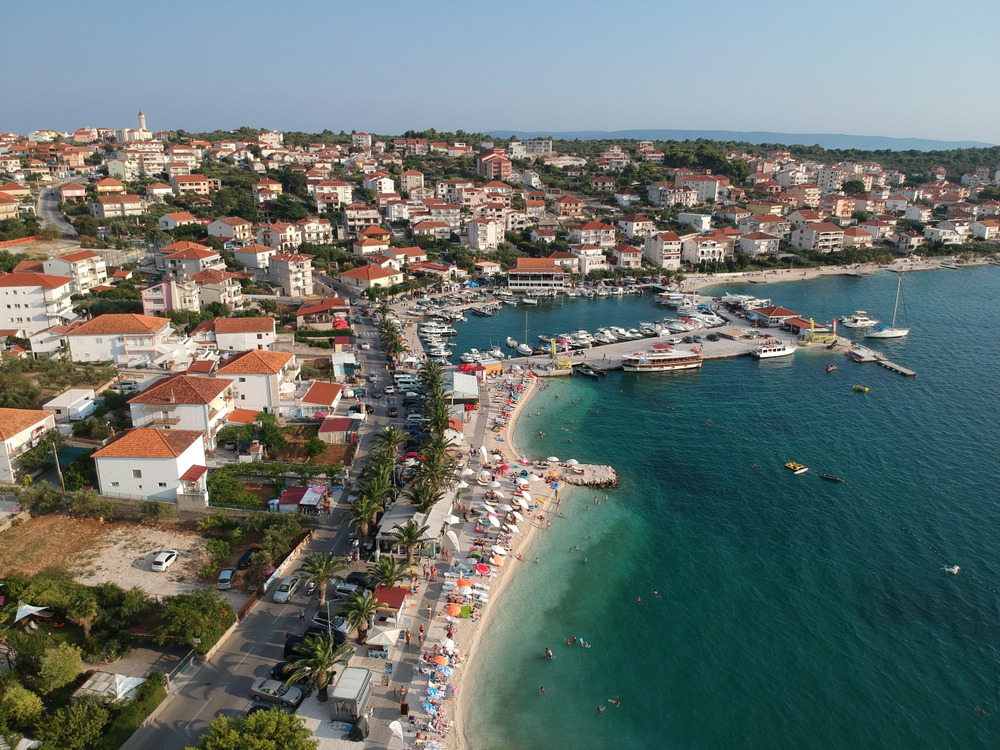
Connected to the mainland by a bridge, Krk combines rocky coves, medieval towns such as Vrbnik and Baška, žlahtina vineyards and the Franciscan monastery of Košljun — an accessible and varied island in the Kvarner Gulf.
Connected to the mainland by a bridge, Krk is the largest island in the Croatian Adriatic — and one of the most accessible. It combines a coastline carved into rocky coves and pebble beaches, a hinterland of vineyards and olive groves, and intact medieval villages. Its position in the Kvarner Gulf provides generous sunshine and long summers, without the isolation of the Dalmatian islands further south.
Quick Facts at a Glance
Access: road bridge from Rijeka (toll), ferries from Valbiska to Merag (Cres Island) or from Baška to Lopar (Rab Island).
Airport: Rijeka Airport is located on the island itself, in the northwest.
Recommended duration: 3 to 5 days to explore several villages and beaches.
Dress code: modest attire required in churches and monasteries.
Ideal season: May-June and September to avoid summer crowds.
What You'll See
The island offers contrasting landscapes: the north is arid and swept by the bora wind, the south more verdant. The villages of Krk, Baška, Vrbnik, Punat and Omišalj each have their own character. Beaches range from the fine sand of Baška to isolated coves accessible on foot or by boat. The interior hides vineyards producing žlahtina, a local white grape variety.
History and Context
Krk has been inhabited since prehistoric times. The Romans founded Curicum, the present-day town of Krk. In the Middle Ages, the Frankopan family ruled here for several centuries, leaving behind castles and fortifications. The island is also home to one of the oldest inscriptions in Glagolitic script, the medieval Slavic liturgical alphabet: the Baška Tablet (11th century), preserved in Zagreb but discovered here.
Highlights of Your Visit
The Town of Krk
The island's main town preserves its Roman and medieval walls almost intact. The Cathedral of the Assumption (12th century) and Frankopan Castle dominate the seafront. The paved streets of the historic center remain lively without being overwhelming.
Baška and Its Beach
In the south of the island, Baška has a long beach of sand and pebbles framed by white cliffs. It is one of the most renowned beaches in the Kvarner. The village itself, with its stone houses and stepped alleyways, is worth a stroll.
Vrbnik and žlahtina
Perched on a sheer cliff overlooking the sea, Vrbnik is the most spectacular village on the island. Its alleyways are among the narrowest in Croatia. This is where žlahtina production is concentrated, a dry white wine to taste in local konoba restaurants.
Košljun Monastery
On an islet in Punat Bay, this 15th-century Franciscan monastery houses a museum, an ancient library and a peaceful cloister. It is reached by boat from Punat.
The Baška Tablet (Discovery Site)
The Church of Santa Lucia in Jurandvor, near Baška, is where the Baška Tablet was discovered in 1851, a foundational document of written Croatian. The church itself is modest but its historical significance is considerable.
Etiquette and Visit Guidelines
Shoulders and knees covered when entering churches and Košljun Monastery.
Silence and discretion in active places of worship.
Some natural coves are protected: respect signs prohibiting anchoring or foraging.
Photography Tips
The golden evening light on the walls of Krk town is optimal in late afternoon. For Vrbnik, photograph from the viewpoint above the village to capture the cliff and sea. Baška beach is best photographed early in the morning, before swimmers arrive. Košljun Monastery offers beautiful reflections in the calm bay.
Location and Access
Krk is located in the Kvarner Gulf, in northwestern Croatia. The Krk Bridge connects the island to the Istrian Peninsula and Rijeka in less than an hour. Rijeka is the nearest major city, the natural starting point. Regular buses serve the main villages from Krk town. Accessibility for people with reduced mobility is limited in the paved historic centers; developed beaches at Baška have some adapted facilities.
Nearby
Rijeka — the Kvarner's major port city and gateway to the island, known for its carnival.
Cres Island — a wild and sparsely populated neighbor, connected by ferry from Valbiska, home to griffon vultures.
Rab Island — accessible by ferry from Baška, famous for its four bell towers and sandy beaches.
Opatija — Austro-Hungarian seaside resort on the Kvarner Riviera, an hour's drive away.
Plitvice Lakes — a UNESCO-listed national park, accessible as a day excursion from the north of the island.
Frequently asked questions
May, June and September offer a good balance: pleasant sea, reduced crowds and cheaper accommodation. July-August is high season, very lively but also very crowded.
A car is recommended to explore interior villages and isolated coves. Buses connect the main towns, but frequencies are limited outside the season.
From Punat harbor, boatmen offer passage to the Košljun islet. The crossing is short. The monastery is open to visitors outside services.
The original is preserved at the Croatian Academy of Sciences and Arts in Zagreb. On the island, you can visit the Church of Santa Lucia in Jurandvor, where it was discovered, where a replica is on display.
Most beaches are pebbly or rocky. Baška is an exception with a partially sandy beach, one of the rare ones in the Kvarner.
The žlahtina is the island's native white grape variety, produced mainly around Vrbnik. Dry and crisp, it pairs well with local fish and seafood.
Want to discover this destination?
Our local advisors design your tailor-made trip.