Ostrožac Fortress
Ostrožac Fortress
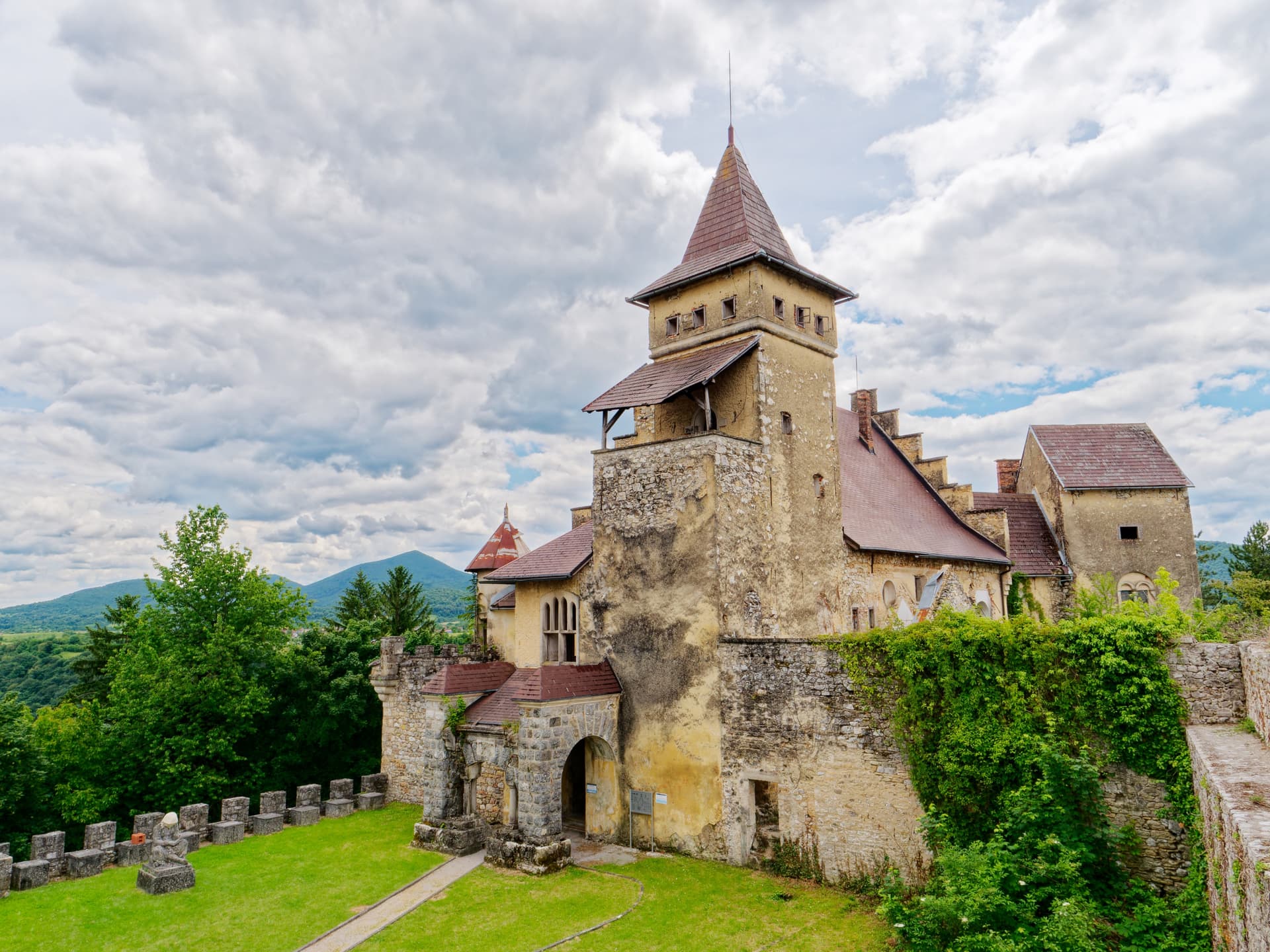
Perched 500 m above the Una River, Ostrožac Fortress blends medieval architecture, a ruined neo-Gothic palace and a sculpture park established in 1969.
Perched at 500 metres above the Una River, Ostrožac Fortress dominates the landscape of western Bosnia-Herzegovina, near the town of Cazin. First mentioned in 1286, it today brings together a medieval fortification, a partially ruined neo-Gothic palace and an open-air monumental sculpture park.
Why visit Ostrožac Fortress
The site presents a rare layering of eras: medieval core, Ottoman occupation, Austro-Hungarian reconstruction in the early 20th century, then artistic reappropriation from 1969 onwards. This stratification reads directly in the stone, without museum displays or set pathways. The visit is self-guided, in the atmosphere of a partially abandoned site—a radical shift from the well-signposted heritage experience of major European fortresses.
History
Ostrožac's origins are said to date back to the 5th century, but no written source confirms this with certainty. The first written mention dates to 1286, when the fortress was part of the domain of the powerful Babonić family, one of the region's most influential noble lines.
In 1592, the Ottoman Empire seized the site and incorporated it into the Ottoman province of Bosnia. Ostrožac's strategic position, overlooking the Una valley, made it an outpost during several centuries of Ottoman occupation.
Between 1900 and 1906, the major of Bihać Lothar von Berks undertook extensive reconstruction of the castle and presented it to his wife, a member of the Habsburg family. Most of the neo-Gothic elements visible today date from this period.
In 2013, the Commission of National Monuments of Bosnia-Herzegovina designated the fortress as a national monument, recognizing its architectural and historical significance despite uneven conservation.
What to see on site
The neo-Gothic palace
The centrepiece of the site, this palace from von Berks's reconstruction is now partially in ruins. Inside remain sculpted portals and decorated balustrades testifying to the refinement of the Austro-Hungarian commission. Some parts are unstable: exploring it suits visitors comfortable with abandoned spaces and requires care, particularly with children.
The sculpture park
Since 1969, the Ostrožac Sculptors' Colony has held regular gatherings within the fortification. Over 150 monumental works carved from Bihać stone are scattered throughout the courtyard and around the ramparts. This density makes the fortress one of the most significant open-air monumental sculpture ensembles in the western Balkans.
The ramparts
The rampart walks allow you to circulate around the fortification and offer clear views over the Una valley and surrounding mountains. The passages are not secured by barriers: caution remains essential, particularly in wet weather.
When to visit
Since the fortress is largely open to the sky and the palace partially ruined, seasonality genuinely impacts comfort during your visit. The period from May to October remains most favourable, with peak activity in July–August when the courtyard hosts concerts and local events. In winter, the site remains accessible but damp stone and wind make wandering less pleasant, and some interior access may be restricted.
How to get there
The fortress is located 9 km from Cazin centre and 17 km from Bihać. By car, the route follows the Una valley then takes the road climbing to Ostrožac village, where signage leads to the castle foot. Free parking is available nearby.
Without a vehicle, buses connect Bihać to Cazin (frequency varies by day; check locally). From Cazin, taxis provide the final leg to the fortress for a modest fare, to be confirmed before departure.
Practical information
- Free admission, no guide required, at your own pace.
- Recommended duration: allow approximately 1 hour, longer if you explore the sculpture park in detail.
- Fee: modest entrance fee paid in cash (Bosnian convertible marks – KM) on site.
- Hours: daily opening during high season, broad daytime hours. Check before visiting, particularly outside the season.
- Site closed on arrival? A number is posted at the entrance: +387 61 236 641. The caretaker will come to open.
- Equipment: closed-toe shoes essential (uneven ground, old staircases).
To combine in the region
Una National Park
Renowned for its crystalline rivers and hiking trails, the park notably features the Štrbački Buk waterfalls, which reach 24.5 metres in height. It is the ideal natural complement to Ostrožac's heritage visit.
Sokolac Castle
Near Bihać, this partially ruined medieval castle offers another perspective on the region's defensive architecture.
Bihać
A stopping point on the Una River's banks, Bihać serves as a convenient logistical base for exploring north-west Bosnia-Herzegovina.
Frequently asked questions
Frequently asked questions
Planning the rest of your journey
Ostrožac Fortress fits into a rich heritage itinerary between Bosnia-Herzegovina and Croatie. To extend your discovery, see the Bosnian pyramids, another singular site in the region, or on the Croatie side Diocletian's Palace in Split and Blaca Hermitage on Brač island.
Interested in this visit?
We can include it in your personalised itinerary.