Kamerlengo Castle
Kamerlengo Castle
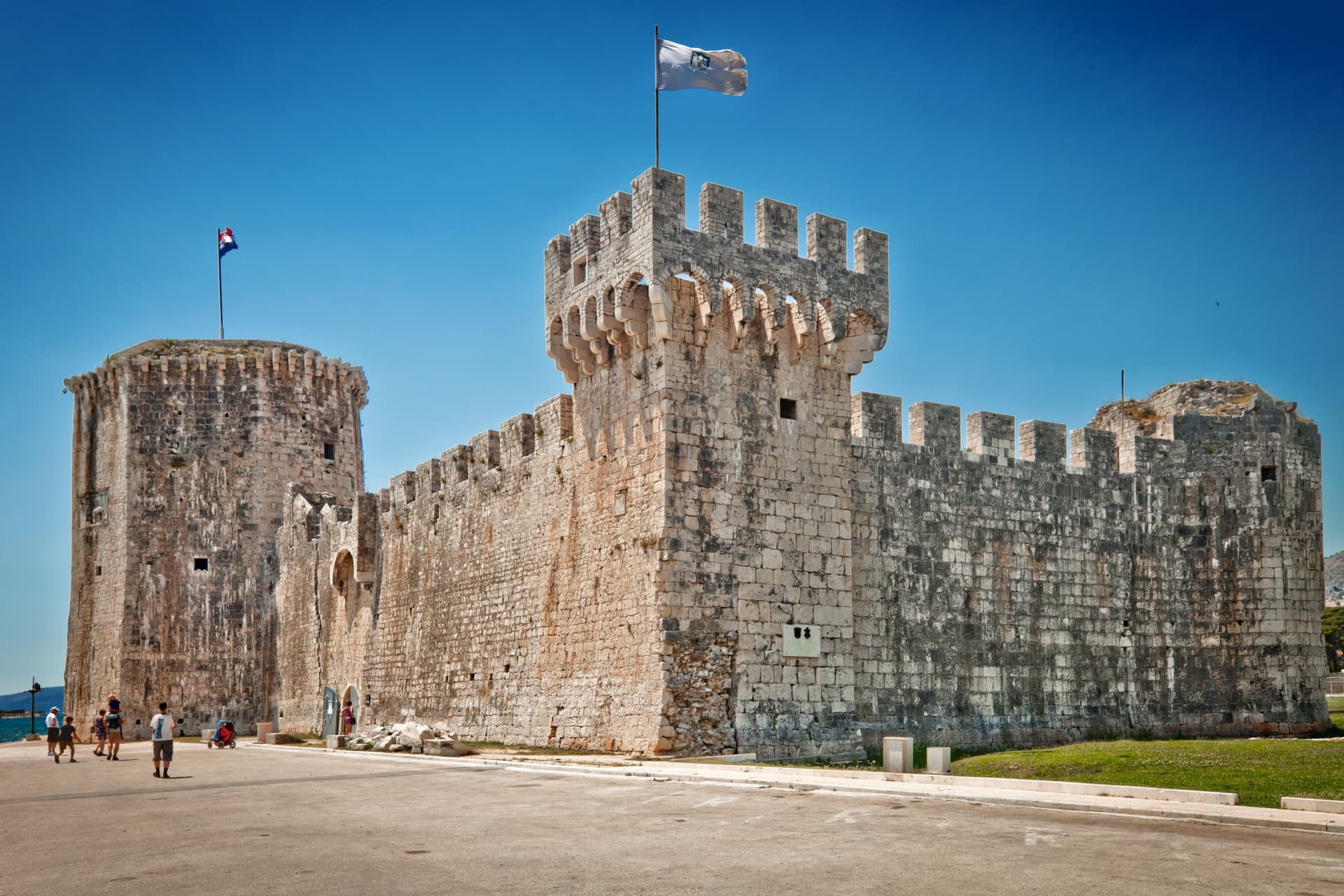
A Venetian fortress built between 1420 and 1437 at the southwestern tip of Trogir, Kamerlengo Castle continues to stand watch over the Dalmatian maritime channel.
Kamerlengo Castle is a 15th-century Venetian fortress standing at the southwestern tip of Trogir, in central Dalmatia. Built between 1420 and 1437 on the orders of the Venetian Republic following the city's capture, it commands the entrance to the maritime channel and still defines the silhouette of this historic city, a UNESCO World Heritage Site.
Why visit Kamerlengo Castle
Three main reasons justify a visit:
- An intact Venetian military witness: the trapezoidal fortress, its corner towers and polygonal keep illustrate 15th-century Adriatic defensive architecture.
- A vantage point over Trogir and the channel: from the ramparts, you can take in the old town, the sea and the island of Čiovo.
- A lively place in summer: the inner courtyard hosts concerts, film screenings and performances throughout the summer season.
Allow 30 to 60 minutes for your visit, depending on your interest in history and panoramic views.
Castle History
From a watchtower to a Venetian fortress
Originally, the site was home to a simple polygonal tower, integrated into Trogir's defensive system and tasked with monitoring the maritime channel. This tower, called Veriga, still faces the sea today.
In 1420, after nearly two months of siege, the Venetian Republic captured Trogir. Faced with the hostility of the inhabitants and damage to the ramparts, Venetian authorities decided to build a true fortress. The work, entrusted to master builder Marin Radoj, spanned 1420 to 1437. The old Veriga tower was preserved and transformed into a keep.
A garrison and seat of power
The building was separated from the rest of the city by a crenellated wall and a wide moat. It served as a garrison for Venetian mercenaries and as a residence for the governor who represented the Serene Republic's administration. Until the mid-16th century, it was simply called the "Castle of Trogir." Its current name comes from the Venetian title of Camerlengo, meaning "chamberlain" or "steward," a position held by the officer responsible for finances and local administration.
19th-century dismantling
In the mid-19th century, Trogir underwent major urban transformations: the majority of ramparts were dismantled and the moats surrounding the castle were filled in. A project to demolish the fortress, deemed dilapidated, was even considered before being ultimately abandoned. This decision to spare it explains how the monument has survived to the present day.
What to see on site
The castle adopts a trapezoidal shape, with each corner topped by a tower. Elements worth observing:
- The Veriga Tower, a former medieval polygonal tower repurposed as a keep, facing the sea.
- The rampart walks, accessible by stairs, offering views over the old town and the channel.
- The inner courtyard, now empty: the former residential buildings of the Venetian governor were destroyed. It serves as a stage in summer for cultural events.
- The perimeter walls, whose stone jointing patterns testify to different construction phases.
An explanatory panel is located at the entrance. The visit requires no guide; you can explore independently. Just next to the castle, the Batarija field, where HNK Trogir, the local football club, plays, occupies part of the former glacis.
Practical Information
The castle is open from late March to early November, with extended hours during the peak summer season (often until evening in July-August to escape the heat). Outside this season, the site is generally closed. Since opening times and admission fees are subject to change, it's best to check with Trogir's tourist office before your visit. The entrance fee remains moderate.
Accessibility: the site is not suited for people with reduced mobility. Access to the ramparts and towers involves numerous stone stairs, sometimes narrow.
Tips: wear sturdy shoes, bring a hat and water in summer (little shade on the ramparts). Late afternoons offer particularly favorable light for photographs.
When to visit
The most favorable period extends from May to October, when the site is open and the Dalmatian weather allows you to enjoy the panorama. July and August concentrate tourist crowds but also the cultural program in the inner courtyard: it's the best season to attend a concert or open-air screening. May, June and September offer a good compromise between pleasant weather and moderate crowds.
How to get there
The castle is located at the southwestern tip of Trogir's old town, accessible on foot from any point in the historic center in just a few minutes. Since Trogir's core is pedestrianized, access is always on foot once you enter the fortified city.
From Split, regular buses serve Trogir in about thirty minutes. Split Airport, located halfway between, is also very close: Trogir is indeed a popular accommodation option for travelers in transit.
Nearby
A visit to Kamerlengo naturally fits into a broader discovery of central Dalmatia:
- St. Lawrence Cathedral and the historic center of Trogir, just steps away.
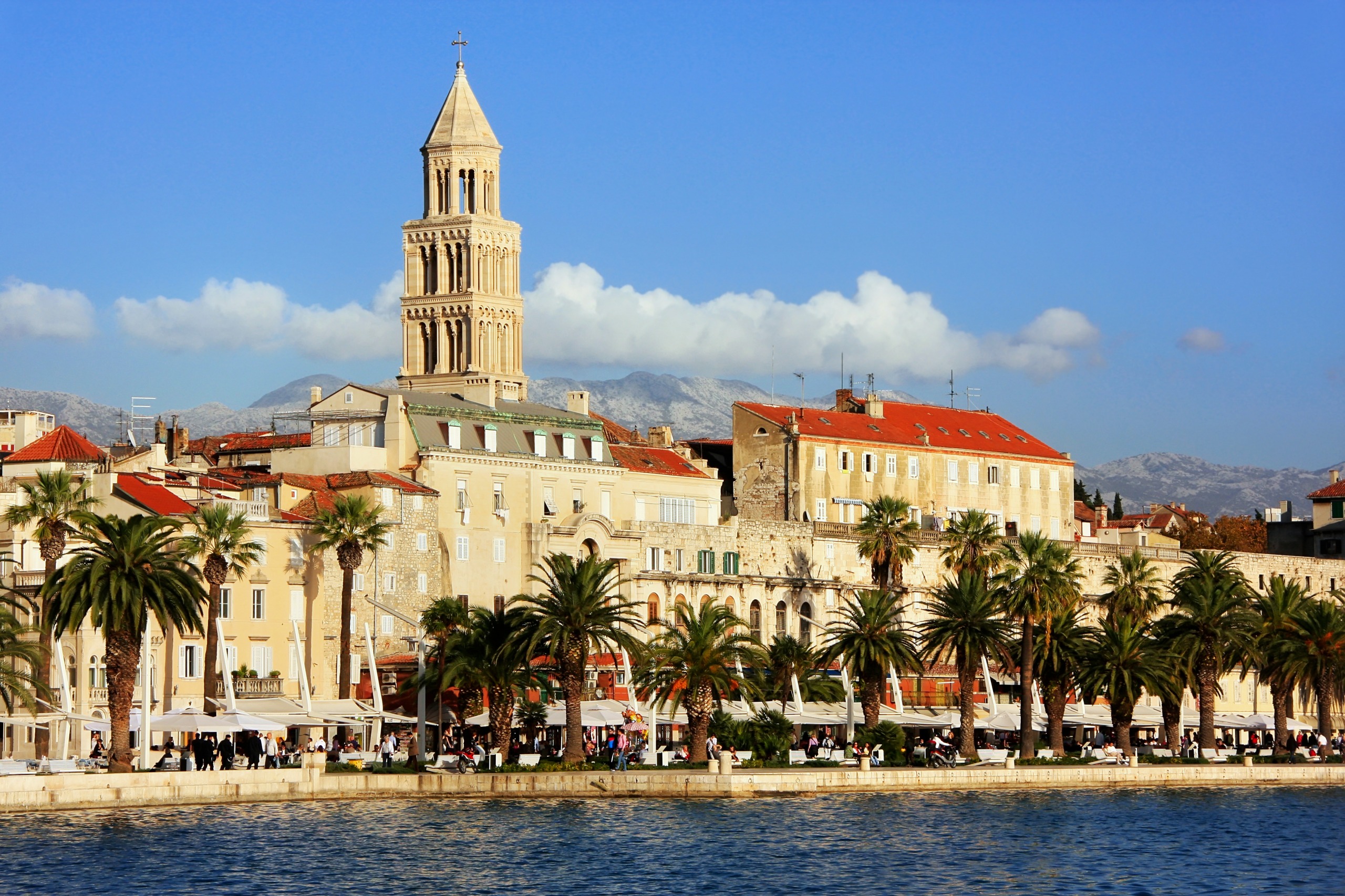
- The Palace of Diocletian in Split, about thirty minutes by bus.
- The Zlatni Rat Beach on the island of Brač, accessible by ferry from Split.
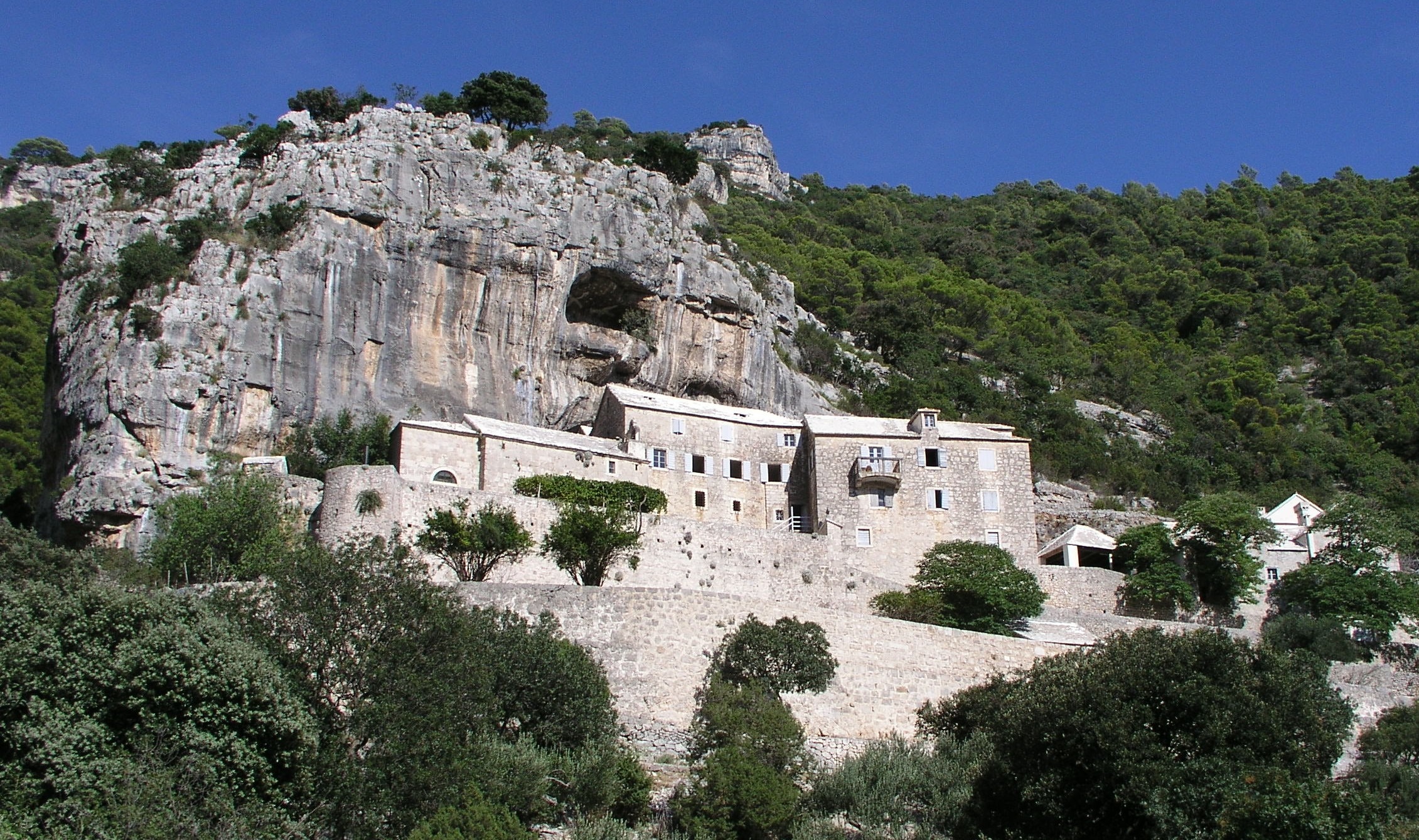
- The Hermitage of Blaca, a troglodyte monastic refuge on Brač.
Frequently Asked Questions
Frequently asked questions
Allow between 30 minutes and 1 hour, depending on how much time you spend on the ramparts enjoying the panoramic views.
No. Access to the levels, ramparts and towers involves numerous stone stairs, with no railings or elevator.
No, the visit is self-guided. An explanatory panel is available at the entrance and the building remains modest in size.
Yes, during the summer months, the inner courtyard hosts concerts, film screenings and performances. The program is announced by Trogir's tourist office.
The name comes from the Venetian title of Camerlengo (chamberlain or steward), a position held by the officer responsible for the city's administration and finances. Before the mid-16th century, the building was simply called the "Castle of Trogir."
Include Trogir in your trip
Kamerlengo Castle fits easily into an itinerary combining Split, Trogir and the Dalmatian islands. To plan a bespoke journey blending Venetian heritage, coastal villages and sailing, consult our trips to Croatie.
Interested in this visit?
We can include it in your personalised itinerary.