Jajce Fortress
Jajce Fortress
Once the capital of the Bosnian kingdom in the 15th century, Jajce Fortress dominates the confluence of the Pliva and Vrbas rivers from its 470-meter hilltop.
Jajce Fortress, the former royal residence of the Bosnian kingdom, stands on a hilltop 470 meters above the confluence of the Pliva and Vrbas rivers. Listed as part of Bosnia's national heritage and a candidate for UNESCO World Heritage status, it ranks among the best-preserved medieval complexes in the western Balkans. A useful geographical note: Jajce is located in Bosnia and Herzegovina, approximately 170 km east of the Croatian border, and is frequently included in regional circuits from Croatia.
Why Visit Jajce Fortress
Three main reasons merit a visit. First, the site condenses more than five centuries of Bosnian history, from the medieval Grand Duchy to Ottoman conquest. Second, its ramparts command a rare panorama: the old town below, the deep-cut valleys, and the Pliva waterfall plunging directly into the Vrbas riverbed. Finally, the fortress encompasses 11,200 square meters over 1,300 meters in length, making it one of the largest preserved medieval citadels in the region, without the crowds of major Croatian sites.
History
The fortress was built in the 14th century by Hrvoje Vukčić Hrvatinić, Grand Duke of Bosnia and a powerful feudal lord. The fortification protected his strategic city, established at the confluence of the Pliva and Vrbas rivers, from Hungarian and Ottoman ambitions.
After Hrvoje's death in 1416, the site retained its local defensive function. Its role shifted in the 15th century when the royal court moved there: Stjepan Tomašević, the last king of Bosnia, was crowned in Jajce in 1461, making it the official capital of the kingdom. A royal palace and a portal adorned with the kingdom's coat of arms were added to the complex during this period.
Facing Ottoman pressure, the stronghold held firm for nearly a century after the kingdom's fall. It finally surrendered in 1528, marking the effective end of Bosnian sovereignty. Under Ottoman administration, Jajce gradually lost its political role. A major fire in 1658 nearly destroyed the structures, which were only partially restored afterward.
Substantial conservation work had to wait for the Austro-Hungarian administration in the 1880s to stabilize the citadel and Saint Peter's Tower. These interventions enabled the archaeological reading still legible today.
What to See on the Site
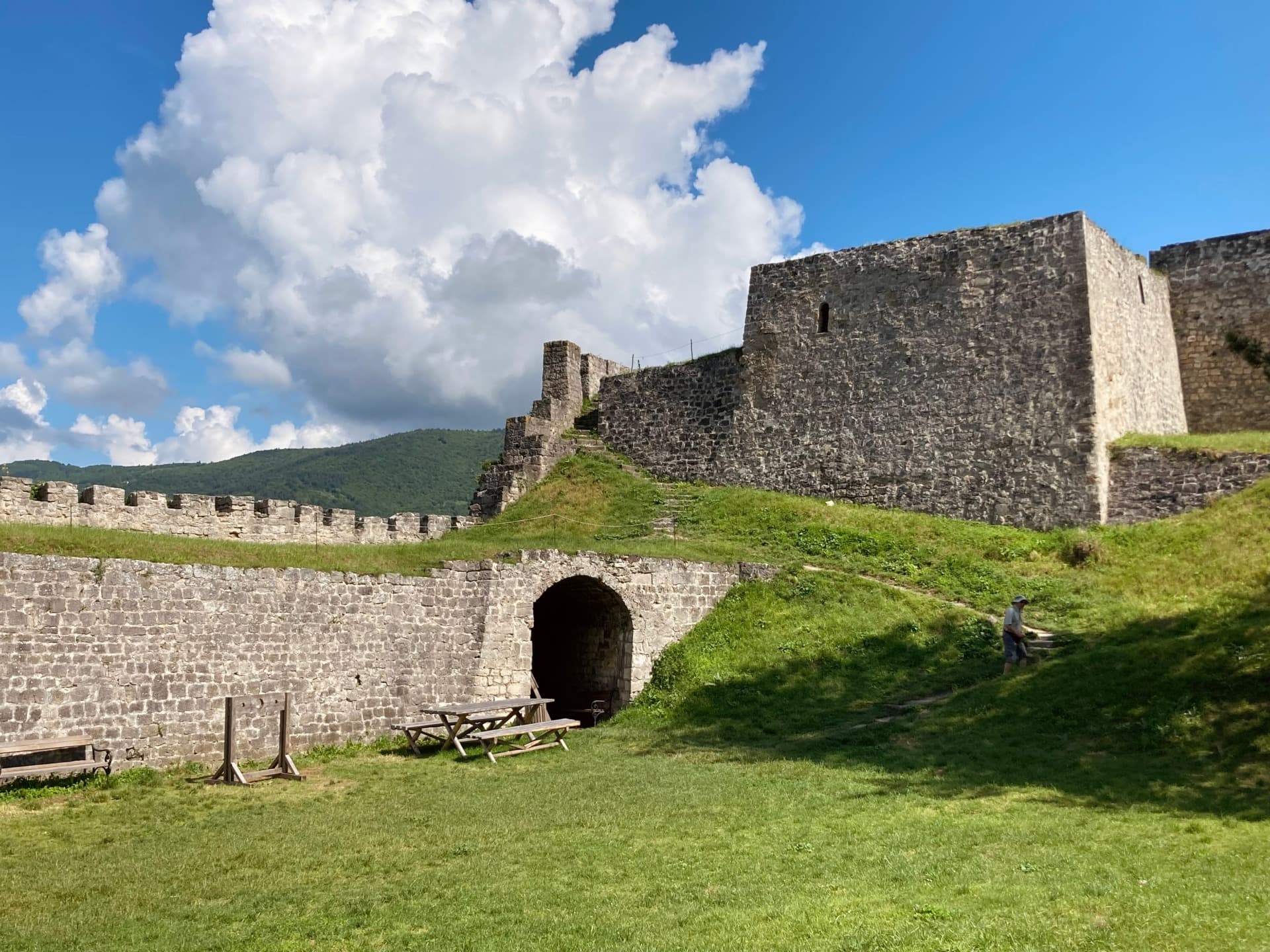
Access is through the main entrance, whose portal preserves the coat of arms of the royal Kotromanić family dating from the 15th century. The path then winds through different levels of the fortress.
- Ramparts and bastions: most of the medieval layout remains legible, with several continuous sections open for exploration.
- Remains of the medieval citadel and royal palace: foundations, load-bearing walls, and traces of royal apartments.
- Saint Peter's Tower: the fortress's highest point, offering the most expansive views over the valley.
- Ancient catacombs: underground galleries accessible separately, generally included in the combined ticket.
From the old town, the ascent passes the ruins of the Church of Saint Mary, the Saint Luke's bell tower, and the Bear Tower, landmarks that extend the visit beyond the walls.
Practical Information
Allow 1.5 to 2.5 hours to tour the entire site, including the catacombs. The climb from the old town is quite steep: wear shoes with good grip, especially in damp conditions, as the stone becomes slippery.
The site is open year-round, with extended hours in summer and reduced hours in winter. Admission remains modest (a few euros), with a combined ticket available for the fortress and catacombs. Check current conditions with Jajce's tourist office before your visit.
The route is not suitable for strollers or people with reduced mobility: irregular stairs, uneven surfaces, and significant elevation changes.
When to Visit
The most comfortable period extends from May to October, with a preference for May-June and September: pleasant temperatures, favorable light, and moderate crowds. Summer remains enjoyable at altitude but can be busy in July and August. In autumn, the colors of the Vrbas Valley particularly enhance the stone ramparts. In winter, snow makes access difficult and certain sections may close for safety reasons.
How to Get There
Jajce is situated midway between Sarajevo (approximately 170 km, 3 hours' drive) and Banja Luka (approximately 80 km, 1.5 hours). Daily coach services connect the city to both destinations. From Croatia, the most convenient access is via Banja Luka, reachable from Zagreb in 4 to 5 hours' drive.
Once in Jajce, the fortress is reached exclusively on foot from the old town. The path is well-marked and the climb takes about twenty minutes at a leisurely pace.
What to See Nearby
Jajce concentrates several sites within a small radius:
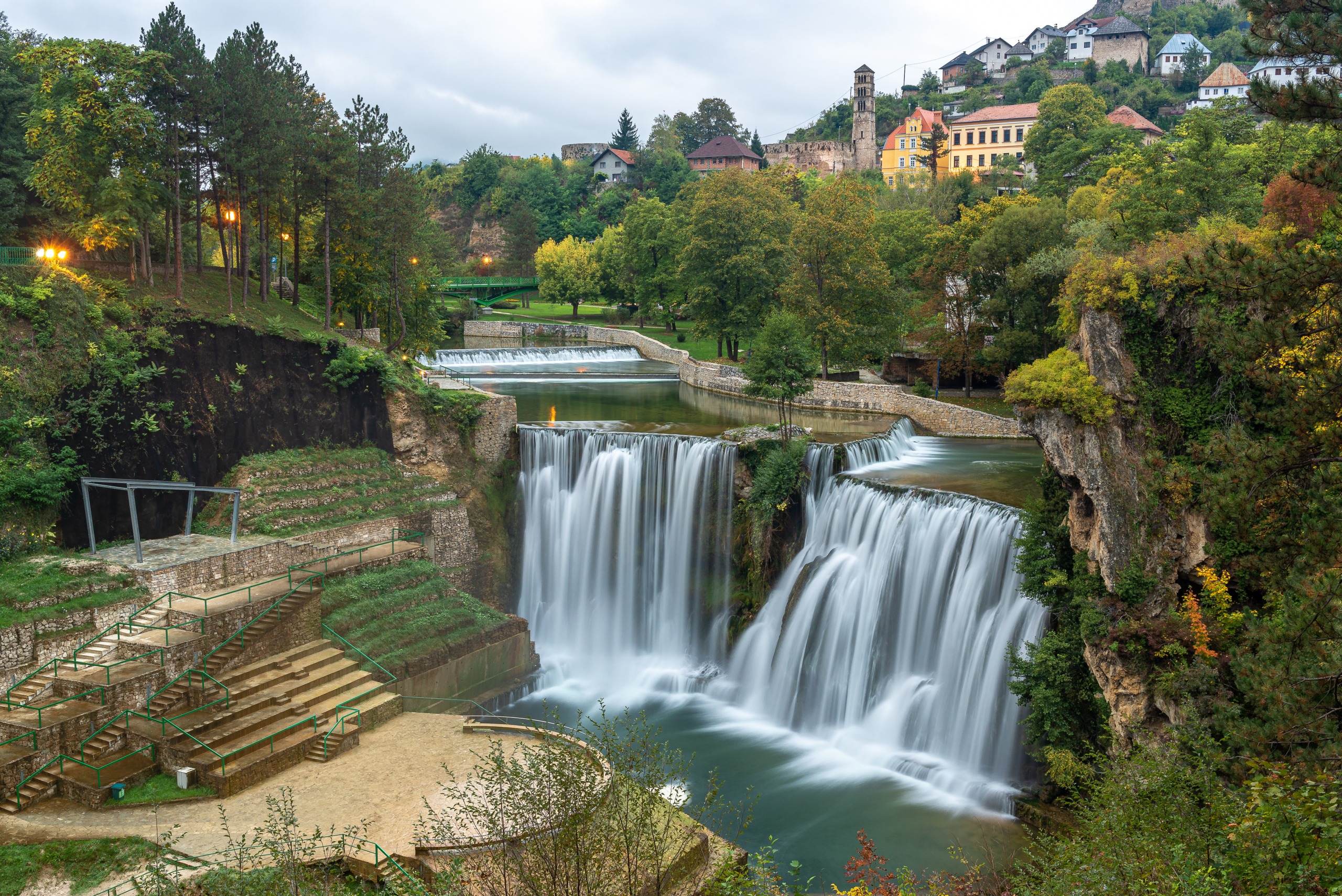
- The Pliva Waterfall, approximately twenty meters high, visible directly from the ramparts.
- The Pliva Lakes, 5 km upstream, with their traditional wooden mills.
- The catacombs and Saint Luke's Church in the old town.
To extend the itinerary on the Croatian side, several historical sites echo Jajce's medieval atmosphere: Diocletian's Palace in Split, Grič Tunnel in Zagreb, and the Blaca Hermitage. Those interested in unusual archaeological sites may also consult the page on the Bosnian Pyramids.
Frequently Asked Questions
Frequently asked questions
Plan Your Trip
Jajce Fortress fits naturally into itineraries combining Croatia and Bosnia and Herzegovina. To prepare your stay and explore the region's historical sites, consult our Croatia tours and feel free to contact us for a custom itinerary including a stop in Jajce.
Interested in this visit?
We can include it in your personalised itinerary.