Istria
Heart-shaped peninsula where hilltop villages, truffles from the Mirna valley and Venetian coastline can be explored in four to five days by self-drive.
Istria forms the largest peninsula in the Adriatic, clinging to the northwestern corner of the country between Slovenia and the Gulf of Kvarner. Its heart-shaped silhouette covers roughly 3,500 km², making it a compact region you can traverse from north to south in under two hours by car. We regularly send travellers here from our agency: it's the Croatian terrain most straightforward to explore independently, with dense road networks and short distances between villages.
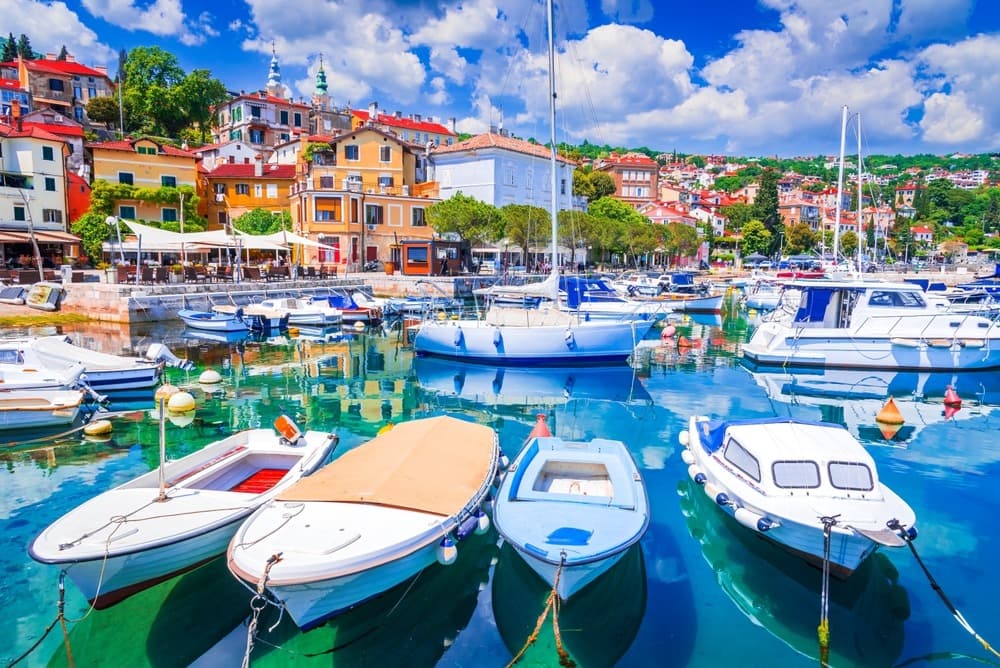
Istrian character stems from a layering of influences. Venetian first, visible in the lions of St. Mark carved onto the façades of Rovinj, Poreč and Pula, in the language spoken by the elderly, and in the cuisine. Roman next: the amphitheatre in Pula, standing since the 1st century, still hosts summer concerts, and the Euphrasian Basilica in Poreč retains its 6th-century Byzantine mosaics, UNESCO-listed. Austro-Hungarian finally, through the seaside resort of Opatija on the eastern coast, developed under Franz Joseph with its Belle Époque villas and the Lungomare promenade.
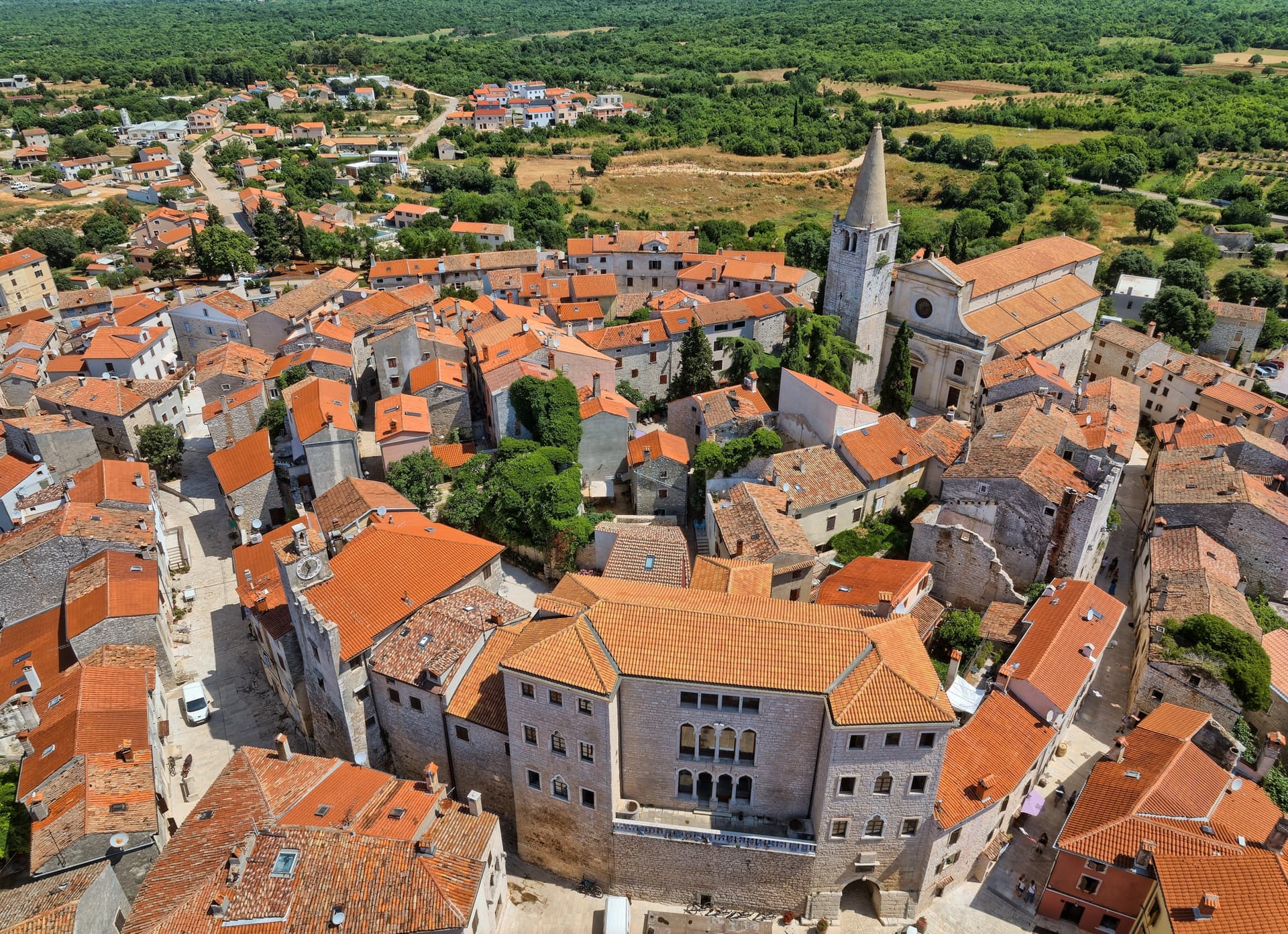
The interior is a complete contrast. The moment you leave the western coast, you climb into rolling countryside that guidebooks often compare to Tuscany—a comparison that holds up: same hills, same stone villages perched on ridges, same density of olive groves and vineyards. Motovun overlooks the Mirna valley from 277 metres, Grožnjan harbours roughly fifty artist studios, Hum claims the title of world's smallest town with around thirty residents. Between these villages lies Motovun Forest, one of Europe's rare territories where white truffles are harvested, from September to January, and black truffles year-round.
The local economy rests on three pillars we share with our travellers: extra-virgin olive oil, with Istrian producers regularly claiming top spots in international rankings (the Buža, Istarska bjelica and Črnica varieties produce a characteristic peppery oil); wine, with two signature grapes, the white malvazija and the red teran, the latter often paired with game dishes; and truffle products, principally around Buzet and Livade. The konobas, small family taverns in the hinterland, serve fuži (twisted pasta) with beef ragoût of boškarin cattle or grated truffle.
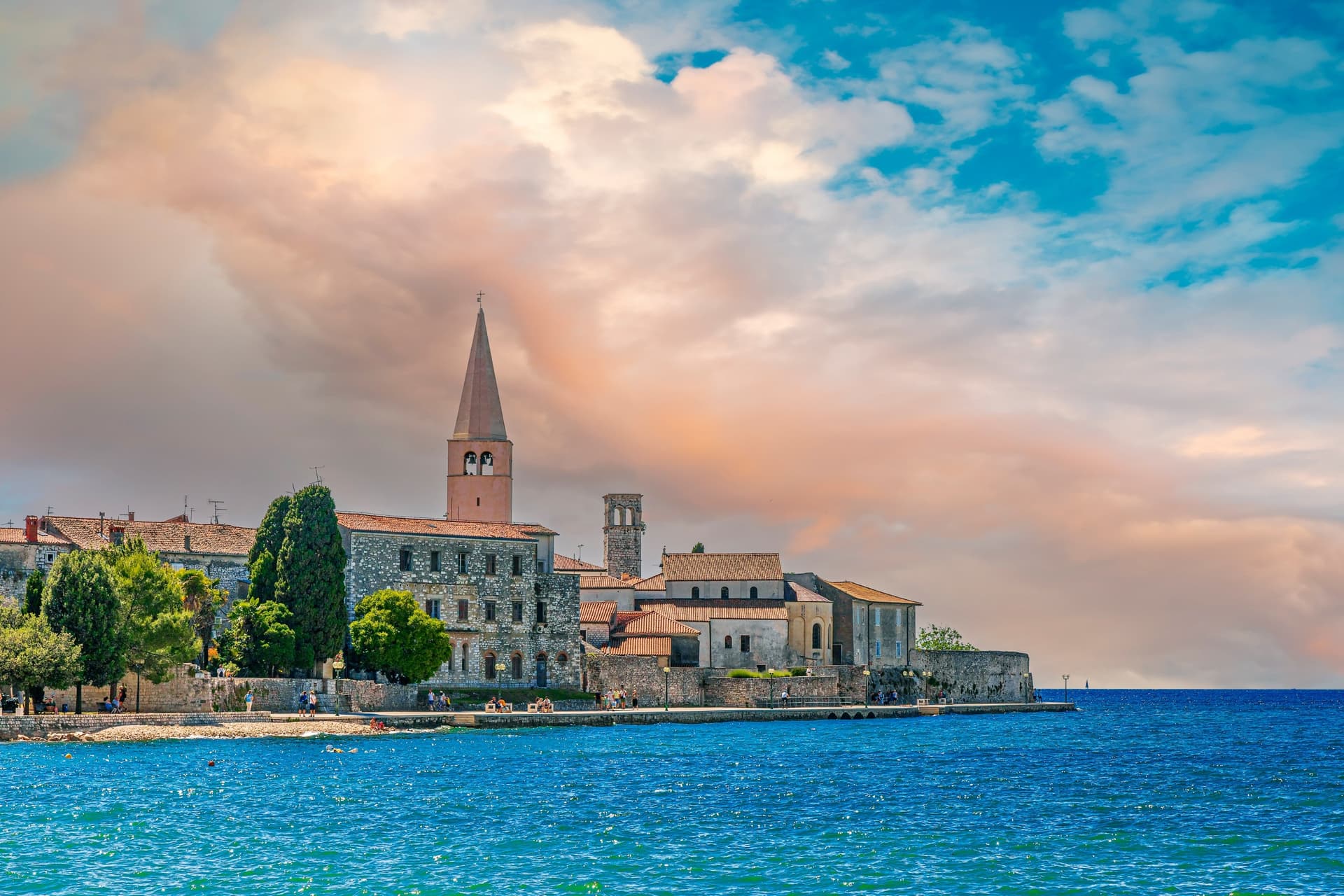
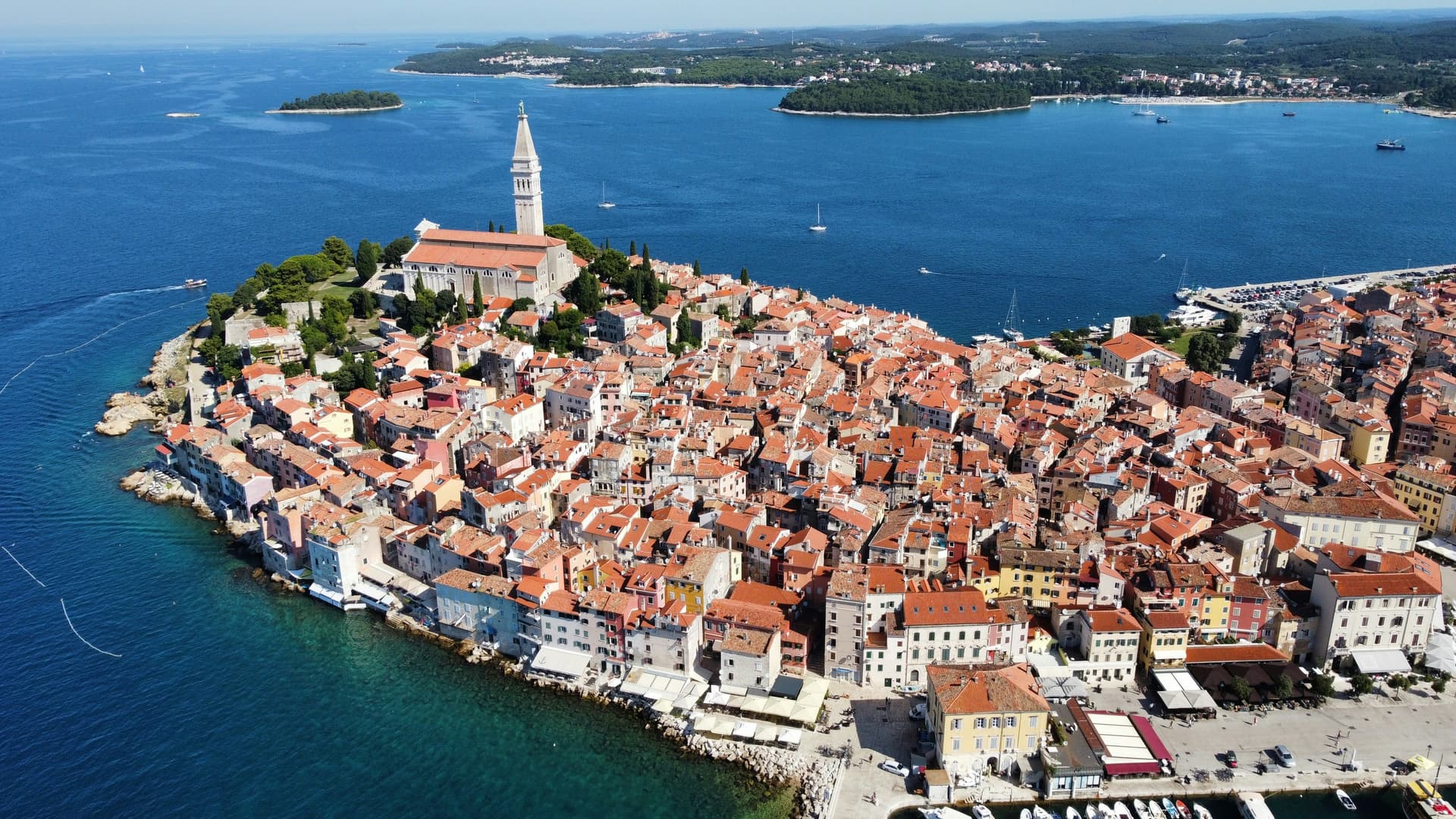
The western coast, from Umag to Pula, alternates between rocky coves, fishing harbours and former villages turned resorts. Rovinj remains our preferred base: the old town on its peninsula, dominated by the 60-metre bell tower of St. Euphemia, retains a dense network of Venetian alleyways, and the Red Islands archipelago opposite allows for an easy half-day boat excursion. The Brijuni Islands National Park, once Tito's summer residence, can be visited from Fažana in a half-day. The sea here is cooler than in Dalmatia—22 to 24 °C in July compared to 25 to 27 °C further south—which suits travellers for whom it isn't the absolute priority.
Istria also has its own festive calendar: the Giostra in Poreč re-enacts an 18th-century tournament in period costume each September, the Motovun Film Festival runs in late July in the village itself, and the truffle festivals in Livade stretch across autumn weekends. This cultural density, combined with logistical ease, explains why we often recommend it as an opener or closer to a broader Croatian journey.
What to discover
Rovinj and the Venetian peninsula. Climb to St. Euphemia church at sunset, then dine on grilled fish in a waterfront konoba. The old town's alleyways can be walked in an hour but often hold you for half a day.
Truffles from Motovun Forest. Early morning outing with a truffle hunter and his dogs through the undergrowth of the Mirna valley. White truffles are sought from October to December, black ones nearly year-round, followed by a tasting with scrambled eggs.
Hilltop villages of the interior. A driving loop between Motovun, Grožnjan, Oprtalj and Hum on narrow white roads. Artist studios, tastings of malvazija at producers' estates, and 270-degree viewpoints across the hills.
Roman amphitheatre in Pula. The 1st-century arena, the sixth largest still standing worldwide, still holds 20,000 spectators during the film festival in July. A visit pairs well with the forum, Temple of Augustus and Arch of the Sergii.
Brijuni Islands by boat from Fažana. National park of fourteen islets, once Tito's residence, with a safari park inherited from his diplomatic gifts and dinosaur footprints on the limestone shores. Plan a half-day on electric bikes.
When to visit
The best window runs from mid-May to end June, then from early September to mid-October. In May-June, temperatures oscillate between 22 and 27 °C, the sea reaches 20 to 22 °C, and interior villages haven't yet reached capacity. September maintains water at 23 to 24 °C, still-long days, and marks the start of white truffle season around Livade and Buzet. October brings the grape harvest and first olive pickings, with afternoons still pleasant at 18-22 °C.
July and August remain viable but Rovinj, Poreč and Pula concentrate the bulk of European summer arrivals: we then recommend staying in the interior, around Motovun or Buzet, and heading to the coast early morning. Temperatures exceed 30 °C on the plains. From November to March, many coastal restaurants and small lodgings close, but the interior stays lively thanks to truffles and wine; expect daytime temperatures of 5 to 12 °C and steady rainfall, around 100 mm monthly.
Practical advice
We recommend four to five days to tour Istria without rushing: two nights on the western coast (Rovinj or Poreč) for Venetian towns and swimming, two nights in the interior (Motovun, Grožnjan or a farmhouse near Buzet) for villages, truffles and producers. Pula airport serves the region in season from several European capitals; outside season, our team most often arranges arrival via Zagreb (3.5 hours by road) or Trieste in Italy, 1.5 hours from the border.
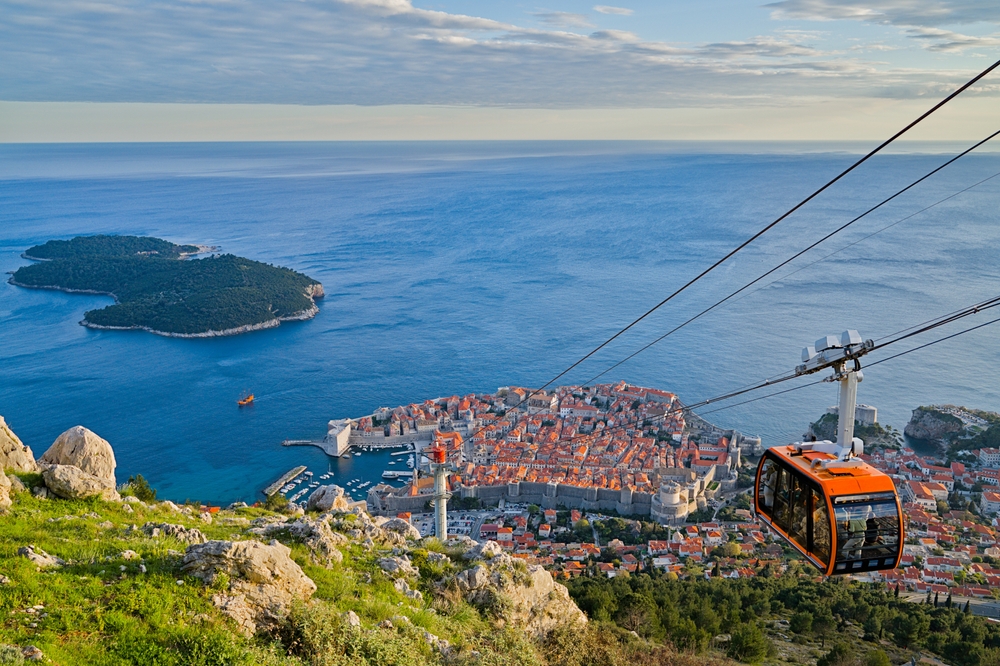
Istria combines well with Plitvice and the interior karst on the route toward Dalmatia, or with Zagreb and Slavonia for a more continental circuit. We advise against pairing it directly with South Dalmatia and Dubrovnik, too far away (700 km), unless you plan a domestic flight or more than ten days on site. It's a region suited to food-minded travellers, couples and families wanting a slow pace by self-drive, and those who prefer village culture to grand maritime crossings. Comfort levels are high: restored stone houses, quality agriturismi, charming small hotels in old towns.