Biokovo
Biokovo
Above the Makarska Riviera, Biokovo Nature Park unveils its glass Skywalk, its karst peaks and 1,500 plant species.
Biokovo is a coastal mountain range and nature park located in Central Dalmatia. Reaching an elevation of 1,762 meters, it is home to Croatia's second-highest peak, Sveti Jure. With its unique karst landscapes, rich biodiversity and the breathtaking views it offers over the Adriatic Sea, this mountain range promises an unforgettable experience for visitors.
History
Known in antiquity as Adrion by Greek geographer Strabo, the Biokovo massif long served as a nurturing mountain for local populations. Inhabitants cultivated potatoes and cereals in its fertile valleys.
The area was granted nature park status in 1981 to preserve its unique geomorphological character and protect its endemic fauna. The following years saw the creation of several information centers such as the one at Ravna Vlaška and the Kotisina Botanical Garden.
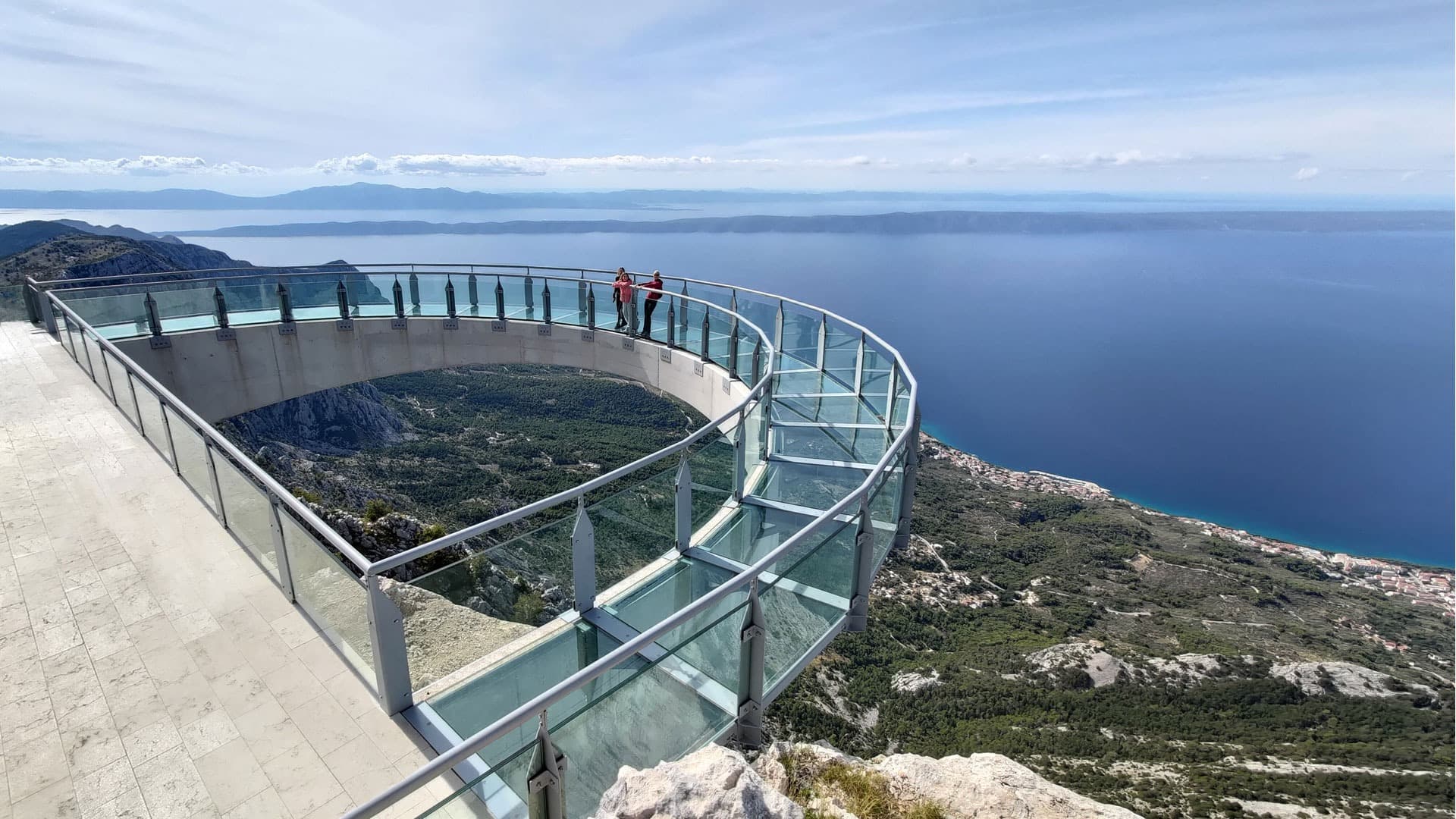
In 2020, the inauguration of the Skywalk marked a turning point in the park's history, transforming it into a sought-after destination for thrill-seekers. Each year, the massif welcomes more than 50,000 visitors.
Flora and Fauna
The Biokovo mountains stretch for 25 km in length. They host a remarkable biodiversity of approximately 1,500 plant species, including 25 endemic varieties such as the Biokovo bellflower, the park's emblematic symbol. In the beech forests of the peaks, common and pygmy shrews form unique isolated populations.
The underground world teems with natural treasures: more than 200 cave-dwelling species inhabit the grottos, among which 60 are remnants from the Tertiary era. Cyclamens and wild orchids dot the rocky slopes, creating a colorful spectacle visible from the Makarska Riviera.
Although the massif appears barren at first glance, numerous animal species have been found there. The avifauna includes certain rare and endangered bird species such as the black kite, white-tailed eagle and kestrel. Foxes, weasels and badgers, among others, form the mammal population. Reptiles are notably represented by lizards, snakes and tortoises.
What to Do in Biokovo Nature Park?
Conquer the Vosac and Sveti Jure Peaks
The Biokovo massif is a popular playground for hikers. It features dozens of hiking trails. However, the most well-known route remains the one leading to the summits of Mount Vosac, which reaches 1,422 m, and Sveti Jure (Saint George), the park's highest point.
Vosac is located just 3 km from Makarska city center, the park's gateway. A well-marked trail leads to its summit. After two hours of hiking from there, you reach the Sveti Jure summit.
Hiking in the Biokovo mountains offers a unique experience for adventurers. In addition to superb views of the karst landscapes and Croatian coast and its islands, visitors can also, on clear days, catch glimpses of parts of Bosnia and Italy (across the Adriatic Sea).
Marvel at the Skywalk Panorama
The Skywalk is a must-see attraction in Biokovo National Park. It is a horseshoe-shaped glass observation platform. This 11-meter-long walkway is perched at an altitude of 1,228 m, above a cliff near the Ravna Vlaska information center. It can accommodate up to 50 people and offers magnificent views over the Adriatic Sea.
Visit the Kotisina Botanical Garden
The Kotisina Botanical Garden is located in the village of the same name, a short distance from the city of Makarska. It is a true celebration of Mediterranean biodiversity. Over its relatively modest area, you will discover more than 250 species of wild plants. From medicinal herbs to endemic species, the plant palette is as rich as it is colorful. Landscaped trails invite you on an educational walk through the different ecosystems represented. From the garden, you will also enjoy stunning views of the Adriatic Sea and the surrounding islands.
Discover the City of Makarska
Exploring the Biokovo massif is also an opportunity to discover Makarska. This city nestled in an exceptional natural setting captivates with its historic center and cobblestone streets.
The Kačić Miošić Square, the beating heart of the city, houses the majestic Saint Mark Cathedral and its iconic bell tower. Along the harbor, the palm-lined waterfront promenade invites leisurely strolls. Cafés and restaurants serve local specialties in a Mediterranean atmosphere. Swimming enthusiasts will appreciate the main beach with its crystal-clear waters, while Sveti Petar Park offers a refreshing haven with its shaded trails.
With Biokovo mountain located just behind Makarska, you must first reach this city to visit the park. It is connected by bus to Split. The distance between these two cities is only 65 km.
Biokovo Nature Park can be explored by car or bicycle. Attractions such as the Skywalk and the Sveti Jure summit are accessible by these means of transport.
However, keep in mind that the roads are narrow and winding, which can be challenging for inexperienced or novice drivers. Additionally, access is regulated, with a limit of 25 cars allowed per hour, which can result in queues, especially during summer. To avoid crowds, it is recommended to go early in the morning.
The massif is a joy for hiking enthusiasts. Note, however, that excursions are only suitable for experienced hikers and climbers, equipped appropriately to handle the sometimes demanding conditions of the site. Indeed, many accidents have already occurred in the park. The trails are often dangerous.
When to Explore the Biokovo Mountains?
The park is open only from early April to mid-November. During the summer months, hours are extended to allow visitors to make the most of the longer days.
Opening Hours and Admission Prices
Access to the nature park costs 8 € per person for those arriving by car or motorcycle, and 5 € for those who wish to travel by bicycle. Children under 7 years old are exempt from admission fees.
Opening hours vary by season: from June to September, 6 a.m. to 8 p.m.; in April and May, 8 a.m. to 7 p.m.; and from October to November, 8 a.m. to 4 p.m.
Want to discover this destination?
Our local advisors design your tailor-made trip.