Trsat Castle (Trsatska Gradina)
Trsat Castle (Trsatska Gradina)
Perched above Rijeka, Trsat Castle is a medieval fortress with ancient origins, offering panoramic views over the Kvarner, a Neo-Gothic mausoleum, and a vibrant summer cultural programme.
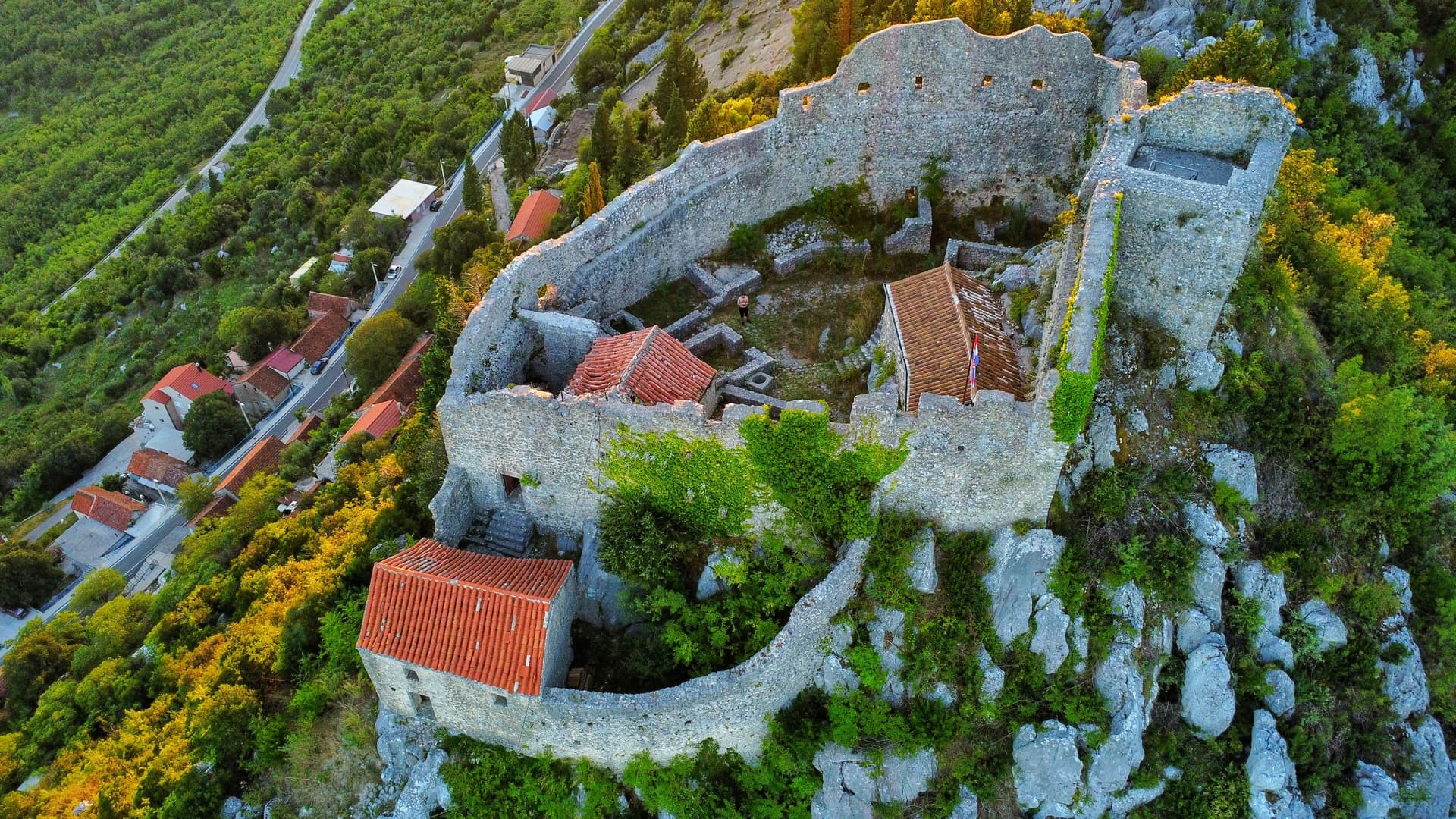
Perched on a rocky outcrop dominating Rijeka and the Kvarner, Trsat Castle is a medieval fortress whose origins reach back to antiquity. Reinvented as a cultural venue, it commands panoramic views over the city, the Rječina delta, and the islands of the Kvarner. It's also an ideal starting point for exploring the historic Trsat neighbourhood, home to a nearby Marian sanctuary.
Practical Information at a Glance
- Access: from central Rijeka, climb the monumental Petar Kružić staircase (538 steps) or drive via the Trsat road.
- Recommended duration: 1 to 2 hours, longer if combining with the Trsat sanctuary.
- Admission: paid entry to towers and interior exhibitions; the exterior site is partially freely accessible.
- Dress code: no particular requirements.
What You'll See
The castle features an irregular layout adapting to the terrain. Ramparts, round towers, and bastions are well preserved. Inside, an art gallery hosts temporary exhibitions. The central courtyard serves as a stage for concerts and summer events. The panoramic terrace is the visit's highlight: views sweep across Rijeka, the harbour, and the islands of Krk, Cres, and Lošinj.
History and Context
The site has been occupied since Illyrian and Roman times. The medieval fortress is documented from the 13th century onwards. It passed successively under the control of the Frankopan lords, then the Habsburgs. In the 19th century, the Irish general serving the Austrian empire, Laval Nugent, acquired the castle and restored it, adding a Neo-Gothic family mausoleum still visible today. This Romantic-era restoration partly shapes its current appearance.
Highlights of Your Visit
The Panoramic Terrace
From atop the ramparts, your gaze sweeps across the entire Kvarner Bay. On clear days, the islands stand out sharply. It's one of the region's finest accessible viewpoints.
The Nugent Mausoleum
Erected in the 19th century in Neo-Gothic style, this family mausoleum is a rare architectural curiosity in Croatia. It speaks to Rijeka's cosmopolitan heritage during the Austro-Hungarian Empire.
Climbing the Petar Kružić Staircase
This monumental staircase, built in the 17th century, connects the city centre to the Trsat plateau. The climb is demanding but part of the experience: each landing offers a fresh framing of the city below.
Summer Exhibitions and Events
The interior courtyard regularly hosts concerts, performances, and contemporary art exhibitions during the summer season. Check the local programme before your visit.
Photography Tips
Morning light is ideal for photographing the Kvarner view, before haze obscures the islands. Late afternoon brings golden light across the stone ramparts. From the terrace, frame towards the south-west to capture both Rijeka's harbour and the islands. Architectural details of the Nugent Mausoleum photograph beautifully in diffuse light.
Location and Access
The castle stands in the Trsat neighbourhood, elevated above Rijeka's centre. On foot from the city centre, take the Petar Kružić staircase, which starts near the Podtrsat neighbourhood. By car, a road leads directly to the plateau. Urban buses also serve the Trsat district. The Marian sanctuary of Trsat is just a few minutes' walk from the castle.
Nearby Attractions
- Trsat Sanctuary — a 13th-century Marian basilica and major pilgrimage site, a few minutes' walk from the castle.
- Historic Centre of Rijeka — the Korzo, city tower, and covered market, accessible from the base of the staircase.
- Island of Krk — connected to the mainland by a bridge, visible from the castle terrace, less than an hour's drive away.
Frequently asked questions
Spring and autumn offer pleasant temperatures and fewer crowds. Summer brings cultural events but can make the staircase climb strenuous.
No. A drivable road provides access to the Trsat plateau by car or bus. The staircase (538 steps) is an option for those comfortable with the physical effort.
Yes, the two sites are just minutes' walk apart on the Trsat plateau. Allow a half-day to comfortably visit both.
Photography is generally permitted in outdoor spaces and on the ramparts. For indoor exhibitions, check posted rules, which may vary depending on events.
Road access avoids the staircase. However, the uneven terrain of the ramparts and courtyard may pose challenges. Contact the site in advance of your visit.
Interested in this visit?
We can include it in your personalised itinerary.